
Enhancing creativity Math Worksheets for Ages 3-8
8 filtered results
Difficulty Level
Grade
Age
-
From - To
Subject
Activity
Standards
Unlock your child's potential with our "Enhancing Creativity Math Worksheets for Ages 3-8." Specially designed to make learning math fun and engaging, these worksheets combine basic math skills with creative activities to stimulate young minds. Whether it’s through colorful patterns, imaginative problem-solving, or interactive puzzles, our worksheets cater to early learners, fostering both their analytical and creative abilities. Ideal for home or classroom use, these resources make math a joy rather than a task. Encourage your child’s natural curiosity and watch as they build a strong foundation in math while unleashing their creativity. Start now and make math magical!
Favorites
With answer key
Interactive
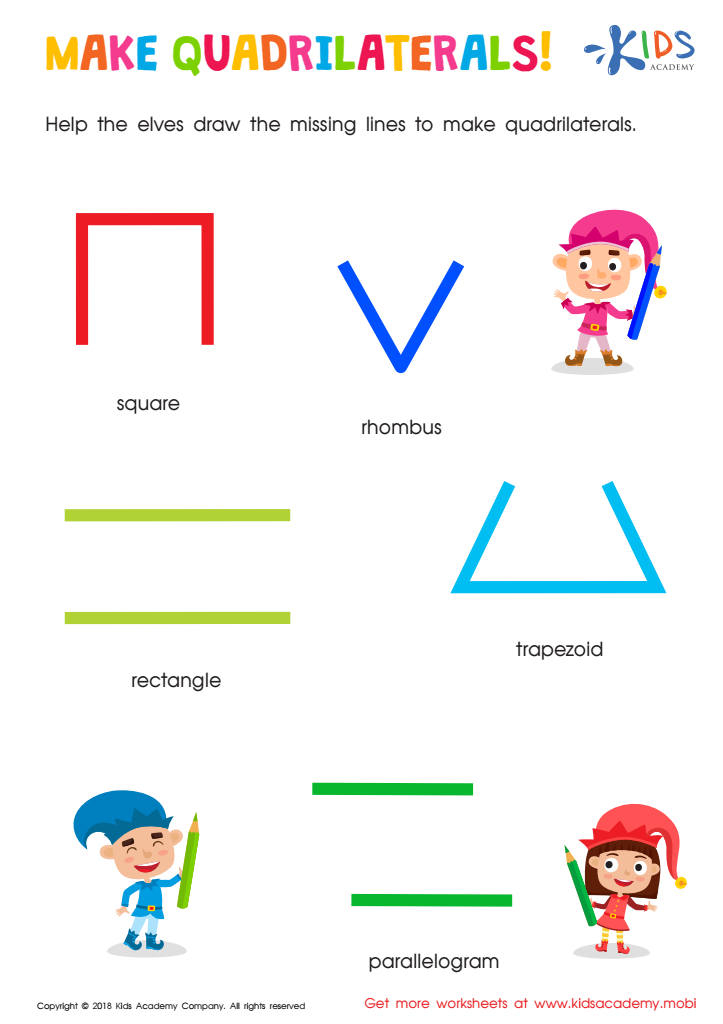
Make Quadrilaterals Worksheet
This fun and colorful worksheet will help your child understand and identify quadrilaterals. It's simple and encourages them to draw lines to create a square, rectangle, rhombus, trapezoid, and parallelogram. Stimulate their minds and watch them learn while they have fun!
 Assign to My Students
Make Quadrilaterals Worksheet
Worksheet
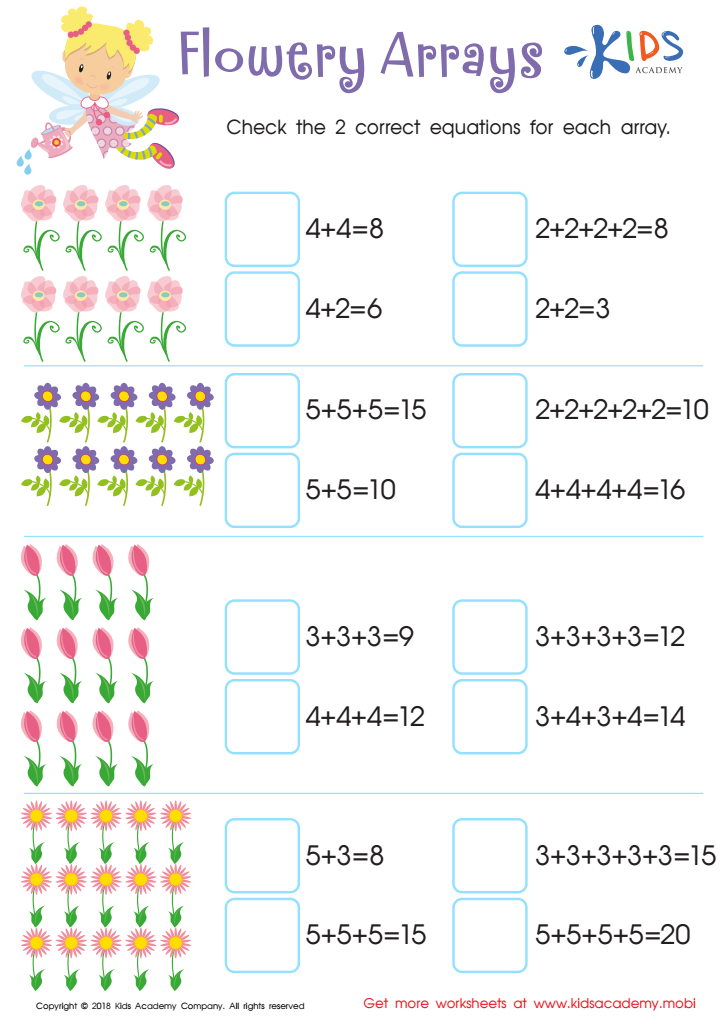
Flowery Arrays Worksheet
This worksheet helps your child learn to identify and represent arrays. For example, both 3+3+3+3=12 and 4+4+4=12 are arrays but the first is arranged in rows and the second in columns. Let your child use this knowledge to answer the four questions in this pdf and check the two correct equations.
Flowery Arrays Worksheet
Worksheet
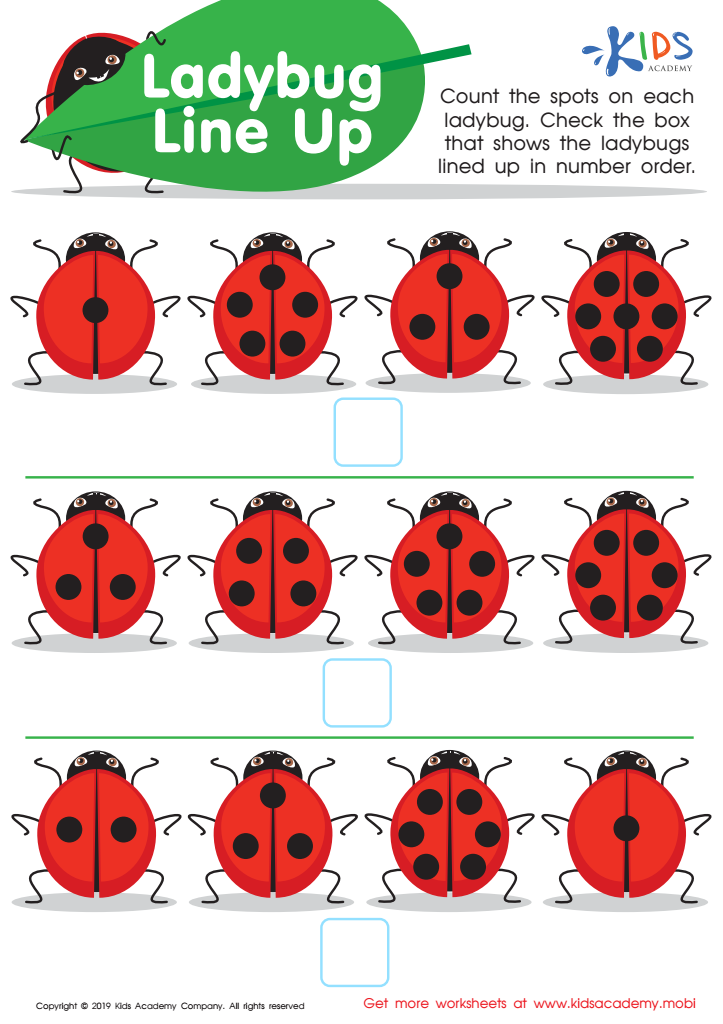
Ladybug Line Up Worksheet
Count the spots on the back of each ladybug in the three groups. Help kids check the box under each group that shows the ladybugs in proper number order. Ladybugs are an adorable insect with unique spots. This worksheet encourages counting and ordering.
Ladybug Line Up Worksheet
Worksheet
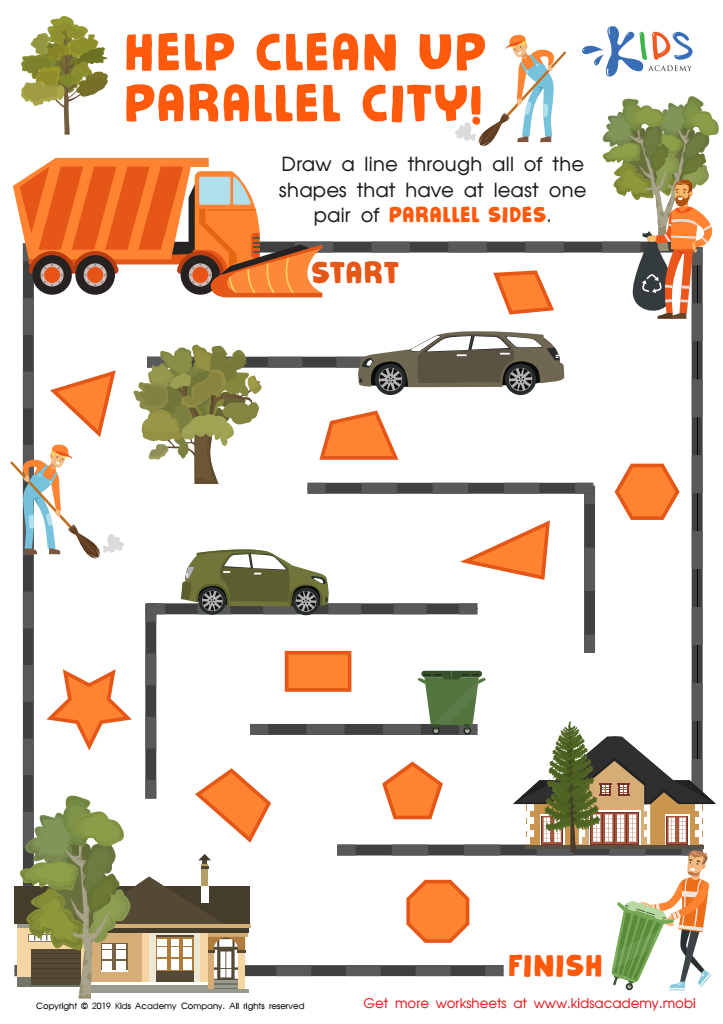
Help Clean Up Parallel City Worksheet
Explain to your kids what parallel sides are and have them identify the shapes with parallel sides in the picture. Then let them draw a line through all the shapes with at least one pair of parallel sides. This colorful worksheet will help them understand and practice this concept.
Help Clean Up Parallel City Worksheet
Worksheet
Join Kids Academy for Free
Who is primarily going to use this learning content?






Enhancing creativity in math for children aged 3-8 fosters a robust foundation for their overall cognitive development. At these formative ages, young minds are incredibly flexible and absorb knowledge like sponges. By introducing creative math concepts, parents and teachers tap into this natural curiosity, making learning engaging and fun. This creative approach nurtures problem-solving skills, critical thinking, and logical reasoning, all of which are fundamental to future academic success.
Moreover, creativity in math helps children develop a positive attitude toward the subject. Traditional methods that focus solely on rote memorization and repetitive exercises can often make math seem dull and intimidating. In contrast, incorporating games, puzzles, storytelling, and hands-on activities makes learning dynamic and interactive. This positive experience with math early on can reduce math anxiety and instill a love for the subject that persists into later years.
Additionally, math creativity encourages perseverance. When children explore multiple ways to solve problems and think outside the box, they learn resilience and the joy of discovery. These skills are not just essential for math; they are critical life skills that support lifelong learning and adaptability. Investing time and effort in enhancing math creativity sets a strong, versatile foundation for children's academic and personal growth.








