Eye-hand coordination Math Worksheets for Ages 3-8
3 filtered results
-
From - To
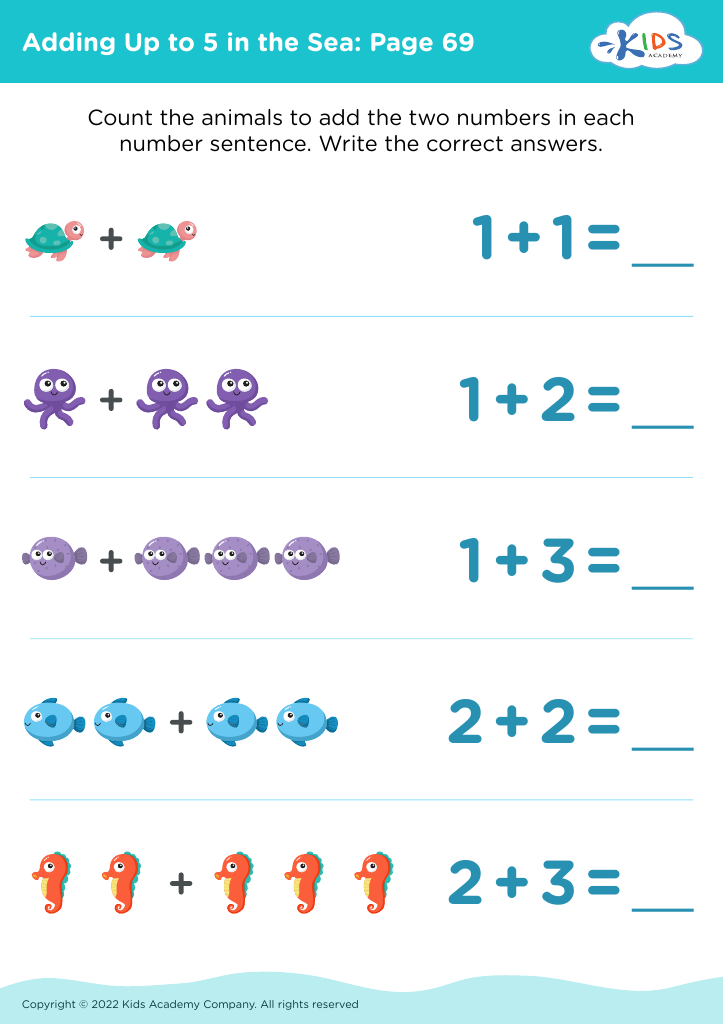
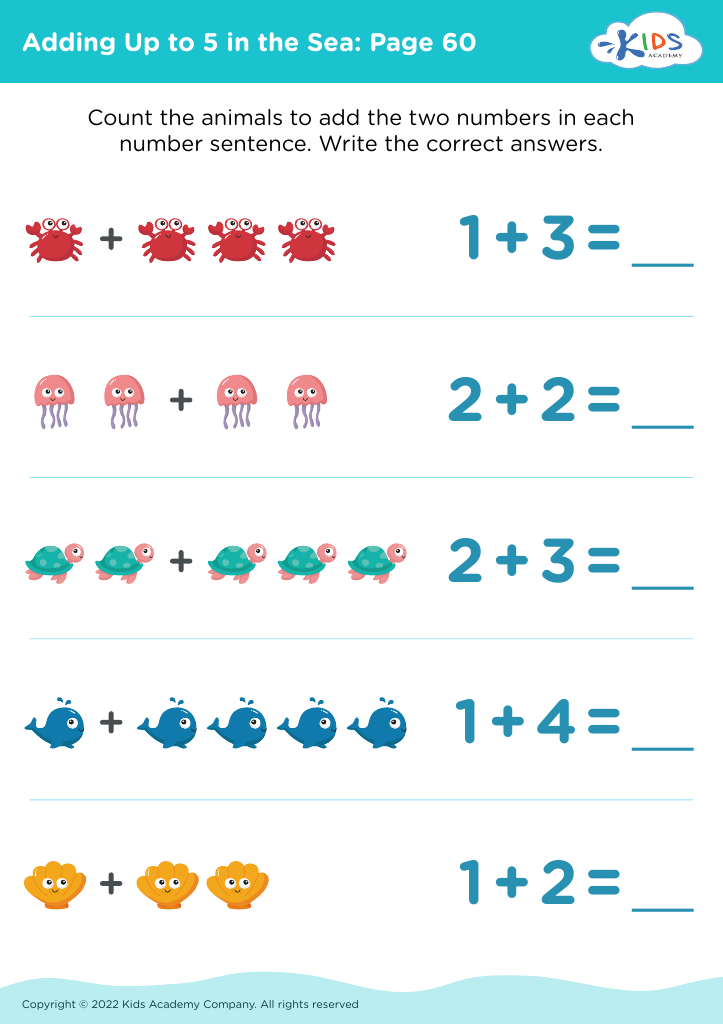
Unlock your child's potential with our Eye-Hand Coordination Math Worksheets, specially designed for ages 3-8! These engaging worksheets help develop essential skills for early learners through fun, interactive activities. Our resources focus on enhancing motor skills while reinforcing basic math concepts, making learning enjoyable and effective. Each worksheet is tailored to promote dexterity and precision as children grip pencils, trace numbers, and manipulate shapes. Ideal for both home and classroom use, these worksheets support a well-rounded educational experience. Dive into our collection and watch your child's confidence and coordination soar, setting a strong foundation for future academic success!
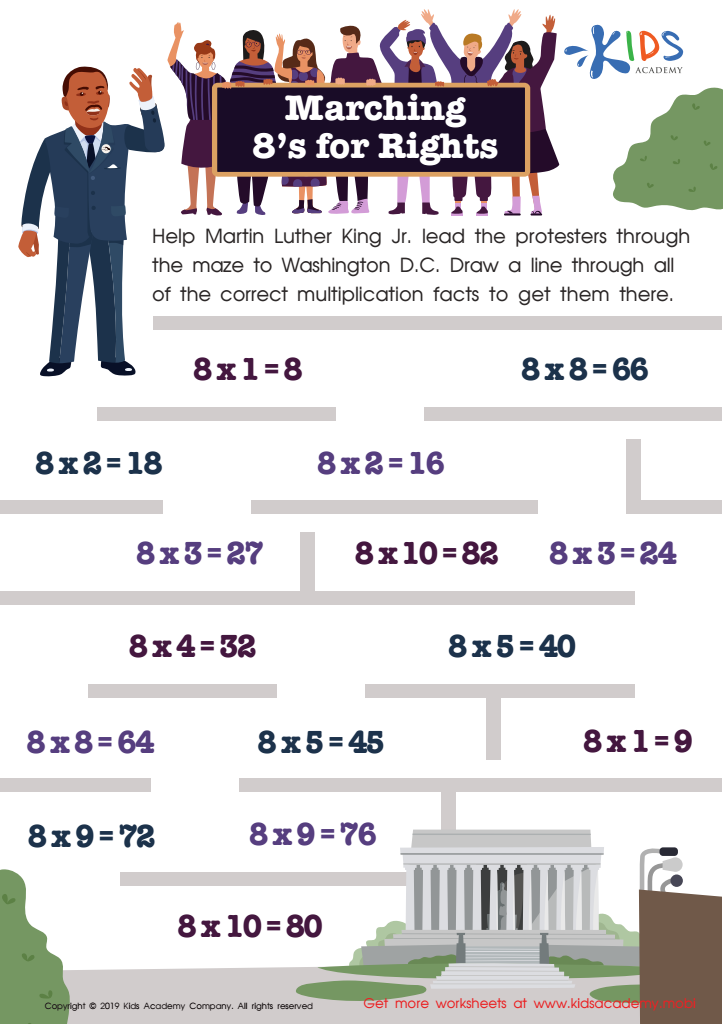
Marching 8’s for Rights Worksheet
 Assign to My Students



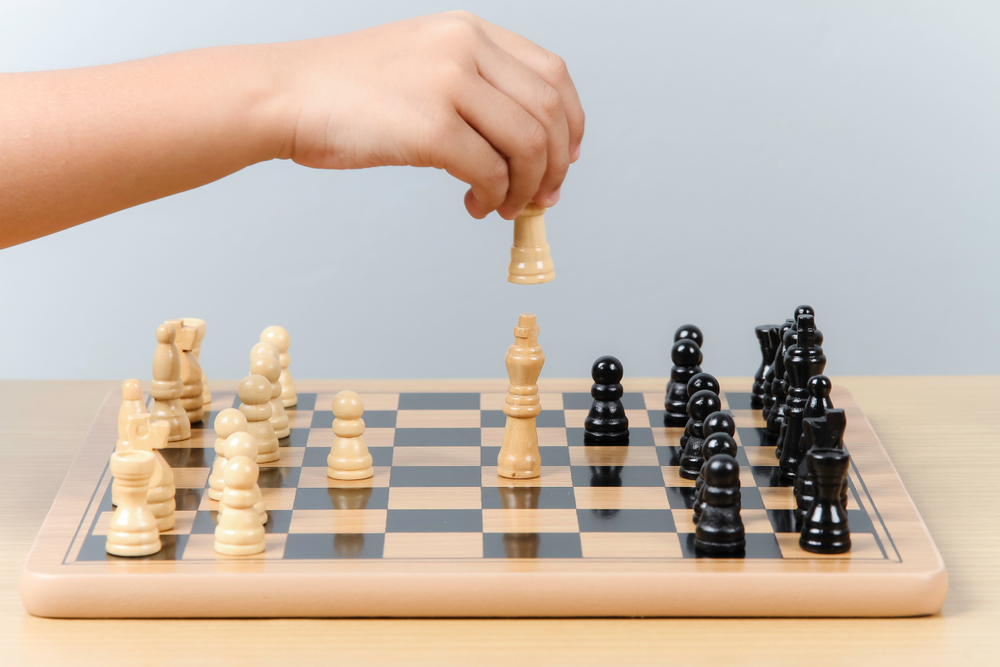



Eye-hand coordination is a vital developmental skill for children aged 3-8, particularly in the context of math learning. During these formative years, young learners are developing foundational skills that will enhance their academic and everyday activities. Eye-hand coordination directly influences a child's ability to manipulate objects, write numerals, and understand spatial relationships—all crucial for mathematical concepts.
Parents and teachers should care about fostering eye-hand coordination since it contributes to a child’s ability to engage with math-related tasks. For example, activities like sorting shapes, counting objects, and tracing numbers require effective coordination. When children practice these skills, they not only become more adept at math but also build confidence in their overall fine motor abilities.
Incorporating engaging activities that promote eye-hand coordination—such as puzzles, building blocks, and craft projects—can make learning math enjoyable. It also helps children develop problem-solving skills, which are integral to understanding mathematical concepts. By supporting children’s eye-hand coordination, parents and educators lay a strong foundation for future learning, leading to greater academic success and independent learners who can navigate everyday tasks confidently. Thus, eye-hand coordination is not just a physical skill, but a gateway to comprehending and enjoying math.








