Fine motor skills (drawing lines) Math Worksheets for Ages 3-8
7 filtered results
-
From - To
Explore our "Fine Motor Skills (Drawing Lines) Math Worksheets for Ages 3-8" to help your child develop essential skills! Featuring engaging, age-appropriate activities, these worksheets promote hand-eye coordination, precision, and early mathematical understanding. Kids build fine motor skills by tracing lines, shapes, and patterns while reinforcing numbers and basic math concepts. Perfect for preschoolers, kindergarteners, and early elementary students, our worksheets make learning fun and effective. Foster confidence and a love for learning with these expertly designed resources tailored to young learners' developmental needs. Sign up now and watch your child flourish!

Count and Match Vegetables 1 – 7 Math Worksheet
 Assign to My Students

Counting Eggs Worksheet
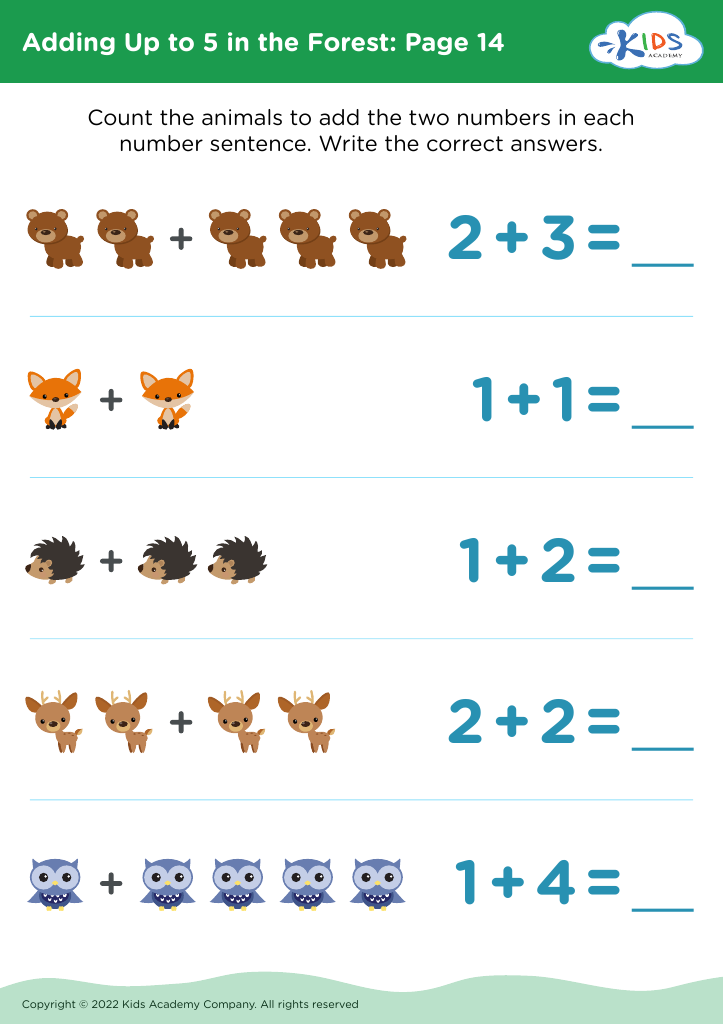
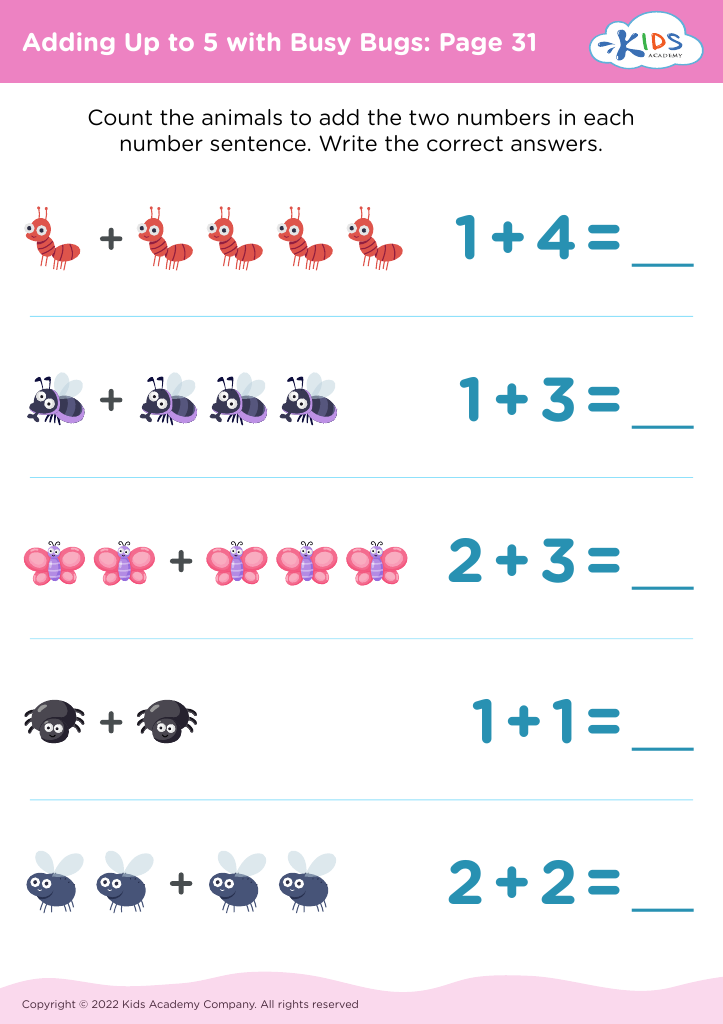

Count and Match Vegetables 2 – 8 Math Worksheet
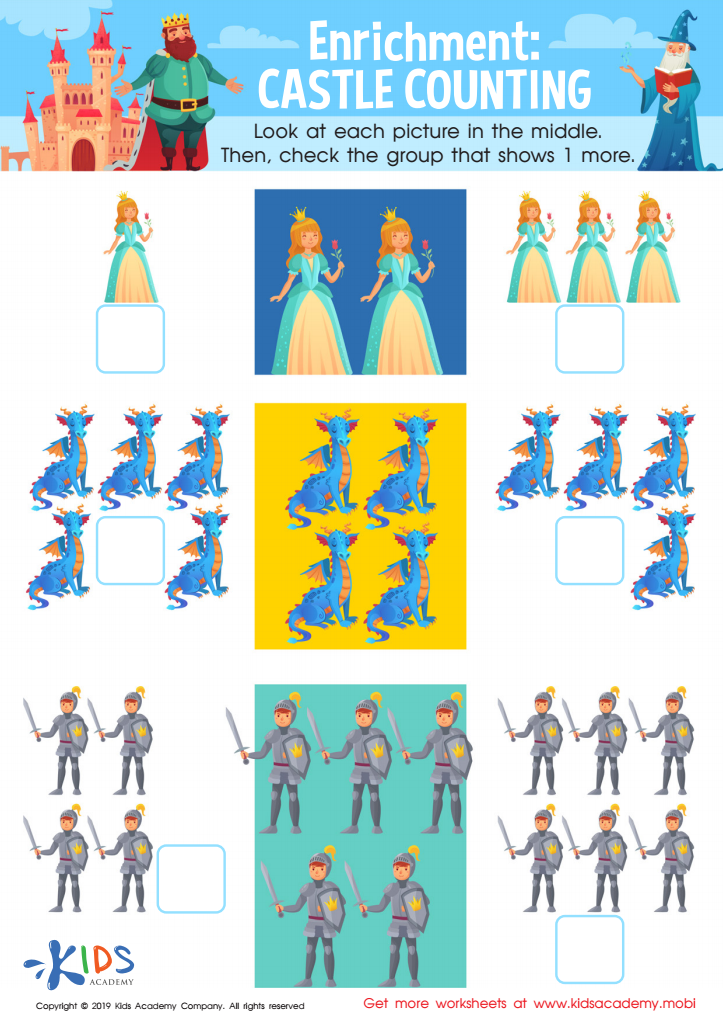
Enrichment: Castle Counting Worksheet
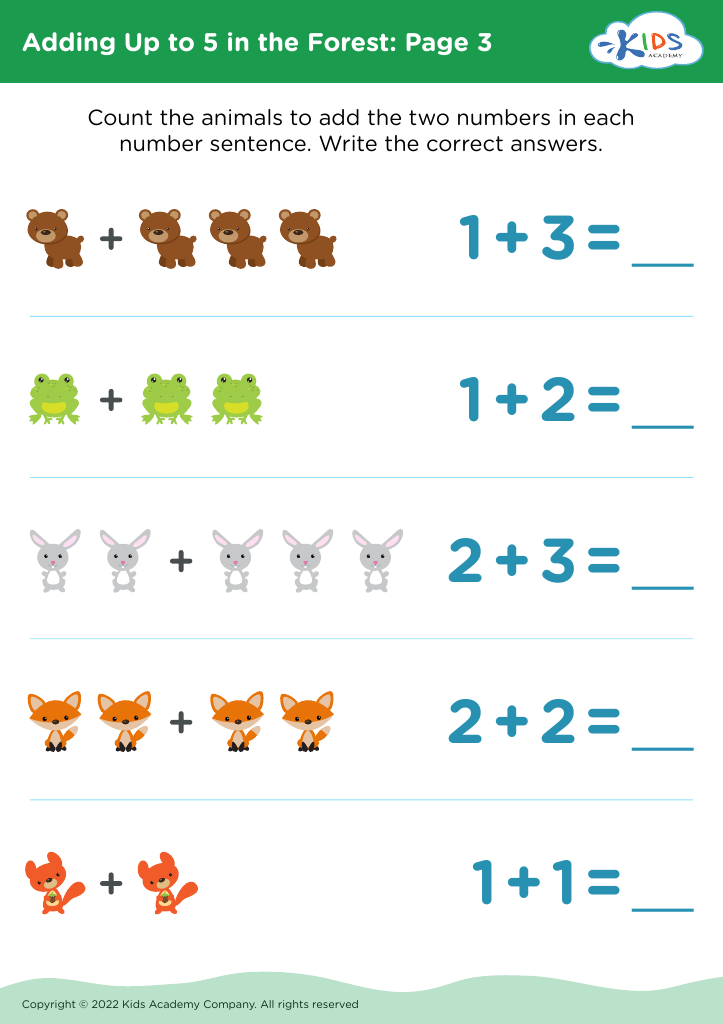






Parents and teachers should care about fine motor skills, including drawing lines, in children ages 3-8 because these skills are foundational for numerous developmental milestones and academic achievements. Fine motor skills involve the small muscles in the hands and fingers, which are essential for tasks such as writing, cutting, buttoning, and even using technology. When children practice drawing lines, they are not just creating art; they are enhancing their hand-eye coordination, dexterity, and precision.
In the context of math, drawing lines helps children grasp basic geometric concepts and spatial awareness. It acts as a precursor to writing numbers and letters, essential for later academic success. Drawing also fosters cognitive development by encouraging children to think about shapes, patterns, and sequences. As they draw different types of lines—straight, curved, zigzag—they are laying the fundamental groundwork for understanding more complex mathematical concepts like symmetry, angles, and graph reading.
Moreover, fine motor skill development promotes patience, focus, and the ability to follow instructions, all of which are critical for effective learning. Early intervention and encouragement in developing these skills set children on a path for greater academic confidence and competency, thus making it imperative for parents and teachers to actively support and nurture fine motor skill activities.








