Grammar practice Math Worksheets for Ages 3-8
3 filtered results
-
From - To
Welcome to our engaging “Grammar Practice Math Worksheets” designed for ages 3-8! These fun, interactive worksheets seamlessly blend essential grammar skills with foundational math concepts, helping young learners build critical thinking while enhancing their language abilities. With vibrant illustrations and age-appropriate exercises, children will enjoy exploring grammar through enjoyable math problems and challenges. Our resources are perfect for both classroom and home learning environments, making grammar practice an exciting adventure. Help your child develop confidence in their skills and foster a love for learning today! Explore our collection and watch your little ones thrive in their academic journey!
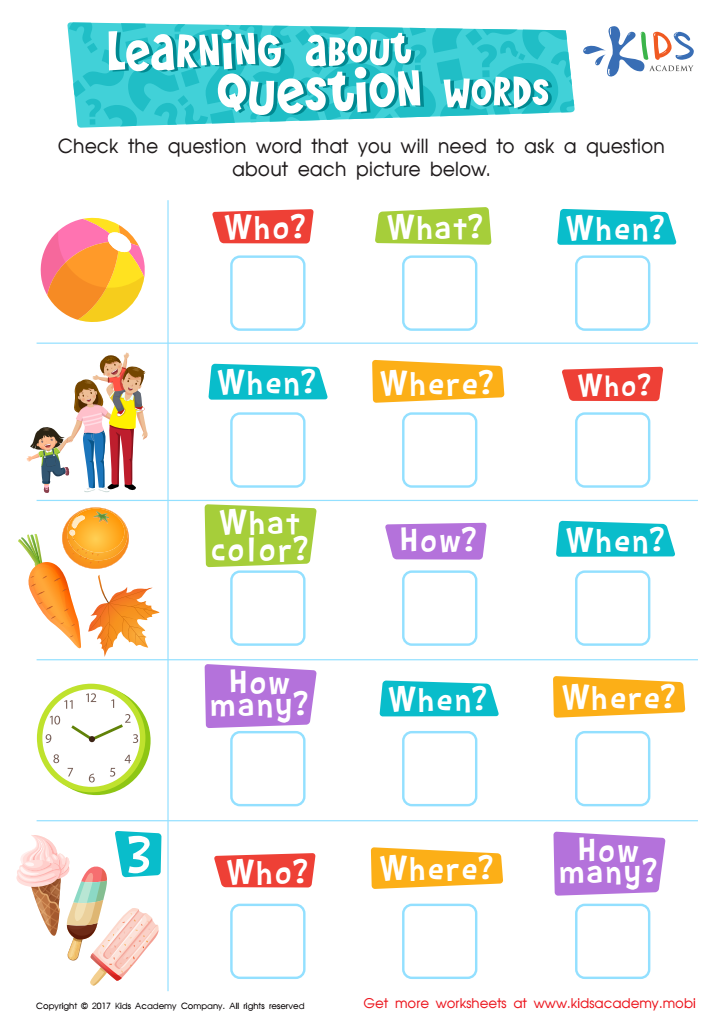
Learning about Question Words Worksheet
 Assign to My Students








Grammar practice and math skills are essential for children aged 3-8, as they form the foundation for effective communication and problem-solving abilities. Early exposure to grammar helps children develop language skills that are crucial for expressing thoughts, following instructions, and understanding written text. This is vital for their future academic success and daily interactions. When they become proficient in grammar, they gain confidence in using language effectively, enhancing their reading and writing capabilities.
On the other hand, math practice fosters critical thinking and logical reasoning. Early math skills prepare children for tasks involving counting, measurements, and basic operations, laying a crucial groundwork for advanced mathematical concepts. Moreover, the ability to communicate mathematical ideas effectively is just as important as mastering the operations themselves, linking grammar with math in promoting holistic learning.
Engaging children in playful and informal grammar and math activities makes learning enjoyable and helps cultivate a lifelong love for learning. When parents and teachers prioritize grammar and math practice, they equip children not just with knowledge, but with essential life skills that empower them to excel academically and socially.








