Handwriting Skills Math Worksheets for Ages 3-8
6 filtered results
-
From - To
Enhance your child's math and handwriting abilities with our expertly crafted worksheets designed for ages 3-8. At Kids Academy, our Handwriting Skills Math Worksheets blend fundamental math concepts with essential handwriting practice, fostering fine motor skills and number formation. These fun, engaging exercises cover counting, addition, subtraction, and more, ensuring your little learner excels in both subjects. Build a strong educational foundation while making math enjoyable and handwriting effortless. Ideal for preschoolers, kindergarteners, and early graders, our worksheets support continuous learning and cognitive development from the comfort of home. Unlock their potential today!
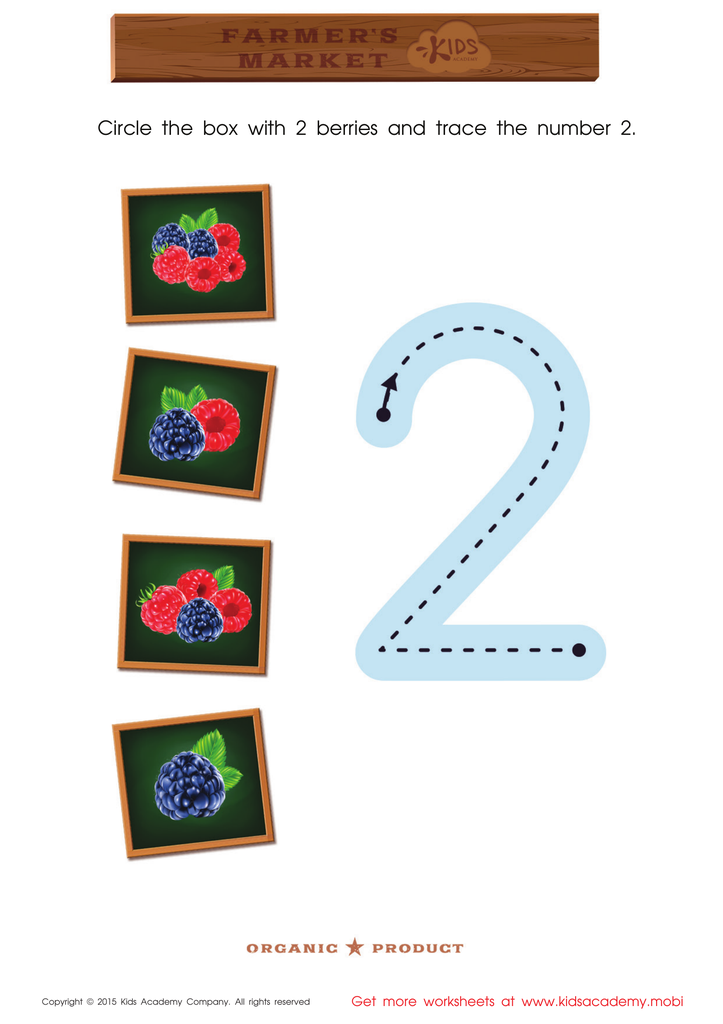
Count the Berries and Trace the Number 2 Printable
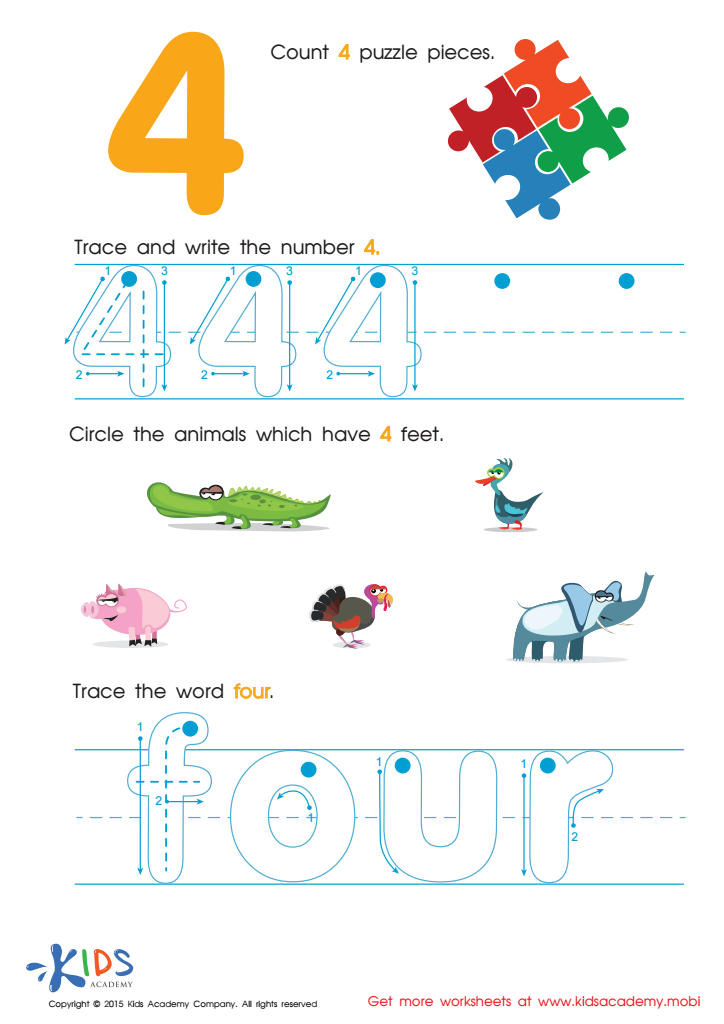
Teaching Children to Write Number 4 Worksheet
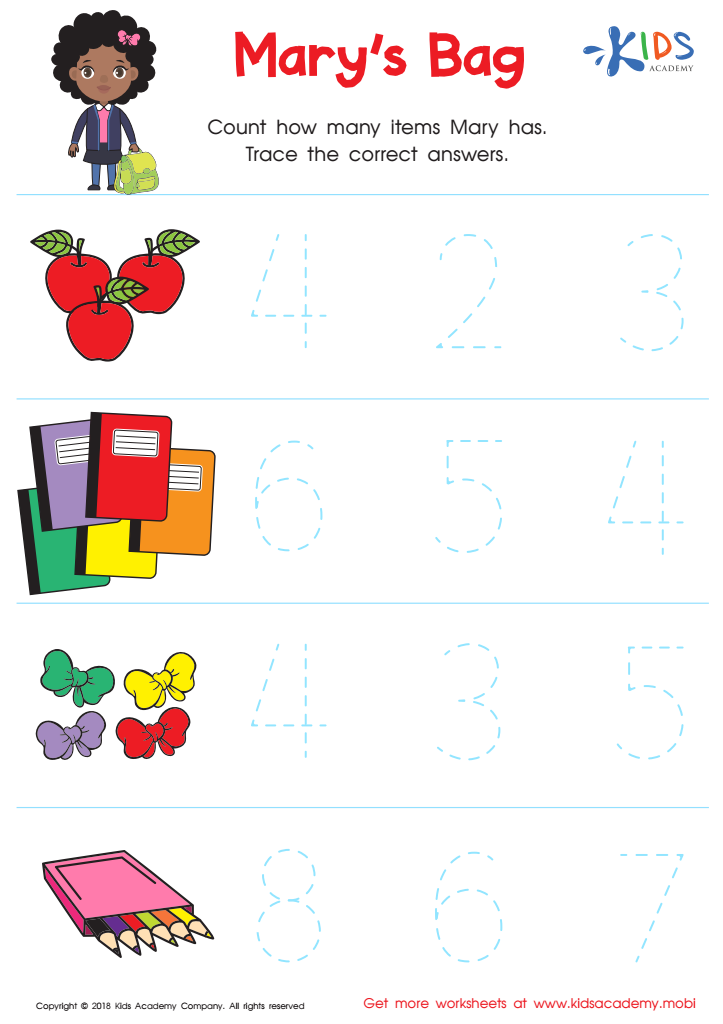
Kindergarten Number Tracing: Mary's Bag Worksheet
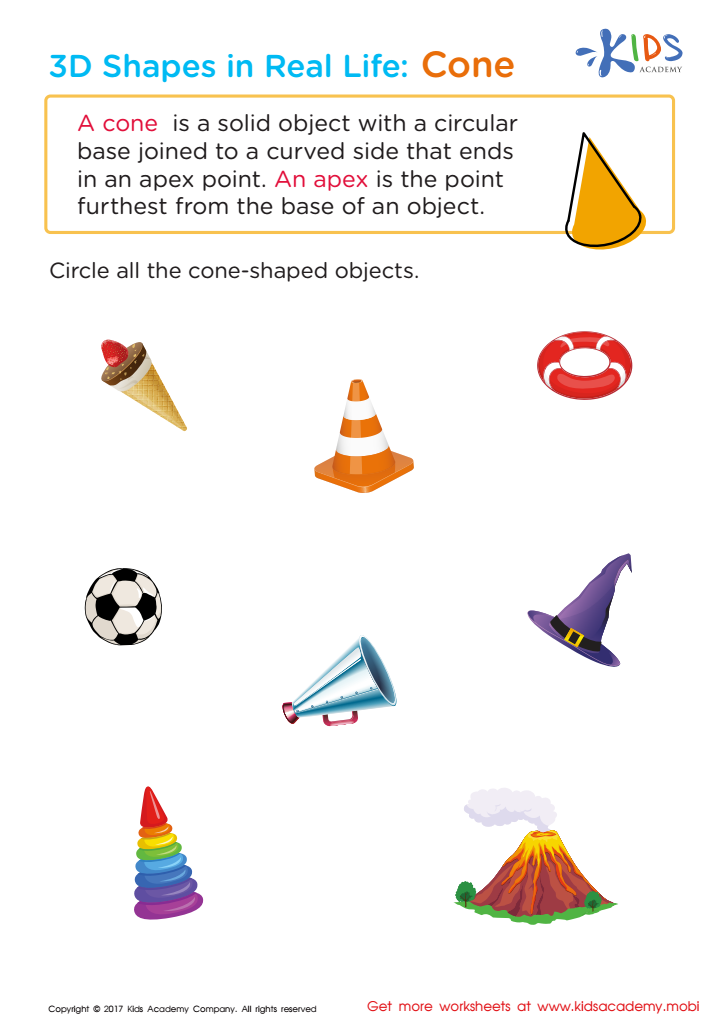
Shapes in Real Life: Cone Worksheet
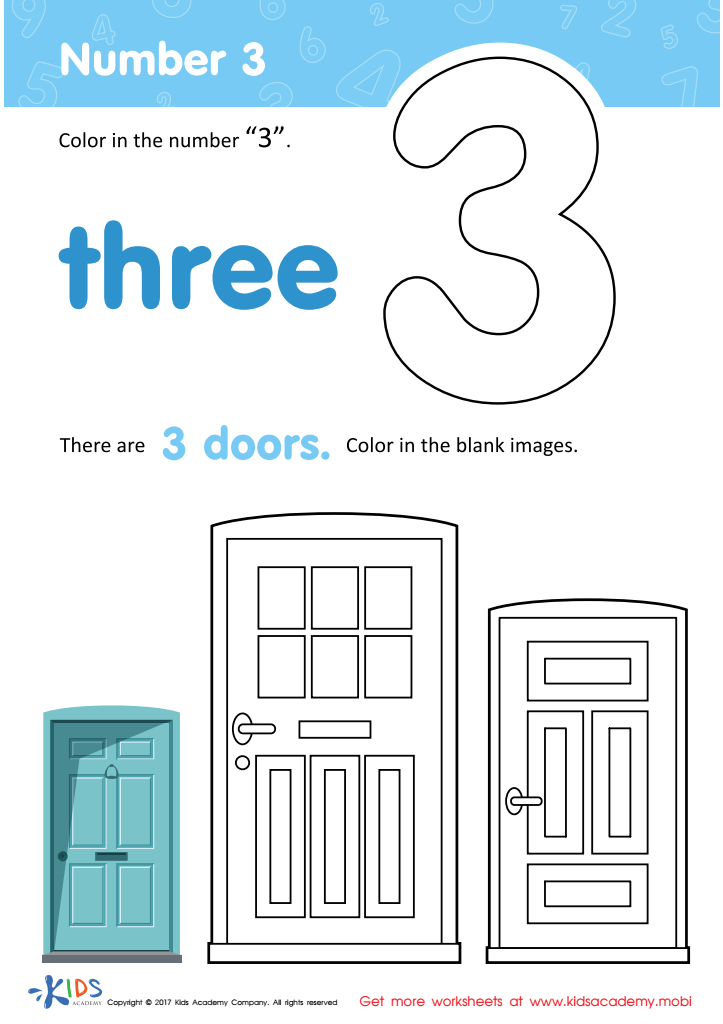
Number 3 Worksheet
 Assign to My Students
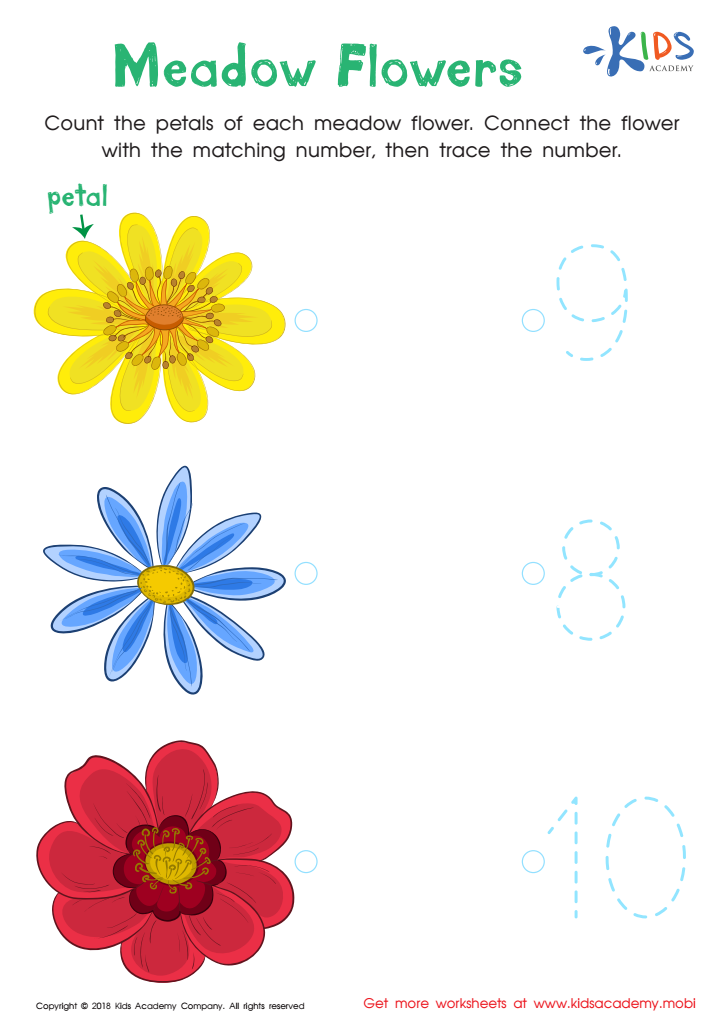
Kindergarten Number Tracing: Medow Flowers Worksheet



.jpg)




Handwriting skills for children aged 3-8 are foundational for both academic and overall cognitive development. When parents and teachers emphasize these skills, they provide children with crucial tools for learning and communication. Firstly, good handwriting contributes to better academic performance. When children can write neatly and efficiently, they develop greater comfort and confidence in their abilities, leading to improved performance in subjects like math. Writing numbers and mathematical symbols accurately helps avoid confusion and errors, allowing young learners to focus on solving problems rather than deciphering their notes.
Moreover, handwriting fosters fine motor skills and hand-eye coordination. These physical skills are essential not only for writing but also for everyday tasks like dressing, tying shoelaces, and using utensils. These activities naturally incline children towards greater independence and self-sufficiency.
Handwriting practices also enhance cognitive development by encouraging children to plan, organize, and execute a series of steps—a process that is fundamentally linked to efficient problem-solving in math. Additionally, the act of physically writing stimulates brain activity, leading to better memory retention and understanding.
Finally, developing legible handwriting nurtures a child's self-expression and confidence. When children can communicate their ideas clearly, they're more likely to participate fully in academic and social situations, ultimately paving the way for a lifetime of achievement and self-assurance.








