Identifying Animals Math Worksheets for Ages 3-8
5 filtered results
-
From - To
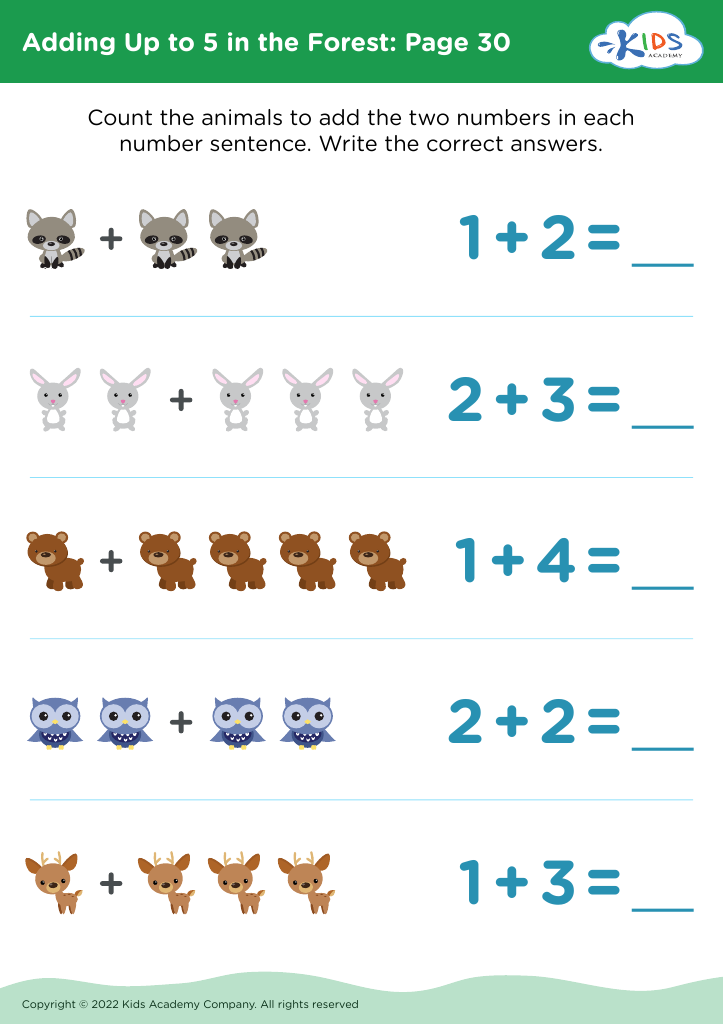
Explore our engaging "Identifying Animals Math Worksheets" designed for children ages 3-8! These interactive worksheets blend math skills with the exciting world of animals, making learning fun and effective. Young learners will strengthen their counting, sorting, and pattern recognition abilities while discovering a variety of animal species. Our thoughtfully crafted activities cater to different age groups, ensuring each child can learn at their own pace. With vibrant illustrations and easy-to-follow instructions, these worksheets are perfect for home or school use. Encourage your child’s love for animals and math today! Download now and watch their skills grow through playful learning!
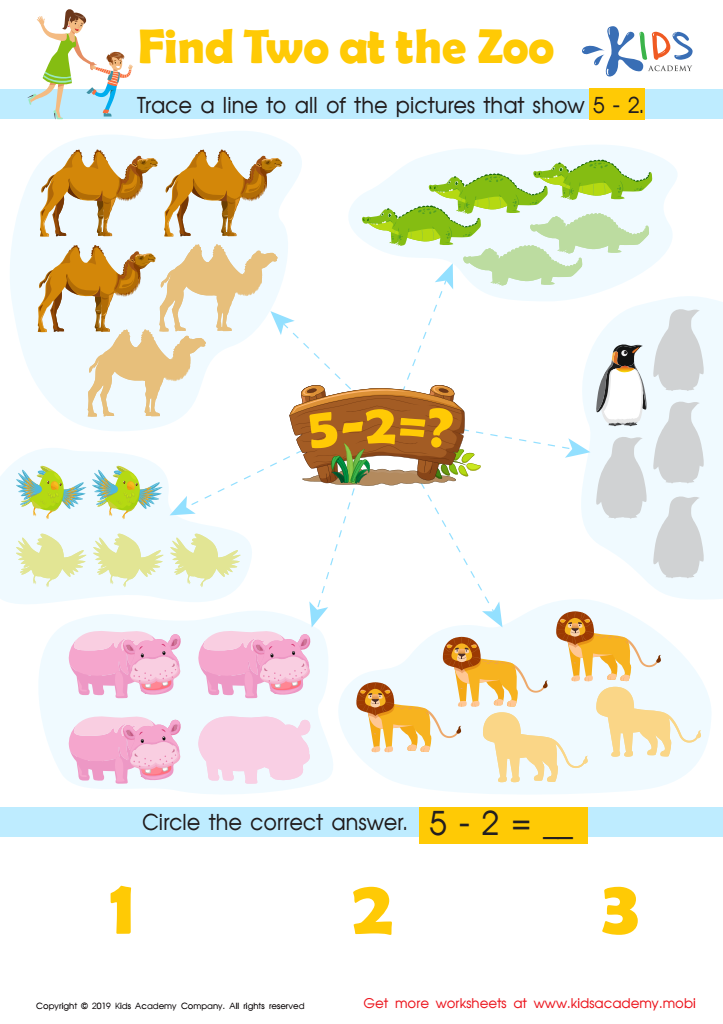
Find Two at the Zoo Worksheet
 Assign to My Students



.jpg)




Identifying animals through math activities is crucial for children aged 3-8, as it offers a unique blend of education and engagement that fosters both cognitive and social development. First, integrating math concepts such as counting, sorting, and pattern recognition with animals provides a relatable and stimulating context for young learners. For example, counting various animal types reinforces number recognition, while sorting animals by size or color enhances critical thinking skills.
Additionally, such activities help ignite children's curiosity about the natural world, encouraging them to learn about different species, their habitats, and behaviors. This not only enriches their vocabulary but also promotes empathy and respect for living beings. Furthermore, collaborating in small groups during animal-related math games enhances social skills, as children learn to communicate, share, and solve problems together.
Finally, these activities foster early numeracy skills that are foundational for future academic achievements. By engaging in playful learning experiences related to animals, parents and teachers lay a strong groundwork for lifelong curiosity and a love for mathematics, making an impact that extends beyond the classroom. Therefore, emphasizing Identifying Animals Math is a well-rounded approach to nurturing holistic child development during these formative years.








