Improve mathematical skills Math Worksheets for Ages 3-8
3 filtered results
-
From - To
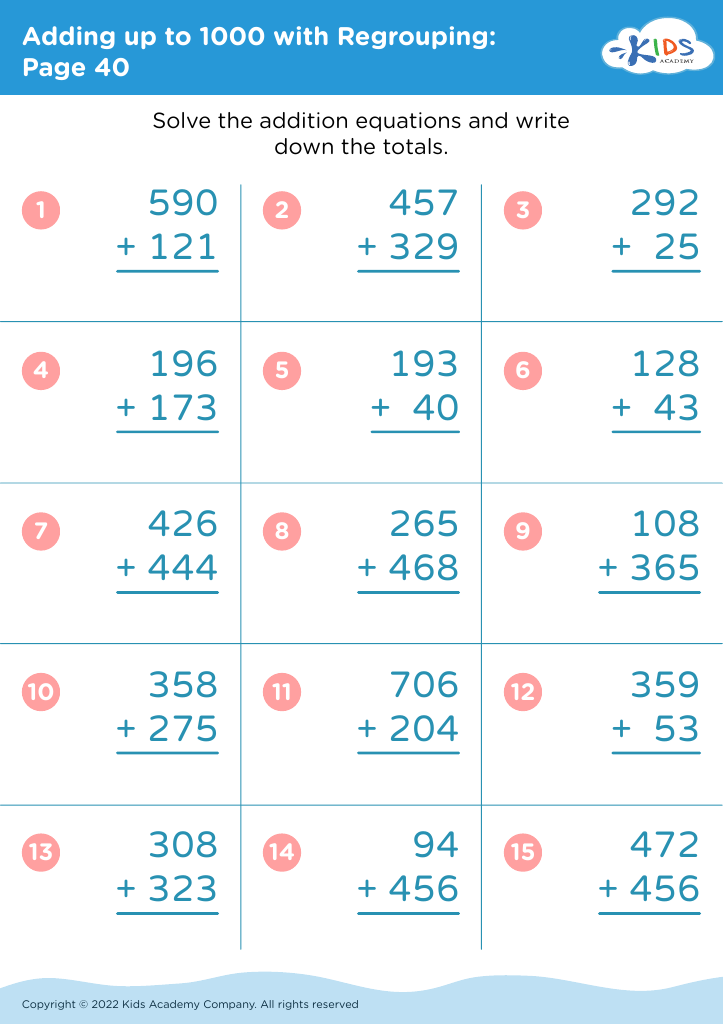
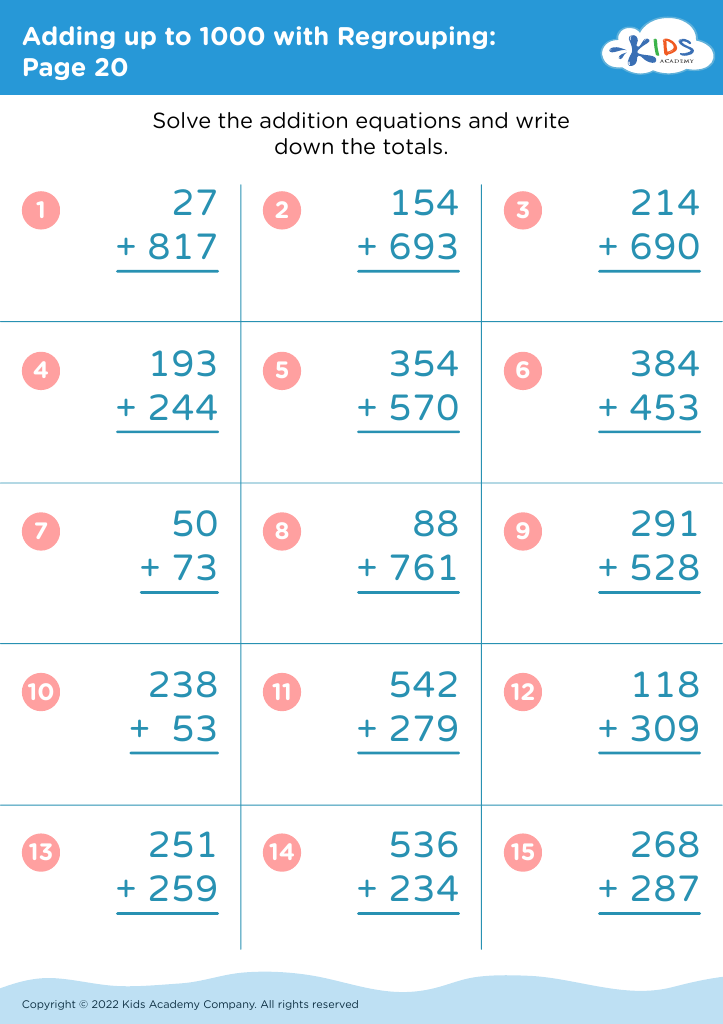
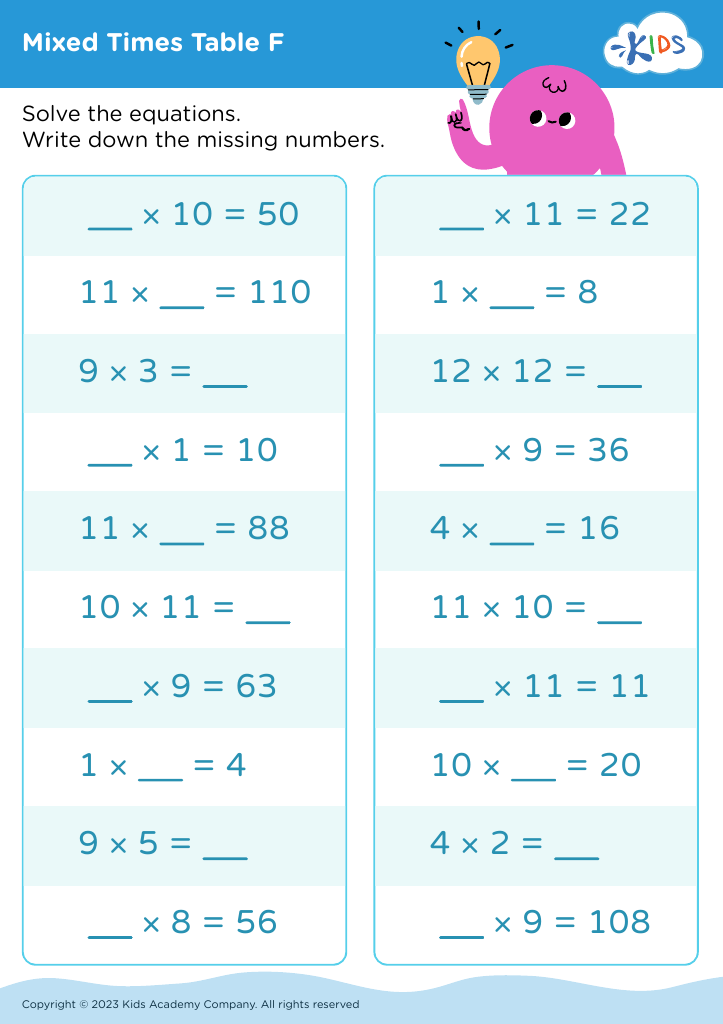
Enhance your child's mathematical skills with our engaging Math Worksheets designed specifically for ages 3-8! Our resources facilitate interactive learning through fun games, puzzles, and colorful visuals, making math enjoyable and accessible. These worksheets cover essential concepts such as counting, addition, subtraction, and shape recognition, providing children with a strong foundation in early math. Each worksheet is crafted to stimulate critical thinking and problem-solving skills while allowing kids to practice at their own pace. Foster a love for numbers and improve their academic performance—explore our collection today and watch your little one flourish in math!




.jpg)



Parents and teachers should care about improving mathematical skills for children aged 3-8 because early math proficiency lays the groundwork for future academic success. At this developmental stage, children are naturally curious, and engaging them in mathematical concepts can enhance critical thinking and problem-solving abilities. By fostering a strong mathematical foundation, parents and educators promote cognitive development, as children learn to identify patterns, make sense of numbers, and understand spatial relationships.
Furthermore, strong math skills correlate with literacy and overall educational performance, helping children perform better in school and boosting their confidence. When children feel capable in math, they are more likely to participate actively in classroom discussions and take on challenges, cultivating a growth mindset.
Engaging children in enjoyable, hands-on mathematical experiences also enhances social skills, as they often collaborate with peers or family members during activities. Ultimately, investing in early math skills not only prepares children for the demands of higher education but also equips them with essential life skills such as managing finances, making informed decisions, and approaching everyday challenges logically. By prioritizing math education, parents and teachers can inspire a lasting appreciation for learning that extends well beyond the classroom.








