Improve writing skills Math Worksheets for Ages 3-8
3 filtered results
-
From - To
Enhance your child's writing abilities with our engaging "Improve Writing Skills Math Worksheets" designed for ages 3-8! These worksheets feature a delightful blend of math and writing exercises that promote early literacy while reinforcing essential math concepts. Each activity encourages kids to practice their handwriting, spell key vocabulary, and solve simple math problems, fostering a fun learning environment. Perfect for home or classroom use, these worksheets cater to diverse learning styles and help build confidence in young learners. Explore our carefully crafted resources and watch your child thrive in both writing and math skills! Get started today!
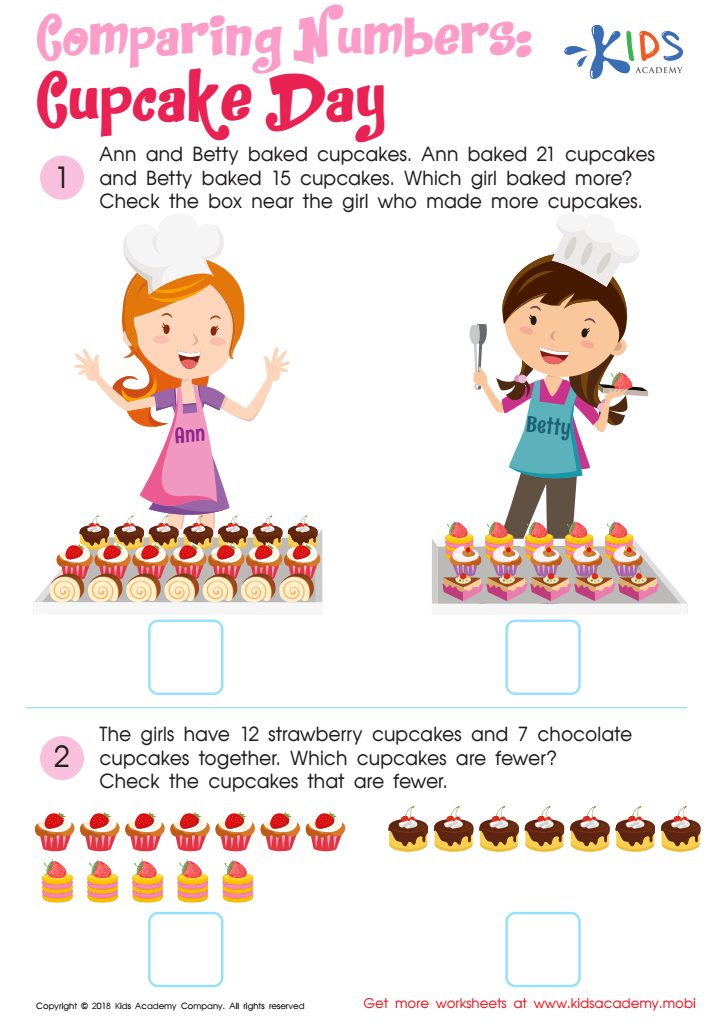
Cupcake Day Worksheet
 Assign to My Students







Parents and teachers should prioritize improving writing skills in young children, particularly between the ages of 3 to 8, as these foundational skills significantly enhance overall learning capabilities, especially in subjects like math. Writing facilitates the development of critical thinking and cognitive skills, allowing children to express their understanding of mathematical concepts clearly. When children learn to articulate their thought processes through writing, they gain a deeper comprehension of arithmetic operations and problem-solving techniques.
Furthermore, well-developed writing skills contribute to effective communication, which is vital in collaborative learning environments. Children who can write about mathematical challenges can share their ideas, discuss methods, and seek help more easily, fostering a productive learning atmosphere.
In addition, emphasizing writing in these formative years supports language development, enhancing vocabulary and comprehension, which are essential not only in math but across all subjects. Encouraging children to jot down their thought processes during math activities also cultivates patience, attention to detail, and confidence in their abilities.
Ultimately, nurturing writing skills strengthens the overall academic foundation of young learners, ensuring they are better equipped for more complex learning experiences in the future and fostering a lifelong love of learning.








