Money addition skills Math Worksheets for Ages 3-8
3 filtered results
-
From - To
Enhance your child’s math and money handling skills with our “Money Addition Skills Math Worksheets” designed for ages 3-8! These engaging worksheets are perfect for young learners to practice adding different coins and bills, helping them grasp the concept of money quickly and enjoyably. Featuring colorful illustrations and simple problems, each worksheet offers hands-on practice that supports your child in building a strong math foundation. With our printable activities, children will learn to count and add money, making real-life scenarios easier to understand. Prepare your little ones for future financial literacy and boost their confidence today with Kids Academy!
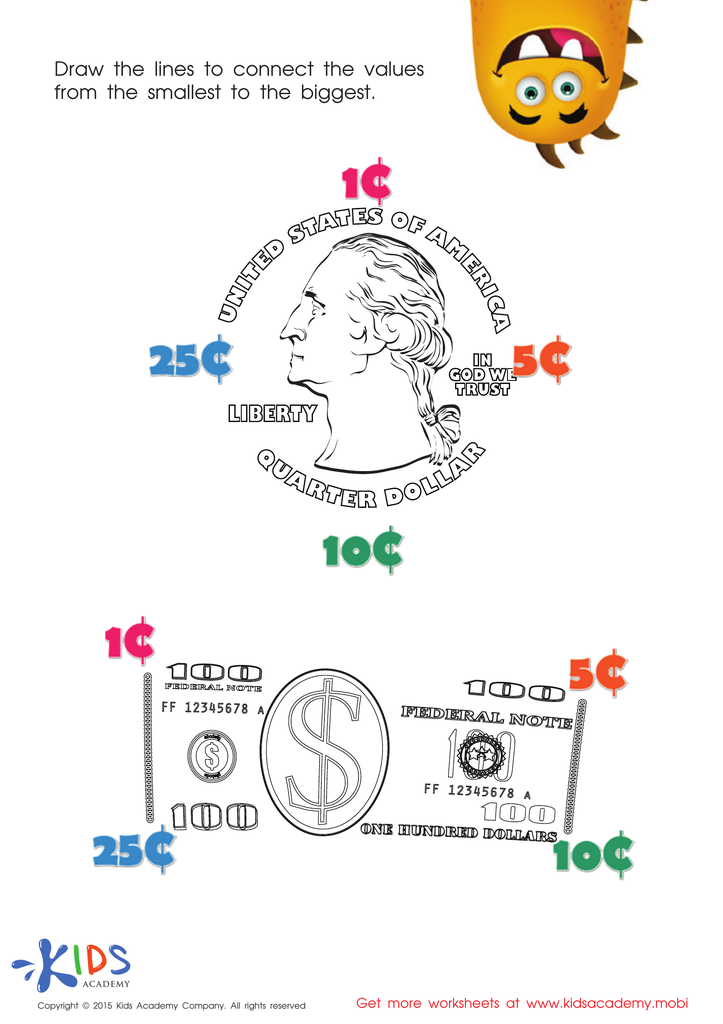
Connecting the Values Money Worksheet
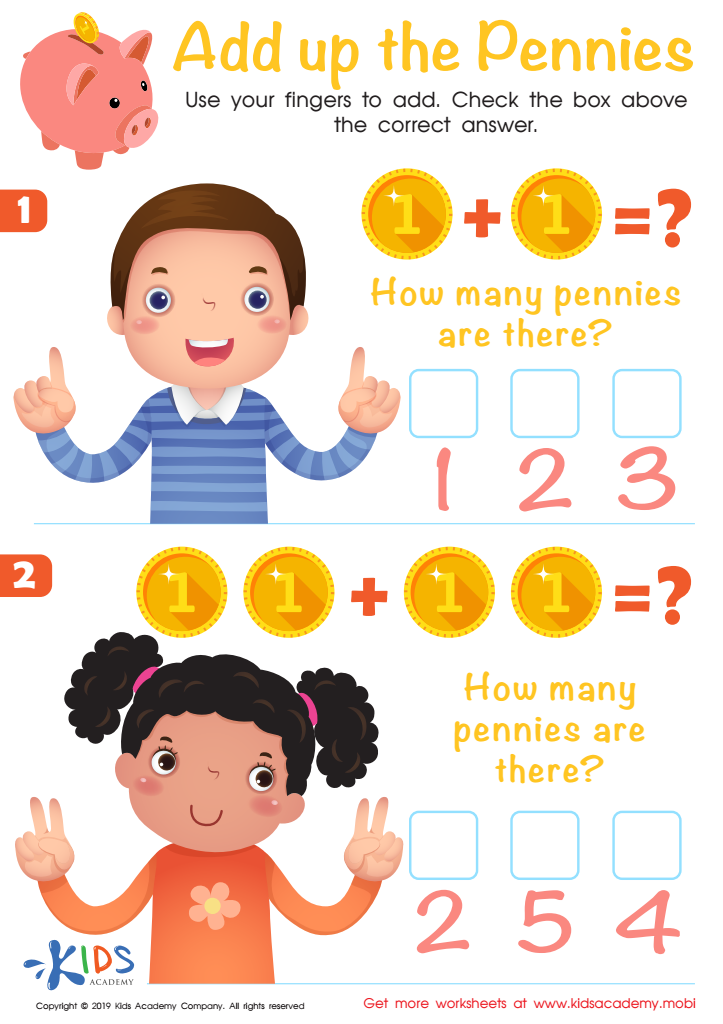
Add up the Pennies Worksheet
 Assign to My Students
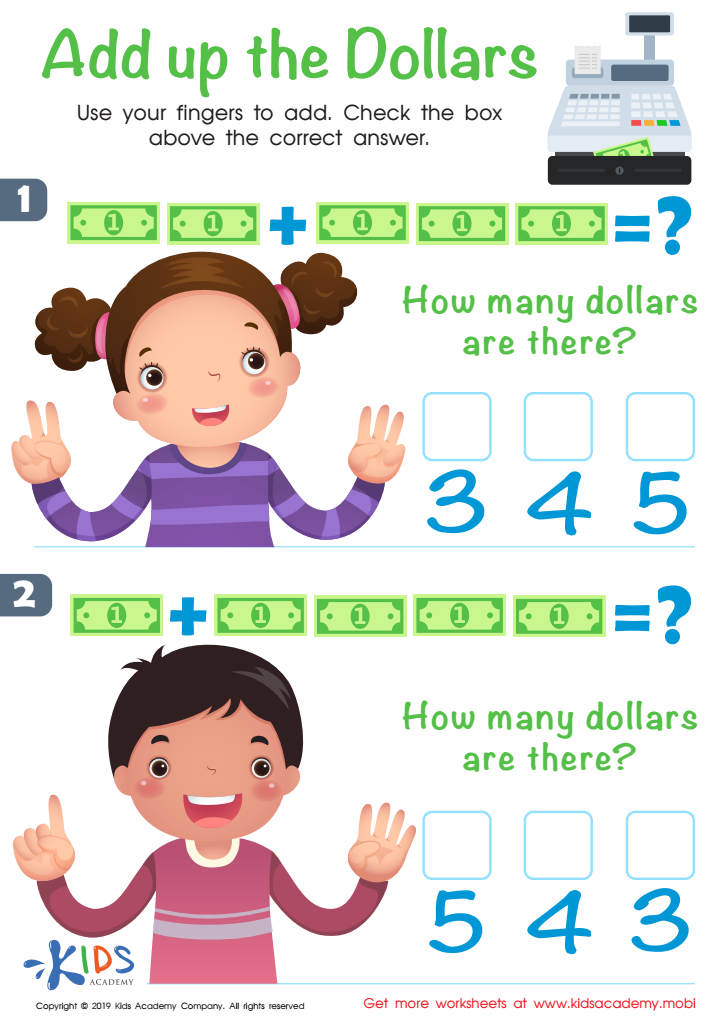
Add up the Dollars Worksheet








Parents and teachers should prioritize money addition skills for children aged 3-8 as these foundational skills are crucial for their overall cognitive development and future financial literacy. During these formative years, young minds are like sponges, adept at absorbing new concepts. Introducing money addition helps children grasp the basic principles of mathematics, including counting, number recognition, and the concept of value. These skills are not only essential for academic success but also for real-world applications.
By engaging children with money-related math, parents and teachers foster a deeper understanding of everyday financial transactions, laying the groundwork for responsible money management in the future. These early lessons cultivate a sense of confidence and independence, as children learn to make simple purchases and understand the importance of saving and budgeting. Furthermore, such activities can boost problem-solving skills and logical thinking, as kids learn to add varying denominations and understand how different coins and notes combine to form a specific amount.
Incorporating money addition in early education also makes learning more interactive and practical. Using real-world scenarios and tangible items like coins and play money can make math more relatable and exciting, keeping children engaged and making abstract concepts easier to comprehend. Thus, investing time in teaching young children money addition is an investment in their future financial well-being and overall competence.








