Number representation Math Worksheets for Ages 3-8
4 filtered results
-
From - To
Welcome to our engaging collection of Number Representation Math Worksheets, designed for children ages 3 to 8! These worksheets provide a fun and interactive way for young learners to explore essential math concepts. With vibrant illustrations and user-friendly formats, children will develop number recognition, counting skills, and an understanding of quantity. Our carefully crafted activities cater to varying skill levels, ensuring all kids can thrive as they master number representation. Encourage your child's confidence and competence in math through our dynamic resources, making learning an enjoyable adventure. Dive into the world of numbers today and watch your child flourish!
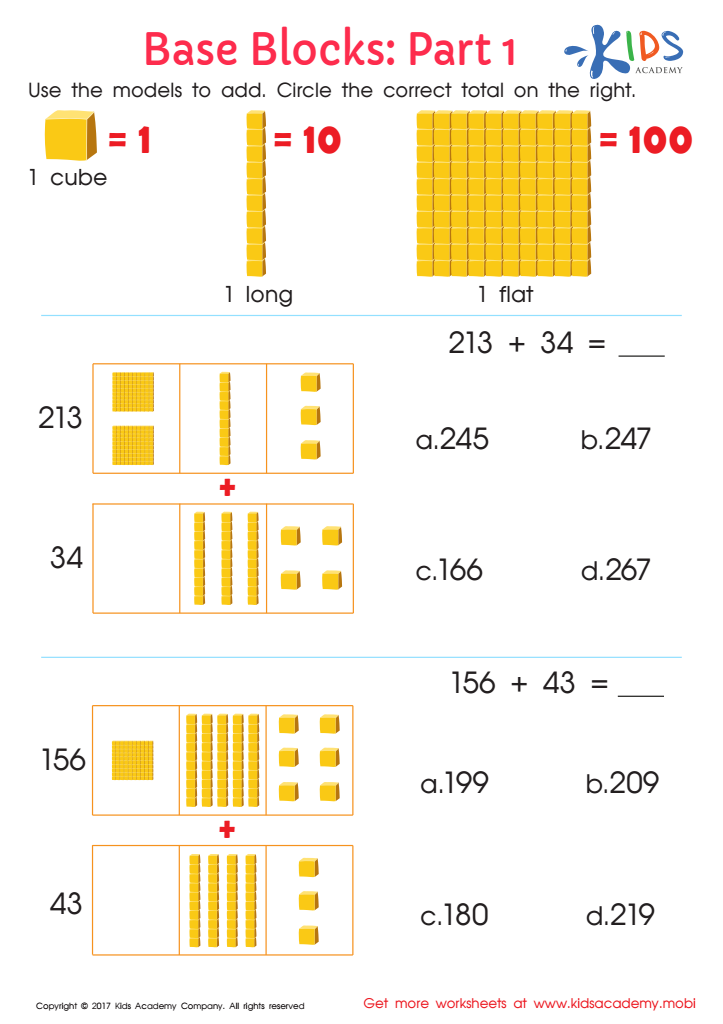
Base Ten Blocks Worksheet: Part 1
 Assign to My Students
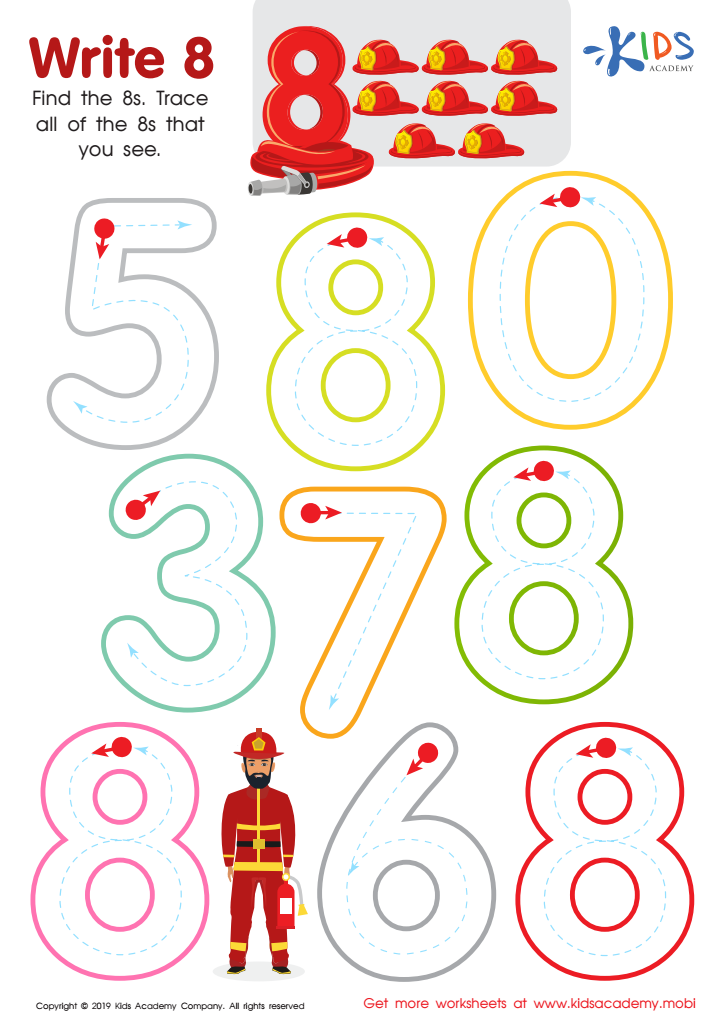
Write 8 Worksheet
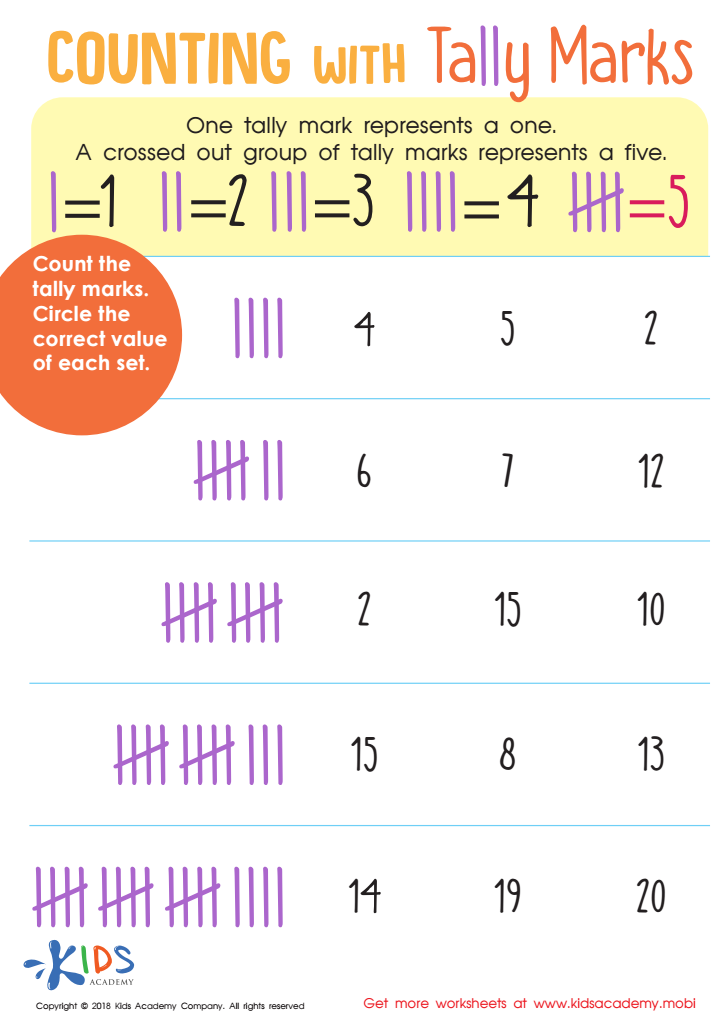
Counting with Tally Marks Worksheet
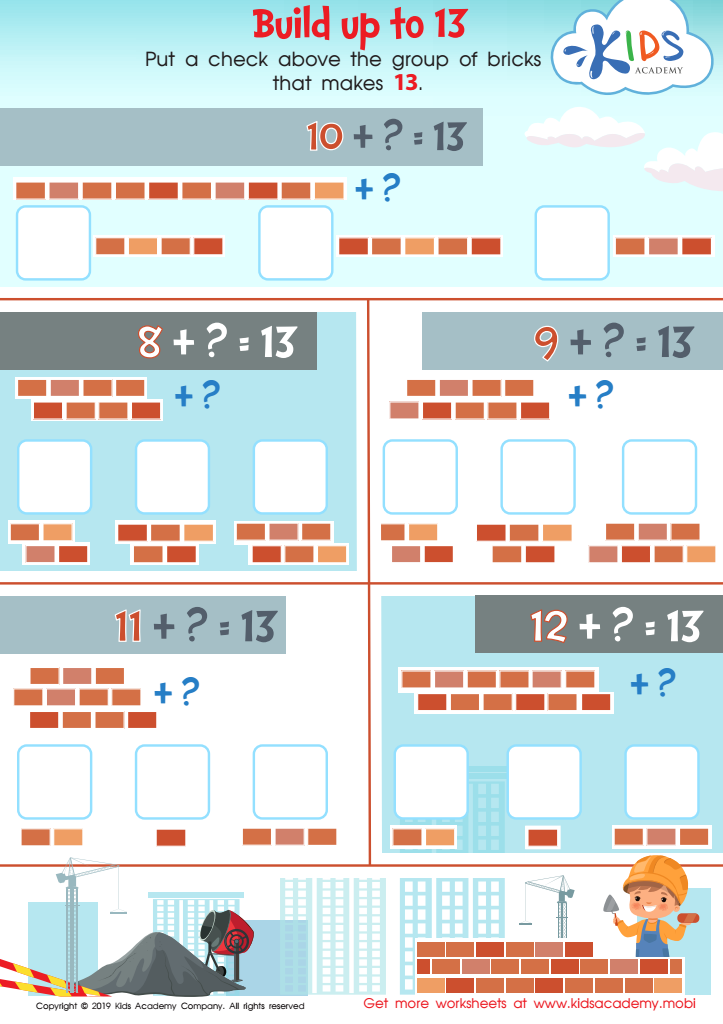
Build up to 13 Worksheet








Understanding number representation is crucial for children aged 3-8 as it lays the foundation for their mathematical development. At this early stage, children begin to grasp abstract concepts through concrete representations such as counting objects, recognizing symbols, and understanding quantities. When parents and teachers emphasize number representation, they help children make connections between numerical symbols and the real world.
Early exposure to number representation fosters strong mathematical fluency, critical thinking, and problem-solving skills. It allows children to communicate their understanding of math concepts, develop confidence, and enjoy learning. Activities that incorporate visual aids, manipulative tools, or interactive games can engage young learners and accommodate various learning styles.
Moreover, number representation helps bridge the gap between concrete thinking and the abstract reasoning needed in advanced mathematics. Investing time in this foundational skill also underscores its significance across the curriculum, as it plays a vital role in subjects beyond math, like science and engineering.
Ultimately, when parents and teachers prioritize number representation, they're not only enhancing mathematical skills but also cultivating a positive attitude towards learning, encouraging curiosity, and providing the necessary tools for lifelong success. This foundational work is essential for children's later academic achievement and real-world problem-solving abilities.








