Practicing Arithmetic Skills Math Worksheets for Ages 3-8
3 filtered results
-
From - To
Discover our engaging "Practicing Arithmetic Skills Math Worksheets" designed specifically for children ages 3-8! These worksheets provide a fun and interactive way to reinforce essential math concepts through colorful illustrations and age-appropriate activities. Your child will practice addition, subtraction, and early problem-solving skills, helping them build a strong foundation in arithmetic. Perfect for both homeschooling and classroom settings, our resources cater to various learning styles and encourage independent practice. With our comprehensive worksheets, children will boost their confidence and proficiency in math while enjoying the process. Download now to make learning arithmetic an enjoyable adventure for your little mathematicians!
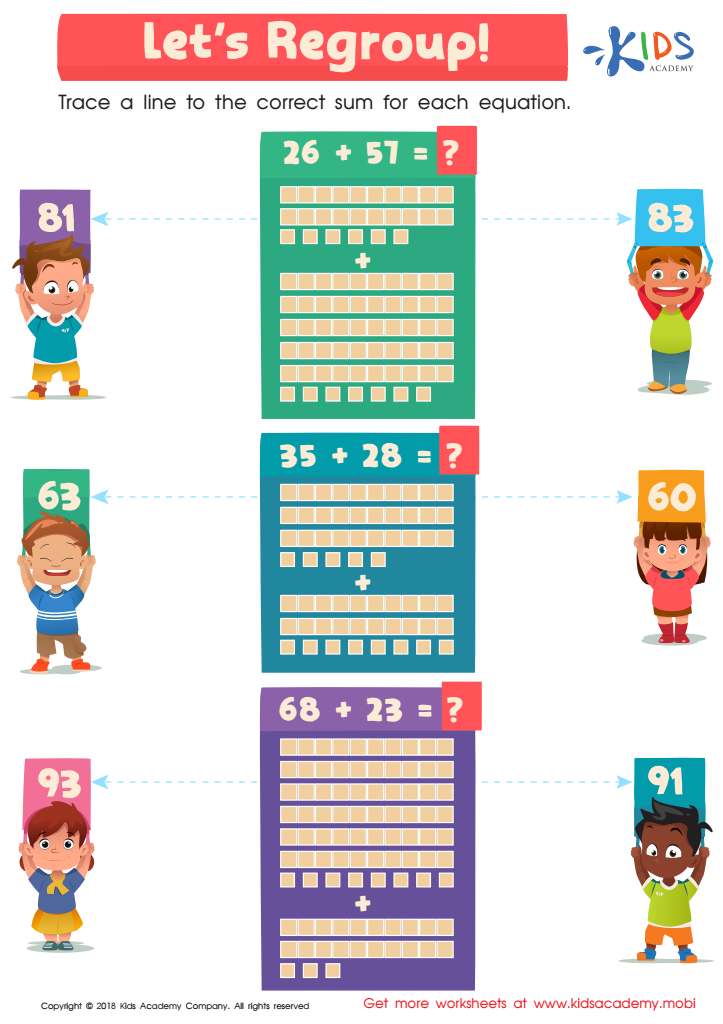
Let's Regroup Worksheet
 Assign to My Students
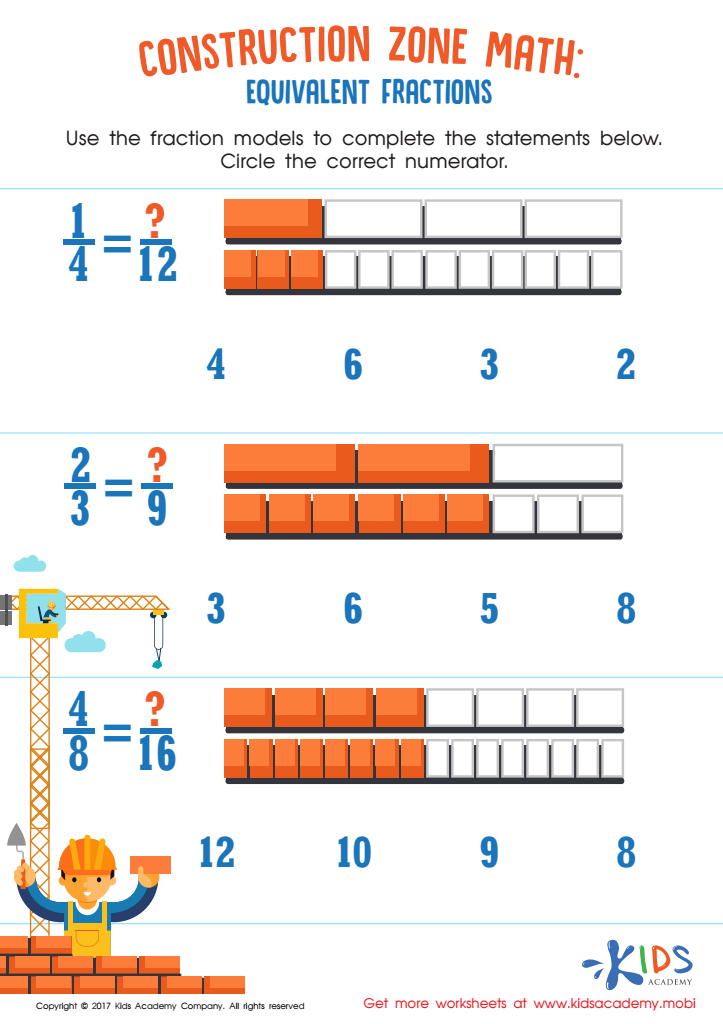
Equivalent Fractions Worksheet
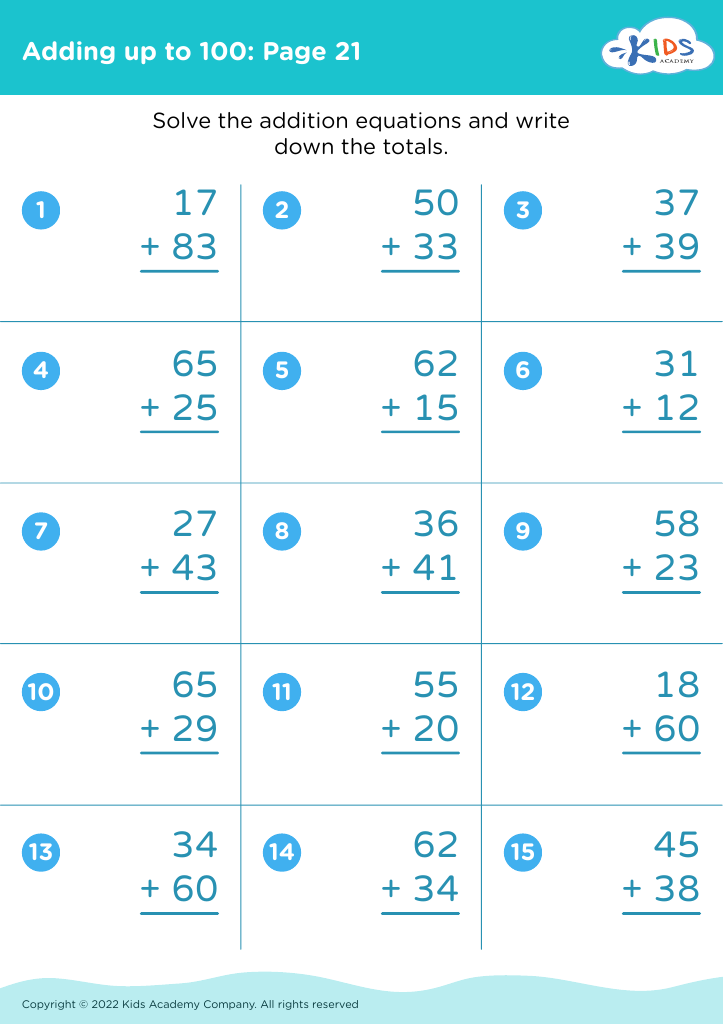







Practicing arithmetic skills for children aged 3 to 8 is essential for several reasons. Early childhood is a critical period for cognitive development, where foundational math skills significantly impact future learning outcomes. Engaging in arithmetic helps build number sense, which is crucial for understanding more complex mathematical concepts later on.
Moreover, regular practice enhances problem-solving abilities, fostering critical thinking and analytical skills. Simple activities, such as counting objects, solving basic addition and subtraction problems, or playing number games, make learning fun and interactive. This playful approach encourages a positive attitude toward math, reducing anxiety and building confidence.
Furthermore, strong arithmetic skills contribute to academic success across disciplines. Many subjects, including science and even reading comprehension, require basic math knowledge for interpreting data and understanding quantity relationships. Parents and teachers play a vital role in creating a supportive learning environment. By incorporating math into everyday activities—like cooking or shopping—adults can demonstrate the practical applications of math in real life, reinforcing its importance.
Ultimately, nurturing arithmetic skills from a young age helps set children on a path toward lifelong learning, equipping them with the ability to tackle increasingly complex mathematical challenges in their future education.








