Shape comparison Math Worksheets for Ages 3-8
4 filtered results
-
From - To
Unlock the world of geometry with our Shape Comparison Math Worksheets designed for ages 3-8. These interactive printables help young learners grasp fundamental skills like identifying, comparing, and contrasting shapes in a fun and engaging way. Each worksheet is tailored to develop critical thinking and enhance visual perception in young children. Perfect for classroom use or at-home practice, our worksheets cater to varying skill levels, promoting progressive learning. Watch as your child confidently explores shapes through exciting activities that build a solid foundation for future math success. Discover these essential resources at Kids Academy!
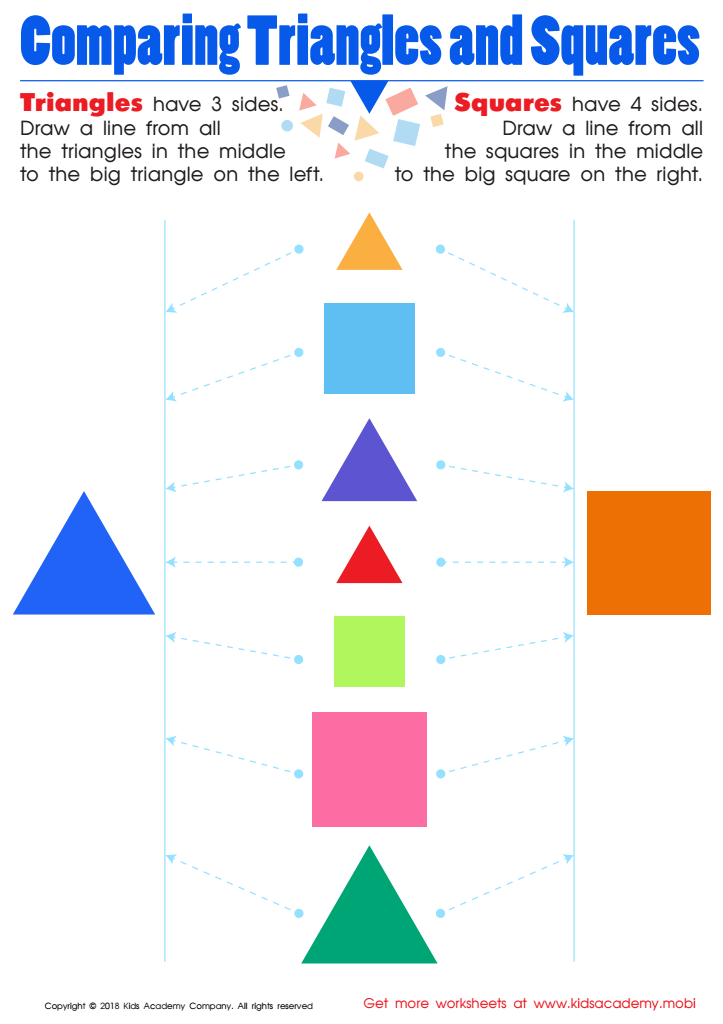
Comparing Triangles Squares Worksheet
 Assign to My Students
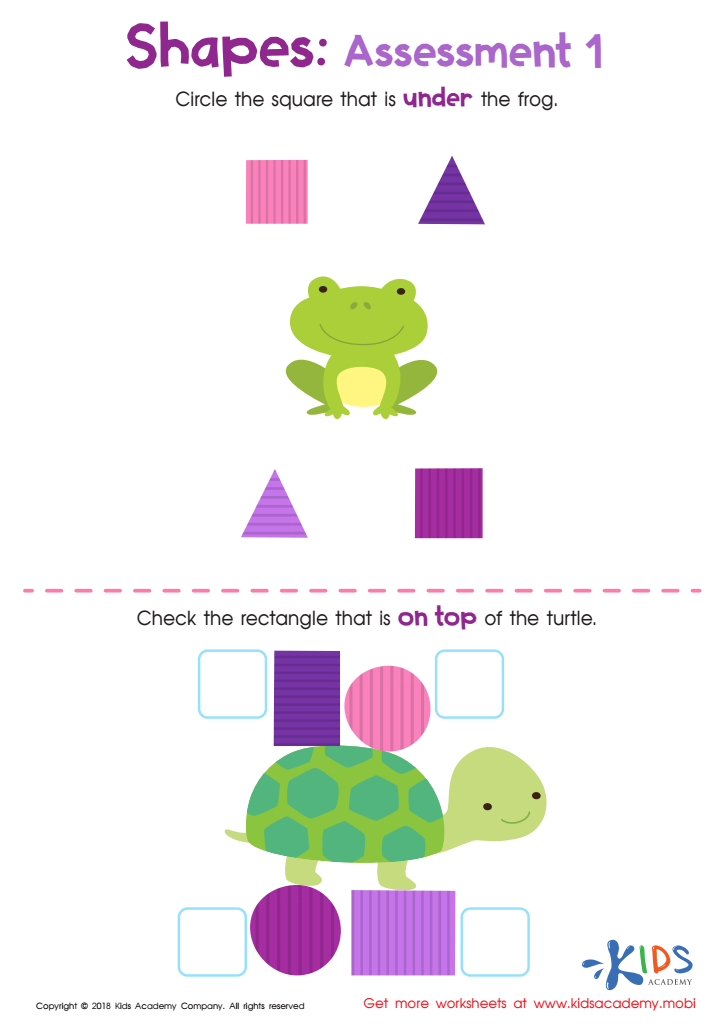
Geometry – Assessment 1 Worksheet
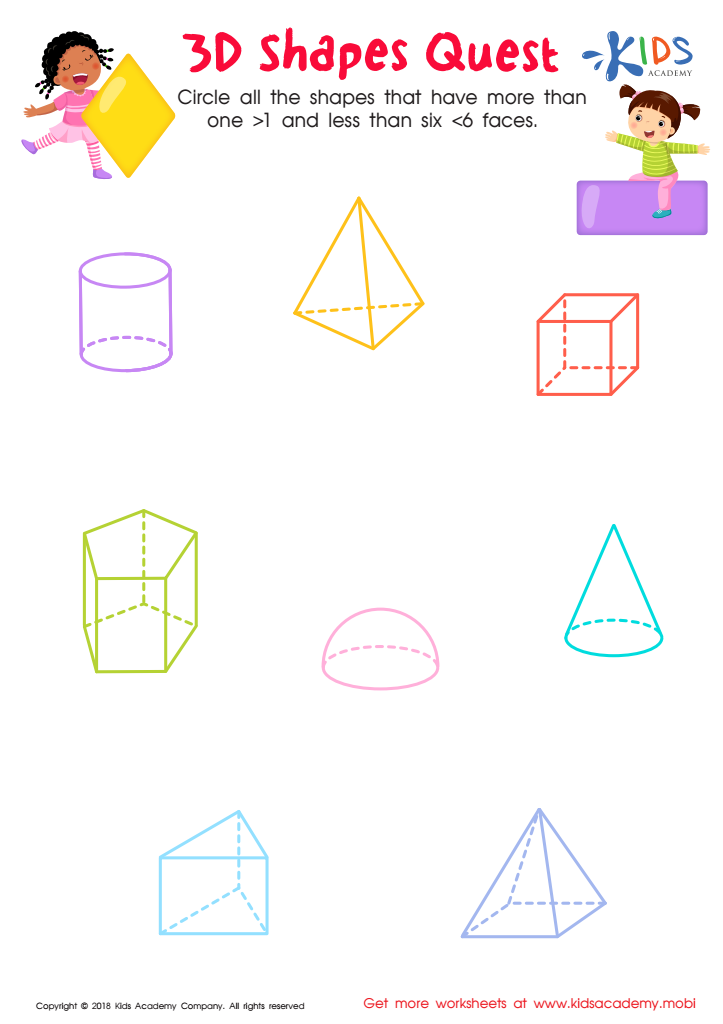
3D Shapes Quest Worksheet
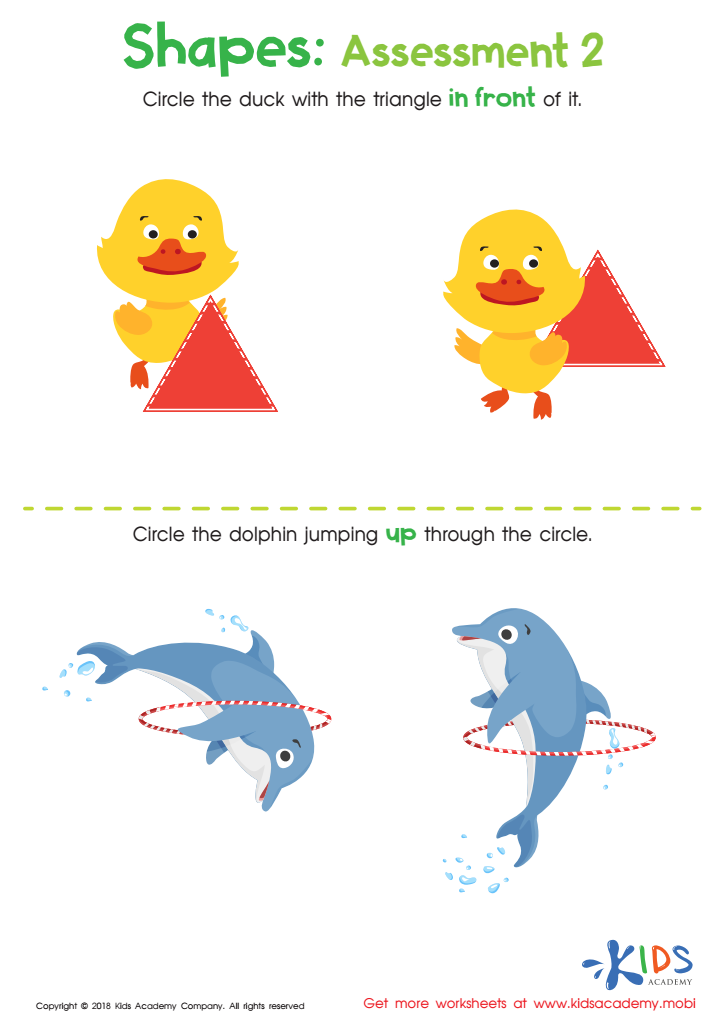
Geometry – Assessment 2 Worksheet






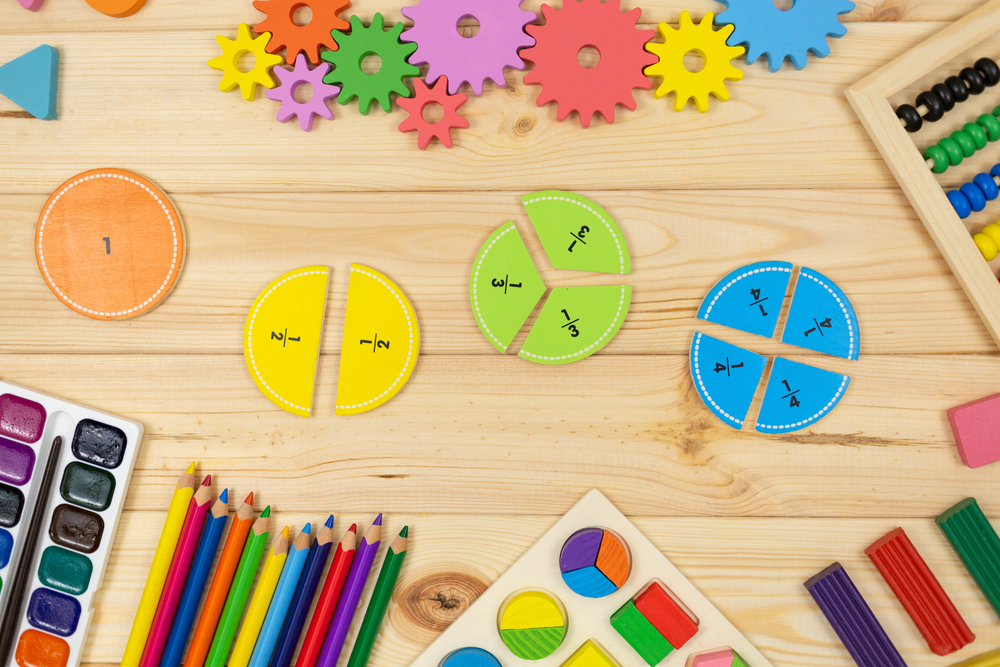
Shape comparison activities are foundational to mathematical learning for children aged 3-8. Engaging in these activities helps young learners develop critical spatial awareness and geometry skills. Here's why parents and teachers should care:
-
Cognitive Development: Shape comparison enhances cognitive processes, promoting problem-solving and analytical thinking. Children learn to observe similarities, differences, and patterns, aiding overall intellectual growth.
-
Language Skills: Using descriptive language to compare shapes strengthens verbal skills. Terms like "bigger," "smaller," "taller," and "shorter" become part of their vocabulary, fostering better communication.
-
Math Readiness: Understanding shapes and their properties is a stepping stone to more complex mathematical concepts such as symmetry, fractions, and geometry. Early exposure lays a strong groundwork.
-
Fine Motor Skills: Manipulating shapes through drawing or playing with blocks improves hand-eye coordination and fine motor skills, which are crucial for writing and other tasks.
-
Real-World Connections: Recognizing and comparing shapes helps children make sense of the world. They learn to identify shapes in everyday objects, enhancing observational skills and practical knowledge.
-
Confidence and Enjoyment: Fun and interactive activities boost confidence. Children feel a sense of achievement when they can recognize and describe shapes, fostering a positive attitude towards math.
Investing time in shape comparison exercises equips children with essential skills, making learning engaging and paving the way for future academic success.








