
Understanding equality Math Worksheets for Ages 3-8
7 filtered results
Difficulty Level
Grade
Age
-
From - To
Subject
Activity
Standards
Unlock the world of equality for young learners with our engaging math worksheets designed for ages 3-8! Our comprehensive worksheets make understanding equality fun and accessible, sparking curiosity and fostering a love for math. Through interactive activities featuring shapes, numbers, and simple equations, children build foundational skills and critical thinking. These worksheets are tailored to align with early education standards, ensuring each child progresses at their own pace. Whether used in the classroom or at home, our printable worksheets encourage hands-on learning, making abstract concepts concrete and understandable. Help your child thrive in math with Kids Academy's equality worksheets!
Favorites
With answer key
Interactive
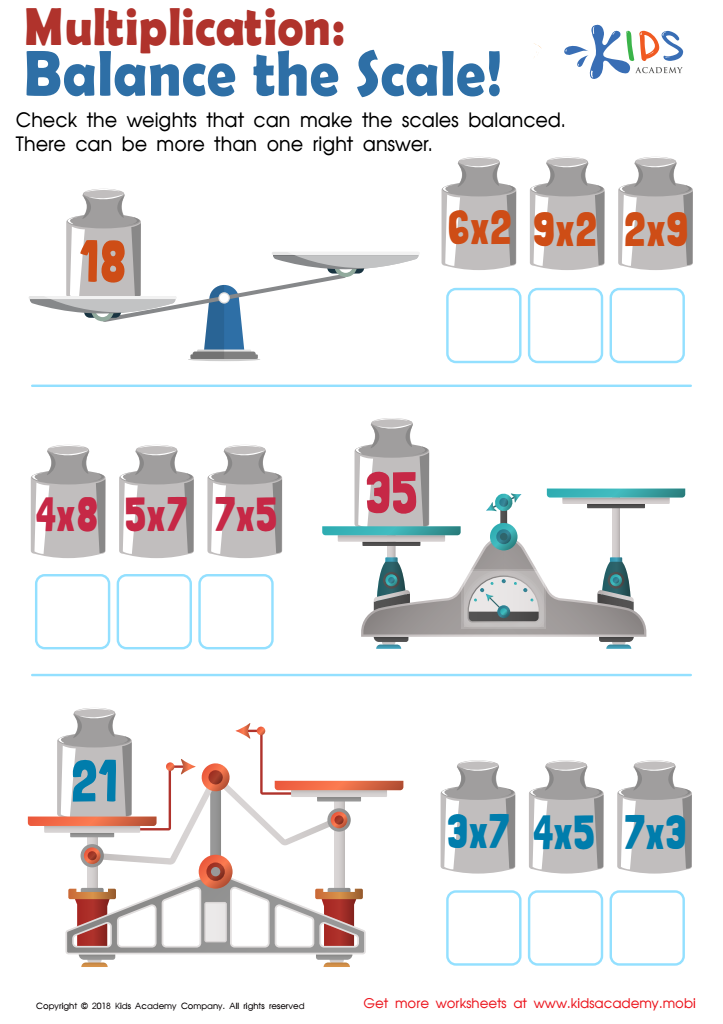
Balance the Scales Multiplication Worksheet
Challenge your child to practice math with our 'Balance the Scales' multiplication worksheet! Get them to solve each multiplication problem and select the weights that make them equal. Hint: it might be more than one!
 Assign to My Students
Balance the Scales Multiplication Worksheet
Worksheet
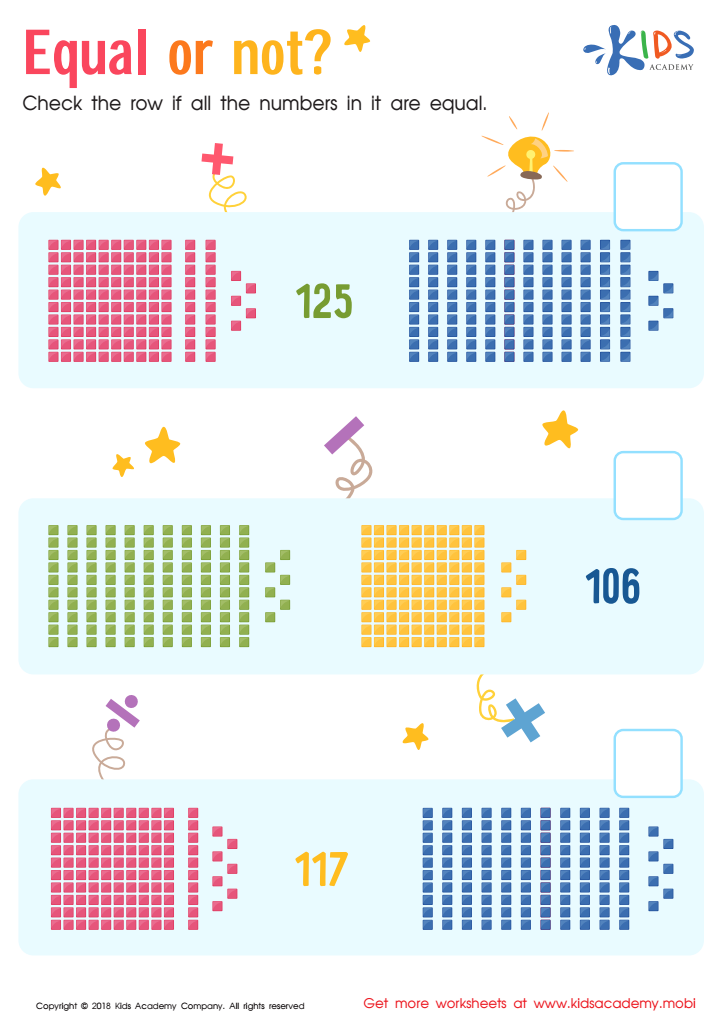
Equal or not Worksheet
To grow your child's learning, challenge them with new tasks. Stimulate their brains with activities that will build their knowledge and thinking skills. Take advantage of this worksheet exercise: ask your child to check the rows where all the numbers are equal. This simple exercise will improve their learning.
Equal or not Worksheet
Worksheet
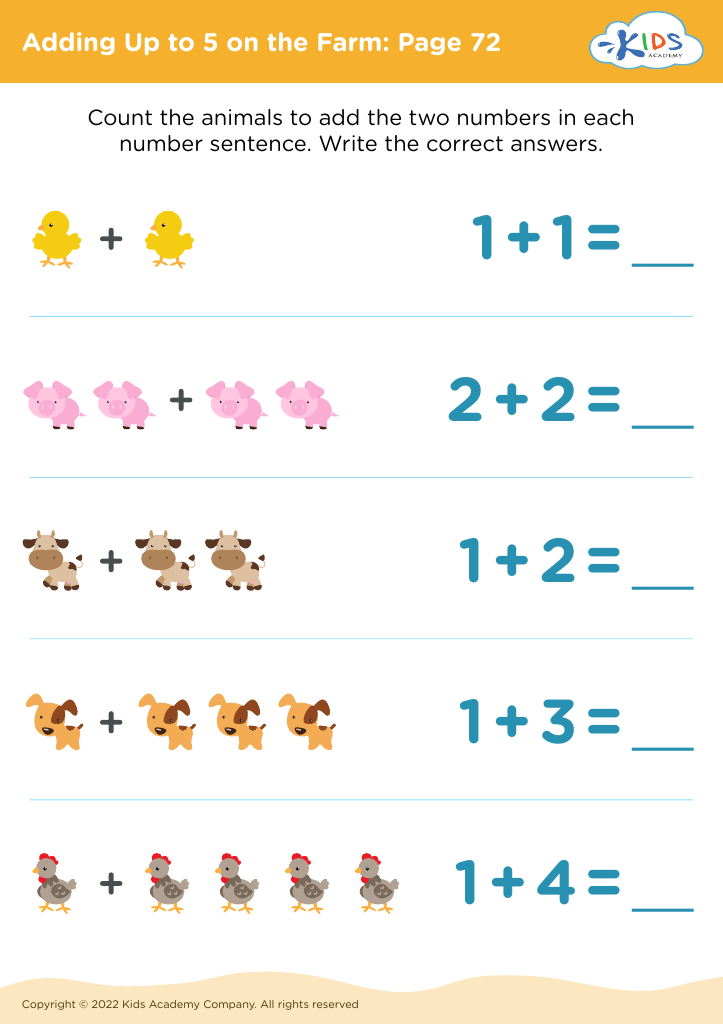
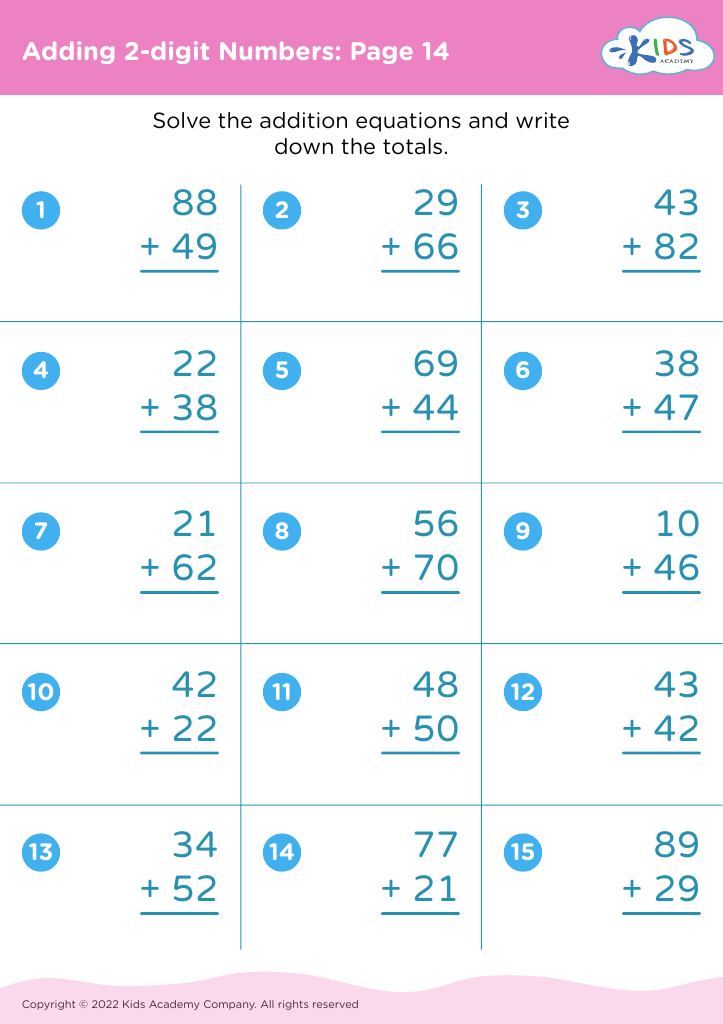
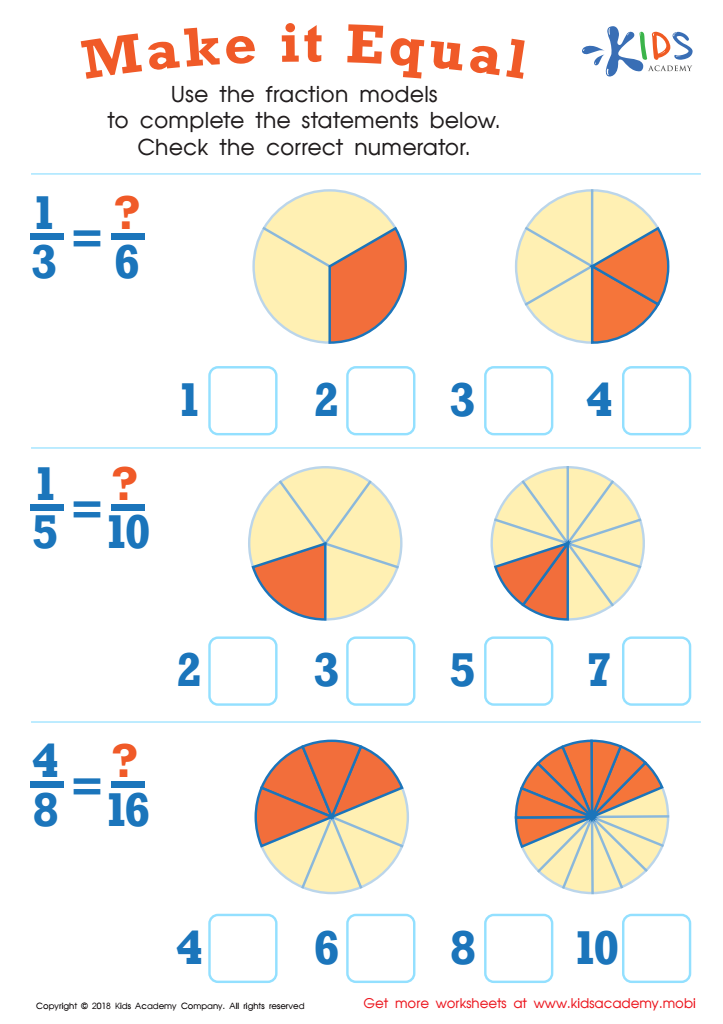
Make It Equal Worksheet
Ask your kids to complete the equations in the worksheet and find the correct numerator. Explain that numerators are the numbers at the top of a fraction and guide them as they count the shaded parts of the shapes. There are three equations to figure out.
Make It Equal Worksheet
Worksheet
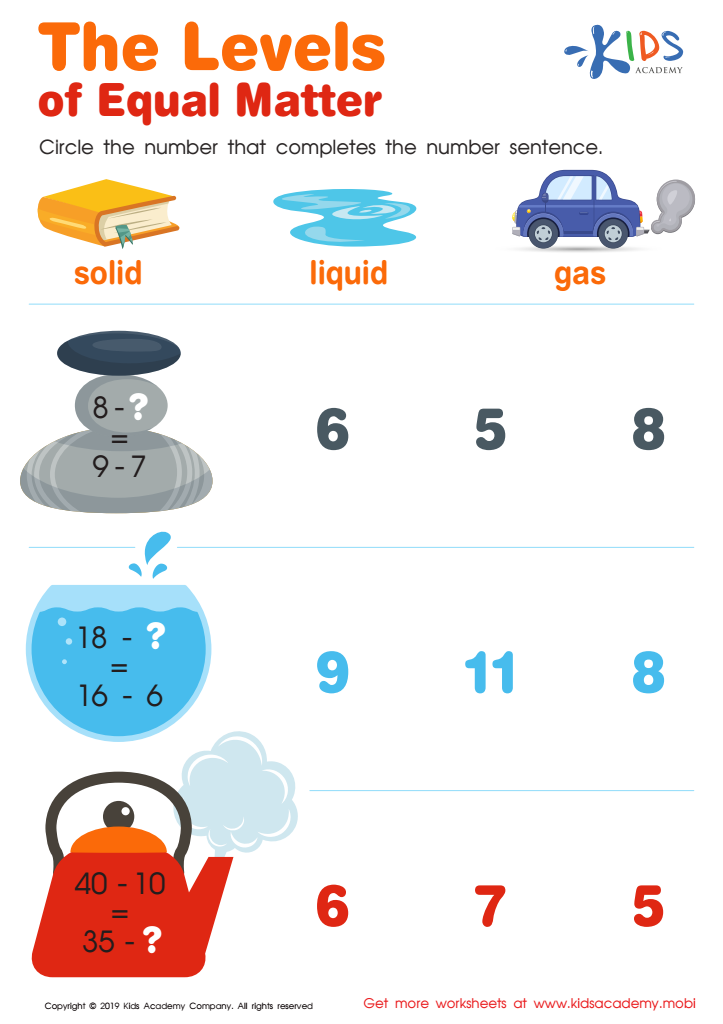
The Levels of Equal Matter Worksheet
Matter is anything that has weight and occupies space. Common examples include people, animals, objects and liquids. Have your kids understand this concept by looking at the levels of matter in this worksheet and completing the number sentence mathematical problems beneath.
The Levels of Equal Matter Worksheet
Worksheet
Join Kids Academy for Free
Who is primarily going to use this learning content?







Understanding equality in math for children ages 3-8 is crucial for several reasons. First, early exposure to mathematical concepts sets a strong foundation for future learning. When children grasp the concept of equality, they reach a significant milestone in numerical understanding. This sets the stage for more complex operations like addition, subtraction, and even algebra later on.
Secondly, understanding equality promotes logical thinking and problem-solving skills. Children start to comprehend that the quantity or value remains the same even if it's arranged differently. This understanding helps them approach various challenges with an analytic mindset.
Third, comprehension of equality fosters a positive attitude towards math. When young learners feel confident because they understand fundamental concepts, they are more likely to enjoy math rather than fear it. This early confidence can motivate them through more challenging concepts in the future, ensuring a love for learning.
Lastly, equality principles appear in everyday life. From fairly sharing toys with friends to distributing food evenly at the dinner table, recognizing equality helps develop a sense of fairness and social skills, essential attributes in their overall development.
Parents and teachers can use playful activities to reinforce these ideas, ensuring that the concept becomes both enjoyable and intrinsic to the child's way of thinking.








