Understanding more/less concept Math Worksheets for Ages 3-8
3 filtered results
-
From - To
Explore our engaging "Understanding More/Less" math worksheets designed for children aged 3-8! These worksheets provide a fun and interactive way to help young learners grasp the foundational concepts of quantity comparison. By using colorful visuals and relatable scenarios, children will develop their skills in identifying which set has more or less. These resources not only enhance mathematical understanding but also promote critical thinking as kids practice differentiating quantities in various contexts. Ideal for both classroom use and at-home learning, our worksheets are perfect for nurturing early mathematical skills in a playful, encouraging environment. Start their math journey today!
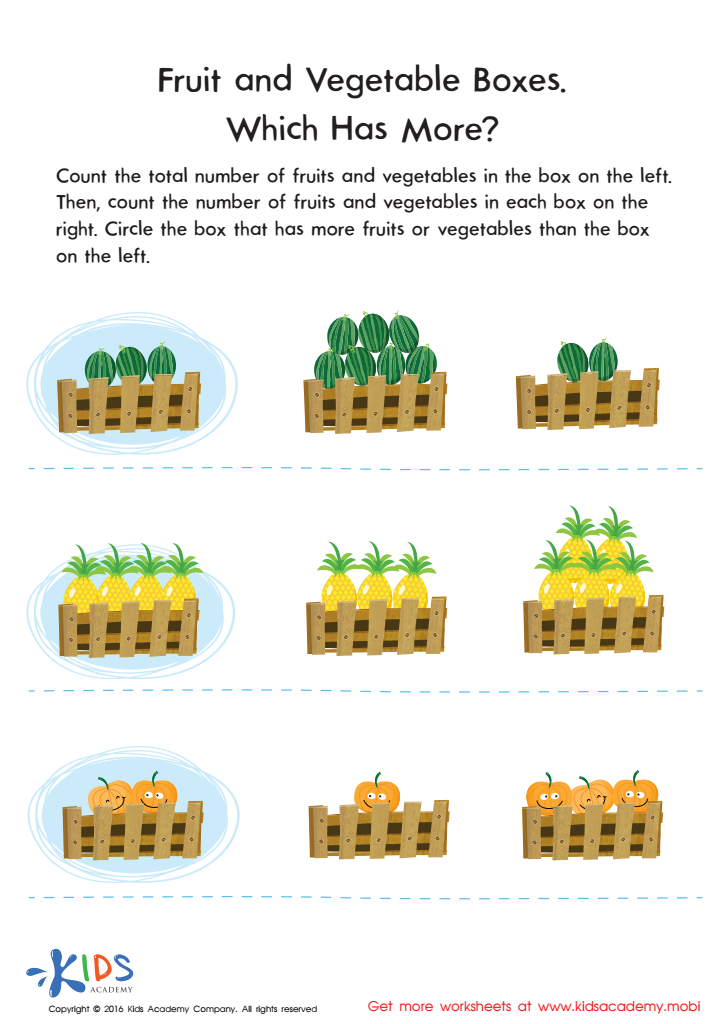
Which Has More? Size Worksheet
 Assign to My Students
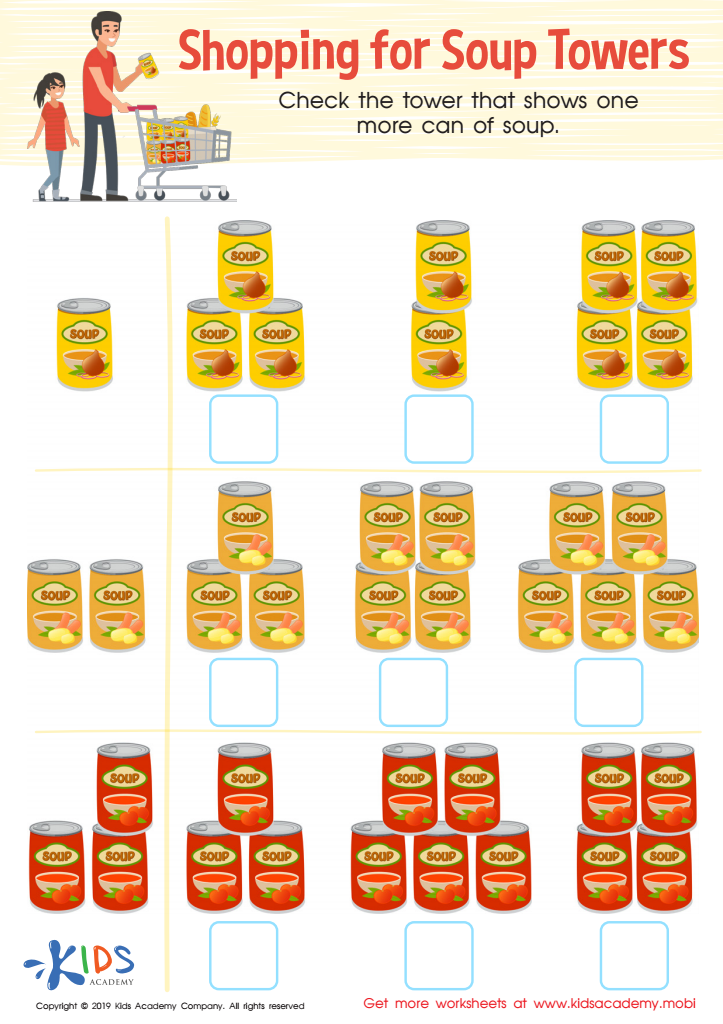
Soup Towers Worksheet
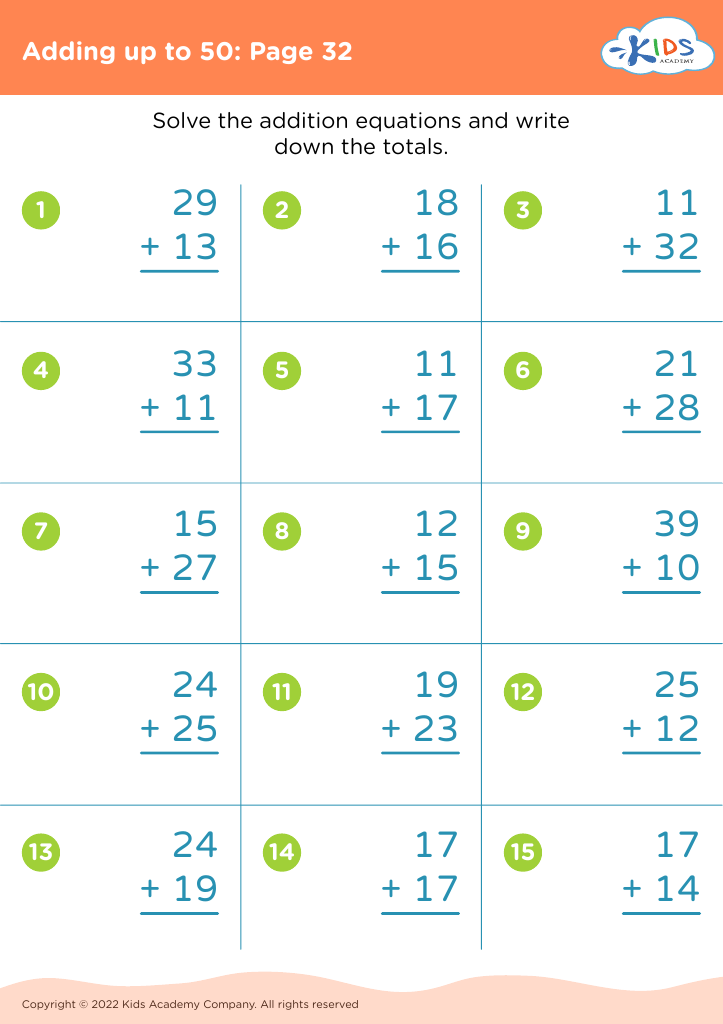







Understanding the concepts of more and less is essential for children aged 3 to 8 as it lays the groundwork for their mathematical development. At this early stage, children begin to grasp fundamental numerical relationships, which are vital for their cognitive growth. By distinguishing between more and less, children enhance their ability to categorize, compare, and make informed choices.
Parents and teachers should care about this aspect of math because it fosters critical thinking skills that extend beyond numbers. For instance, discussions about more and less can easily be integrated into daily activities, such as cooking, shopping, or playing, making learning organic and engaging. Furthermore, mastering these concepts helps to build confidence in young learners as they tackle larger mathematical ideas in the future, such as addition and subtraction.
Additionally, facilitating learning around more and less nurtures social-emotional skills. Children learn to express their preferences and negotiate with peers, which is crucial for effective communication.
Ultimately, a strong understanding of the more/less concept equips children with essential life skills, enhances their academic performance, and creates a solid foundation for a lifelong appreciation of mathematics. Investing time in these early understandings pays dividends in both educational and personal development.








