Understanding quadrilaterals Math Worksheets for Ages 3-8
4 filtered results
-
From - To
Enhance your child's foundational math skills with our "Understanding Quadrilaterals" worksheets, designed specifically for ages 3-8. These engaging, age-appropriate activities help young learners explore the world of shapes through fun exercises that promote critical thinking and problem-solving. Covering various quadrilaterals like squares, rectangles, and trapezoids, our worksheets encourage children to identify, classify, and compare these shapes in a playful context. With vibrant illustrations and interactive tasks, your little mathematicians will develop their spatial awareness and geometry skills while having a blast. Download our printable resources today to spark a lifelong love for math in your child!
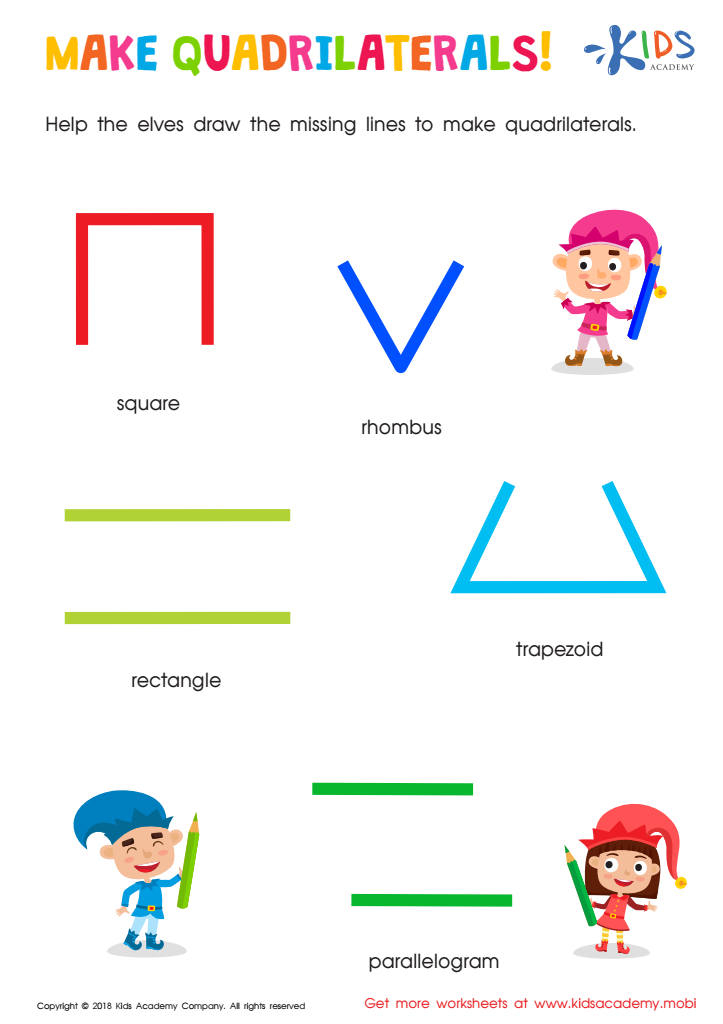
Make Quadrilaterals Worksheet
 Assign to My Students
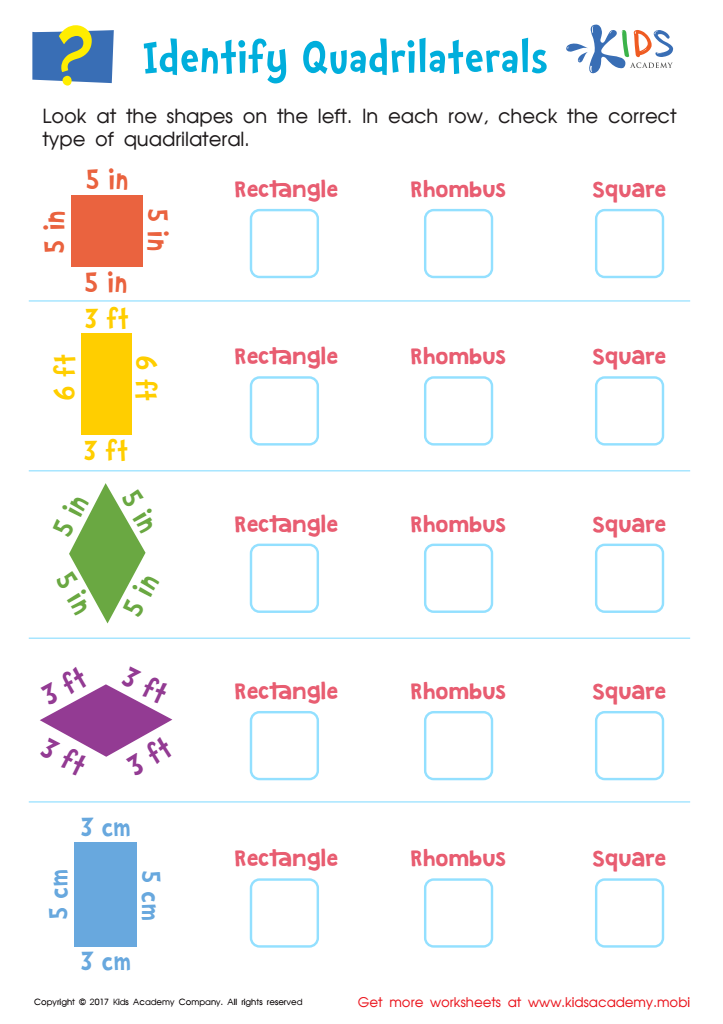
Identify Quadrilaterals Worksheet
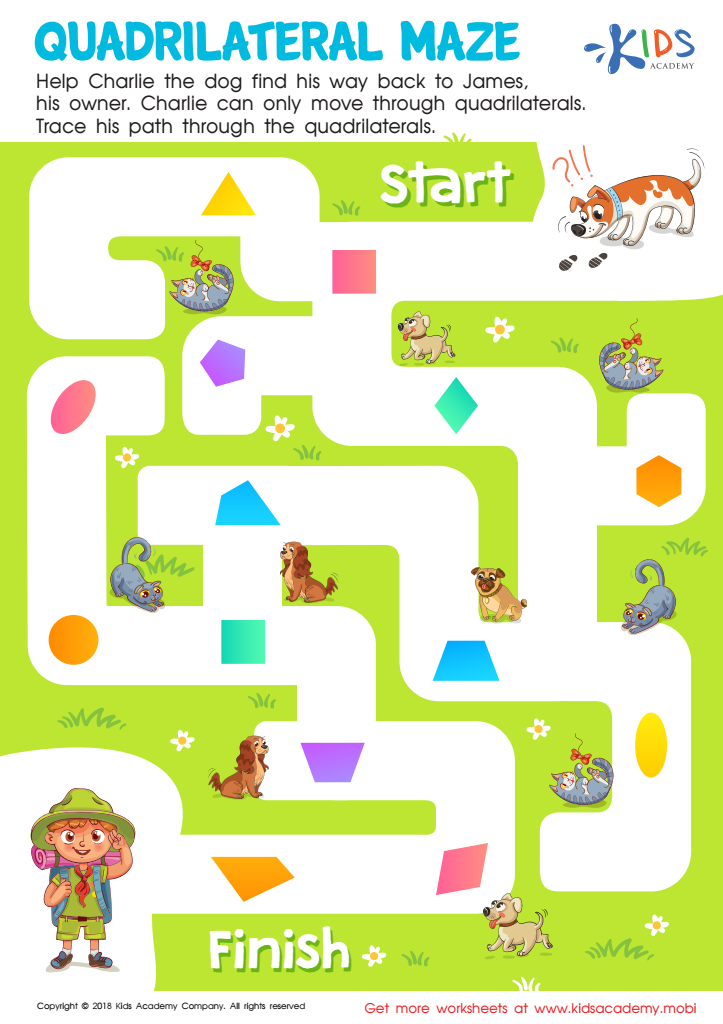
Quadrilateral Maze Worksheet
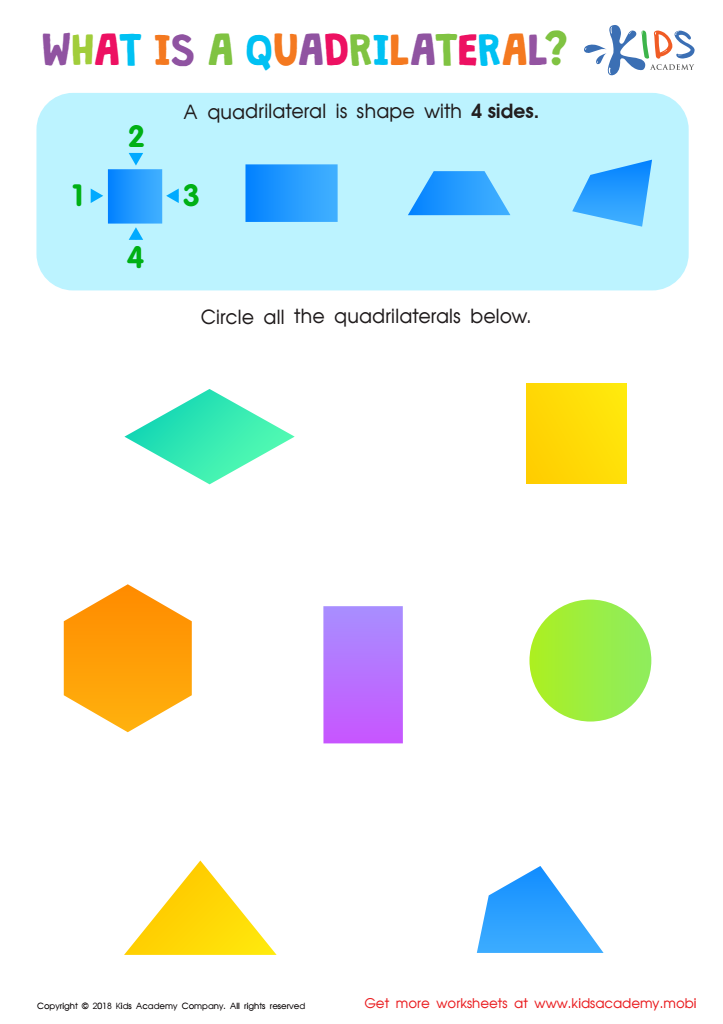
What Is a Quadrilateral? Worksheet








Understanding quadrilaterals is essential for children aged 3-8 as it lays a foundational math skill that develops their spatial reasoning and problem-solving abilities. At this age, children are naturally curious about shapes and the world around them. Introducing quadrilaterals—four-sided shapes such as squares, rectangles, and rhombuses—helps them categorize and make sense of their environment. Engaging with these shapes enhances their observational skills and encourages them to notice geometric relationships and properties.
Moreover, comprehension of quadrilaterals supports future learning in mathematics. Identifying and distinguishing between different shapes cultivates critical thinking and conceptual understanding, which are crucial skills for higher-level math. For parents and teachers, guiding children through activities involving quadrilaterals can create enjoyable and interactive learning experiences that build a positive attitude towards math.
Additionally, tying in real-world examples, such as windows, boxes, and artwork, makes the concept relatable and easier for children to grasp, reinforcing their learning. By focusing on quadrilaterals, parents and teachers play a significant role in equipping children with essential skills that support their ongoing education and cognitive development, fostering confidence that can translate to success in later years.








