
Underwater animal identification Math Worksheets for Ages 3-8
3 filtered results
Difficulty Level
Grade
Age
-
From - To
Subject
Activity
Standards
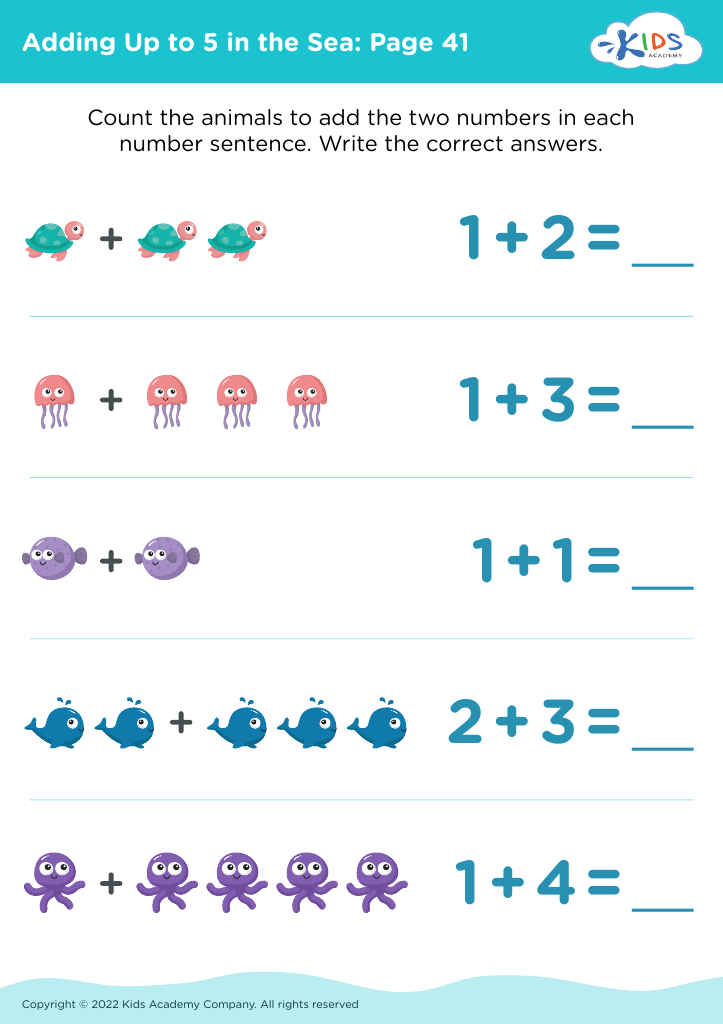
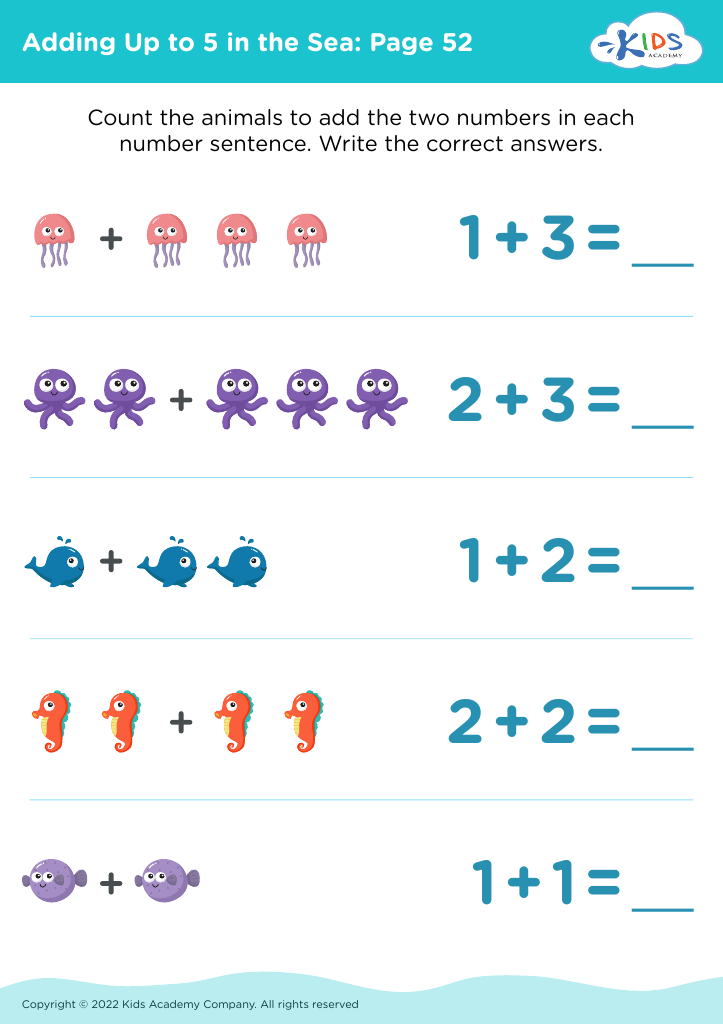
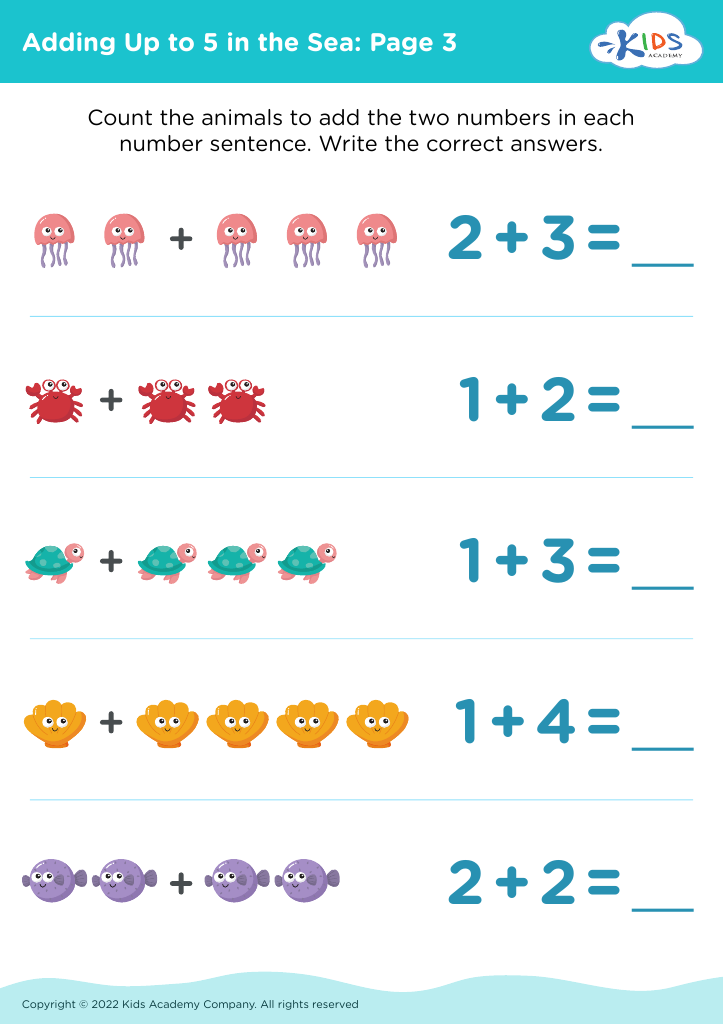
Dive into learning with our Underwater Animal Identification Math Worksheets designed for ages 3-8! Perfect for early learners, these engaging worksheets combine the magic of underwater creatures with essential math skills. Little minds will explore numbers, patterns, and shapes while identifying fascinating sea animals. Featuring colorful illustrations and age-appropriate challenges, our worksheets make learning fun and interactive. They reinforce critical thinking and observation skills that set the foundation for future math success. Ideal for parents and teachers looking to enrich their child's educational journey, these resources turn math practice into an aquatic adventure. Start exploring today!
Favorites
With answer key
Interactive
Join Kids Academy for Free
Who is primarily going to use this learning content?



.jpg)



Teaching underwater animal identification coupled with math skills to children ages 3-8 carries a wealth of benefits that parents and teachers should be enthusiastic about. This interdisciplinary approach nurtures cognitive and emotional growth by blending marine biology with fundamental math concepts.
First, associating animals with numbers or shapes makes math more engaging. For instance, counting fish, recognizing octopus arms (eight), and identifying starfish (shapes) can make abstract ideas concrete. Such methods enhance numerical skills while expanding vocabulary with marine terms, promoting cross-curricular learning.
Additionally, young children are naturally curious about animals, and linking this interest with math helps sustain their attention and enthusiasm. This paves the way for a deeper appreciation of science and the natural world, balancing fun with education. It instills environmental awareness early on, fostering a sense of responsibility towards marine conservation.
Problem-solving and critical thinking are implicitly taught through identifying patterns among animals' features and solving counting or comparison tasks. Group activities surrounding underwater themes also encourage teamwork, patience, and social skills.
Importantly, diversifying learning experiences accommodates varying learning styles, ensuring inclusivity. In essence, this integrated approach not only augments academic skill sets but also ignites lifelong curiosity and a love for learning in multiple domains.








