Comparing objects Measurement Worksheets for Ages 3-8
3 filtered results
-
From - To
Discover our engaging "Comparing Objects Measurement Worksheets" designed for children ages 3-8! These worksheets provide a fun and interactive way for young learners to explore measurement concepts by comparing various objects. Through hands-on activities, children will enhance their abilities to identify sizes, lengths, weights, and heights, fostering essential math skills in an enjoyable manner. Our carefully crafted worksheets cater to different learning levels, ensuring every child can grasp these fundamental concepts at their own pace. Whether in the classroom or at home, these worksheets are perfect for reinforcing measurement skills while promoting critical thinking and observational abilities in early learners.
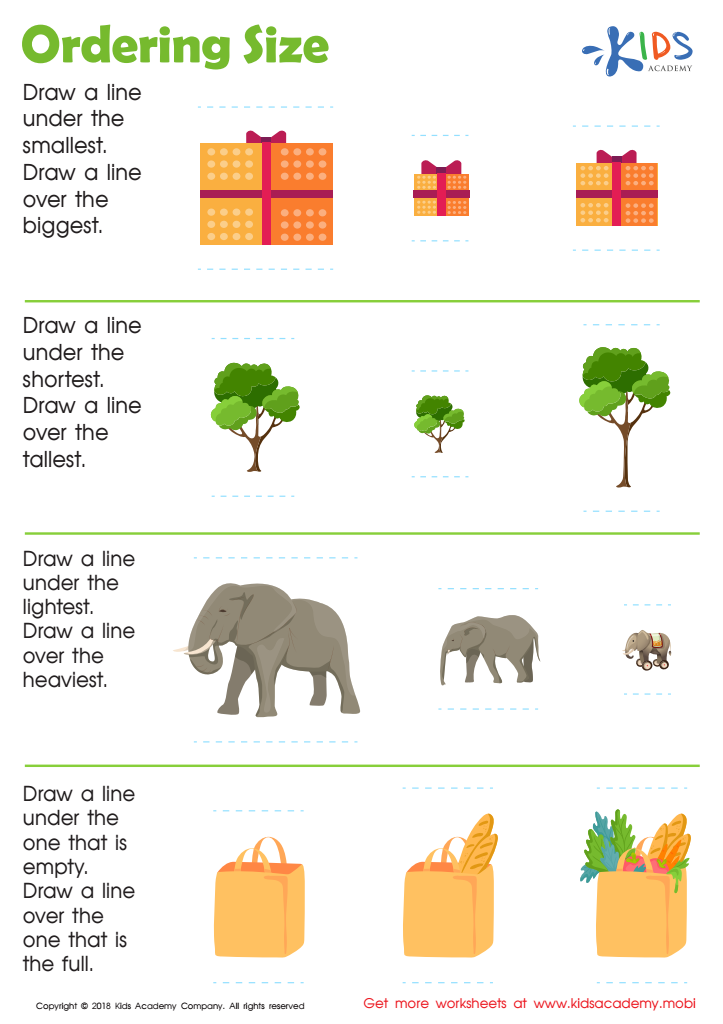
Ordering Size Worksheet
 Assign to My Students
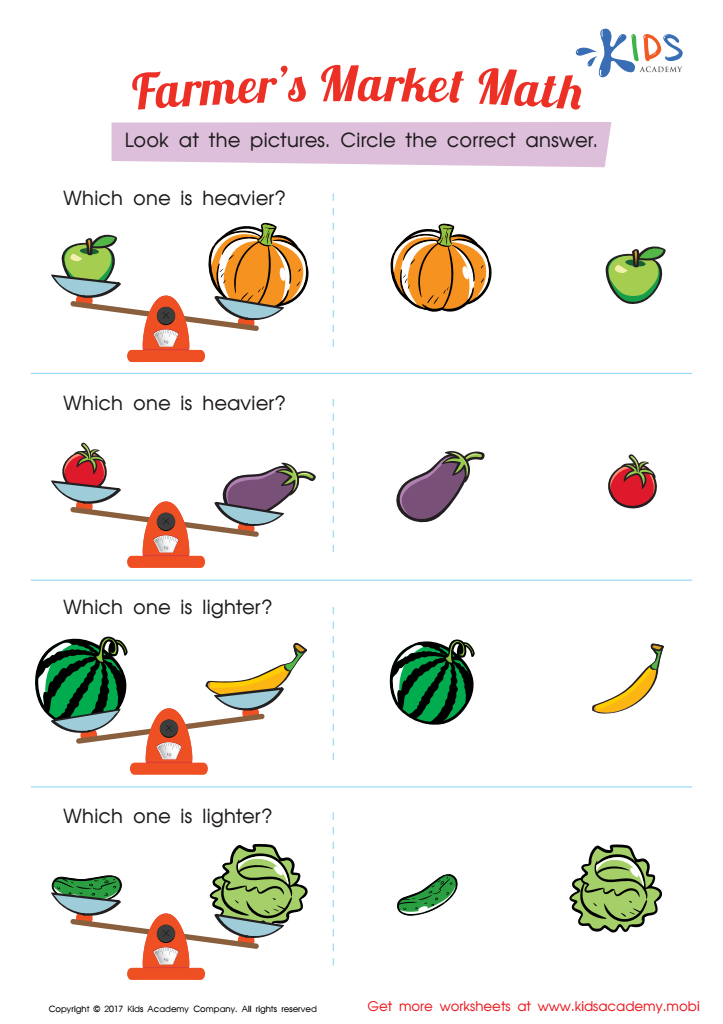
Which One Is Heavier Worksheet
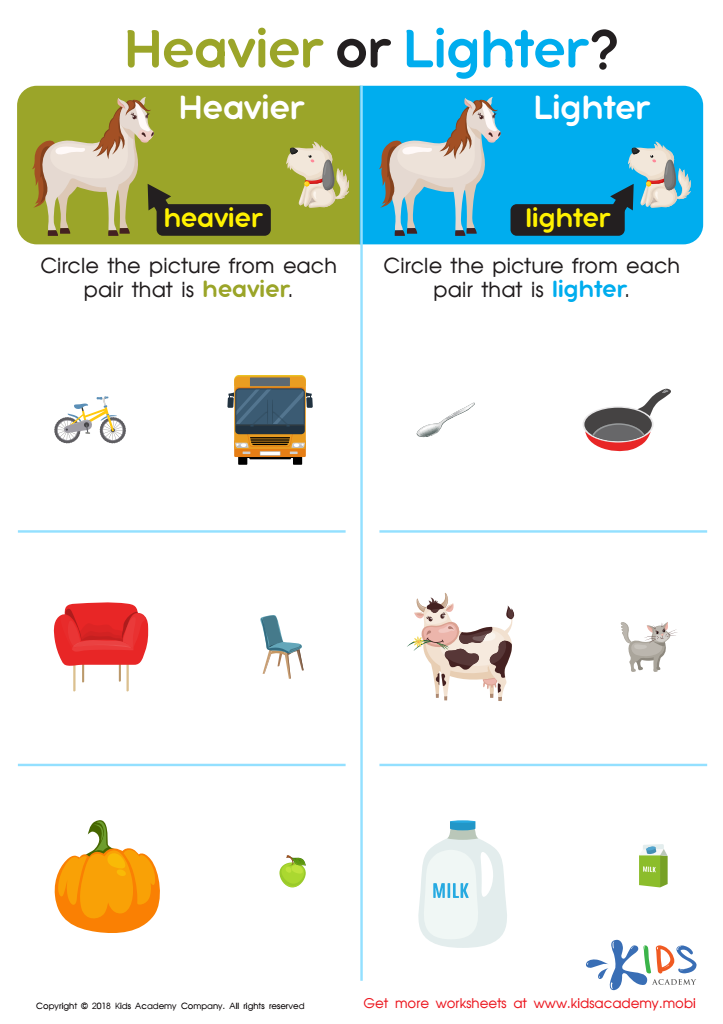
Heavier or Lighter? Worksheet








Comparing objects through measurement is a vital skill for children aged 3-8, and it holds significant importance for both parents and teachers. Firstly, it lays the foundation for mathematical concepts essential for academic success. When children measure and compare objects, they develop critical numeracy skills, understand quantities, and grasp the differences between objects, which are fundamental building blocks for more complex mathematical operations in later years.
Moreover, engaging in measurement activities enhances cognitive development. Children learn to observe, classify, and interpret their surroundings, fostering skills such as critical thinking and problem-solving. For example, when children compare the height of two plants or the length of different pieces of string, they not only engage in measurable tasks but also expand their vocabulary and communication skills as they describe their findings.
Furthermore, comparing objects teaches children about the world around them. It promotes an understanding of size, volume, and weight, aiding in practical life skills. Through play and exploration, children also enhance their fine motor skills, setting the stage for dexterity.
In summary, parents and teachers should prioritize measurement activities to support children's overall cognitive, social, and academic development, ensuring they are well-prepared for future learning.








