Enhancing Counting Skills Measurement Worksheets for Ages 3-8
3 filtered results
-
From - To
Unlock the joy of learning with our "Enhancing Counting Skills Measurement Worksheets" designed specifically for children ages 3-8. These engaging worksheets provide a colorful and interactive way for young learners to master the fundamentals of counting and measurement. With various hands-on activities, children can explore size comparisons, number recognition, and basic arithmetic, all while building their confidence in math skills. Each worksheet is crafted to align with early childhood education standards, ensuring a fun and effective learning experience. Dive into this exciting world of counting to lay a solid foundation for your child's mathematical journey and foster a lifelong love for learning!
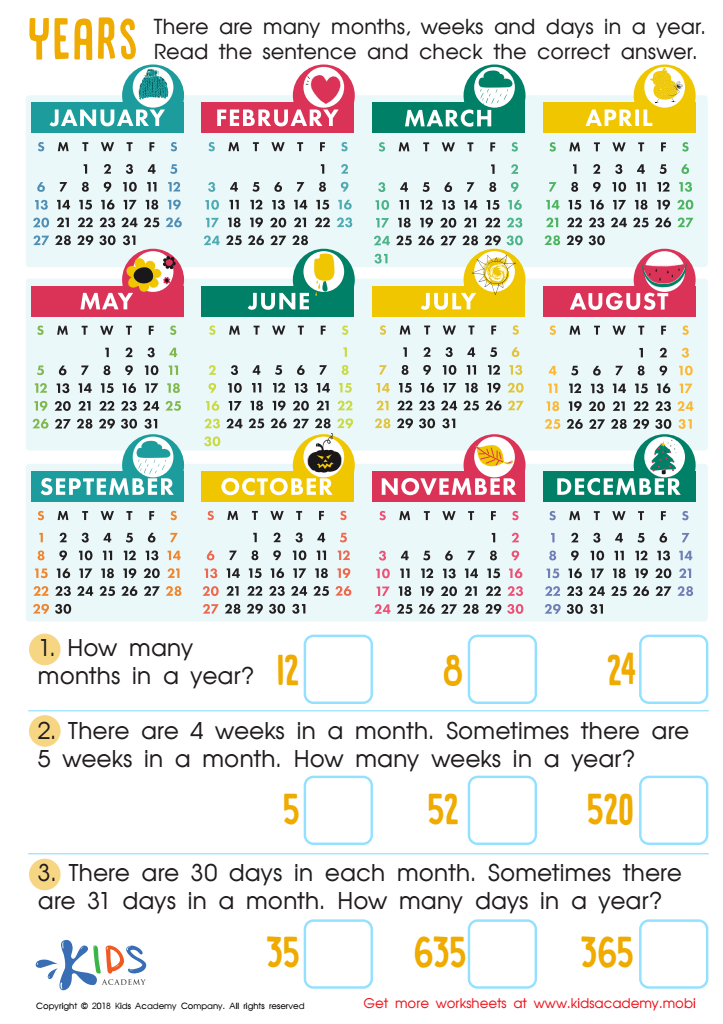
Years Worksheet
 Assign to My Students
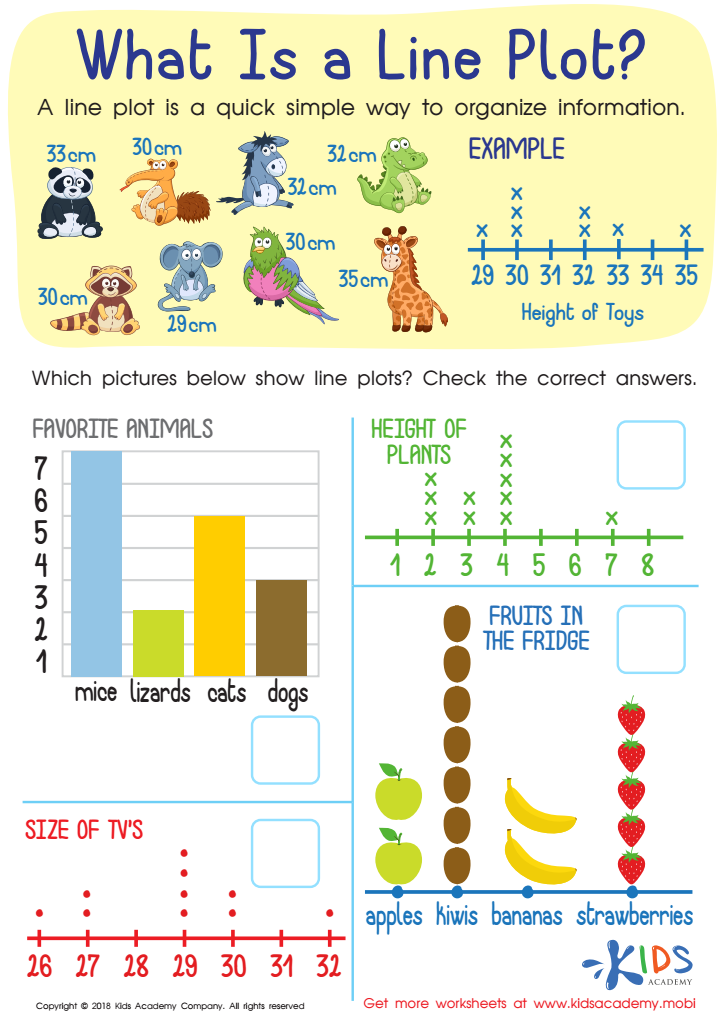
What Is a Line Plot? Worksheet
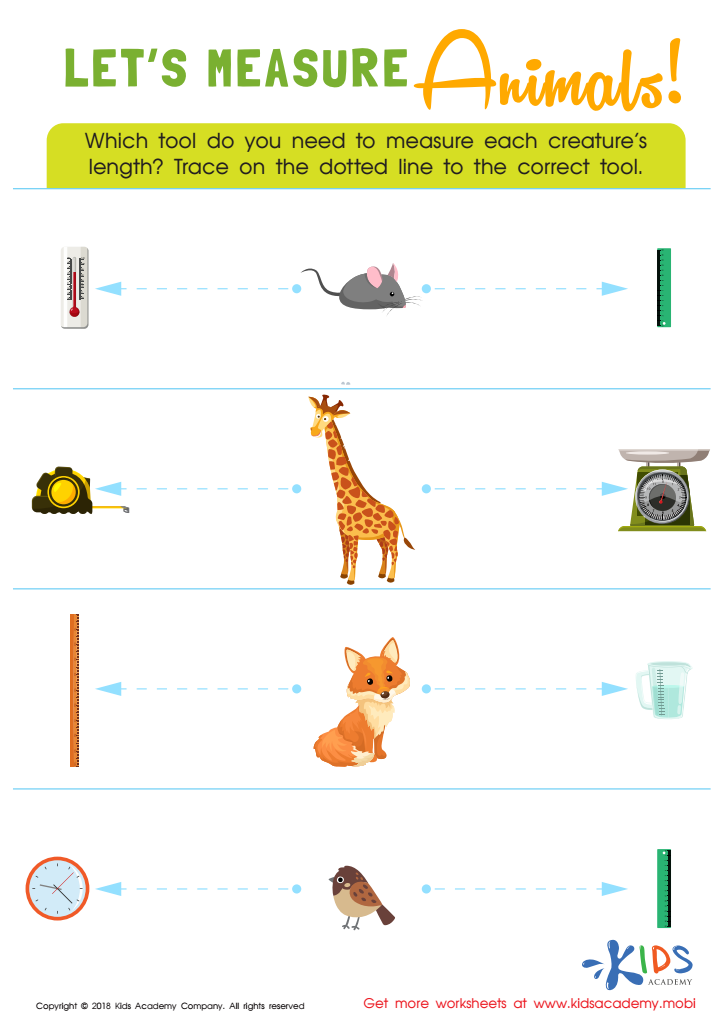
Let's Measure Animals! Worksheet








Enhancing counting skills and measurement in children aged 3-8 is crucial for several reasons. First, these foundational mathematical concepts are essential for cognitive development. Early exposure encourages curiosity, logical reasoning, and problem-solving abilities. Mastering numbers not only benefits math proficiency but also strengthens overall academic performance across subjects.
Furthermore, counting and measurement skills build essential life skills. Children learn to quantify their environment, whether it’s counting toys, measuring ingredients for cooking, or understanding time, all of which are applicable in everyday scenarios. These skills lead to better organization and estimation abilities, fostering independence and confidence.
Engaging in counting and measurement activities also promotes social skills. Group games that involve numbers encourage cooperation, sharing, and communication among peers. The interactive nature of these activities supports emotional development as children learn to navigate successes and mistakes in a supportive context.
Parents and teachers play a vital role in creating enriching environments that promote these skills through playful learning. By emphasizing counting and measurement, they set children on a path toward academic success and lifelong confidence in math. Investing early in these abilities lays a strong groundwork that will serve children well in future educational endeavors and real-life situations.








