Counting skills Multiplication Worksheets for Ages 3-8
4 filtered results
-
From - To
Boost your child's counting skills with our engaging Multiplication Worksheets designed specifically for ages 3-8! These worksheets offer a fun and interactive approach to learning multiplication concepts through counting. Each activity is tailored to promote essential early math skills, enabling kids to confidently recognize patterns and develop a strong foundation in multiplication. Featuring colorful graphics and kid-friendly layouts, our worksheets make learning enjoyable and effective. Whether at home or in the classroom, our resources cater to various learning styles, ensuring that every child can thrive. Start your child's mathematical journey today with our creative and educational multiplication practice!
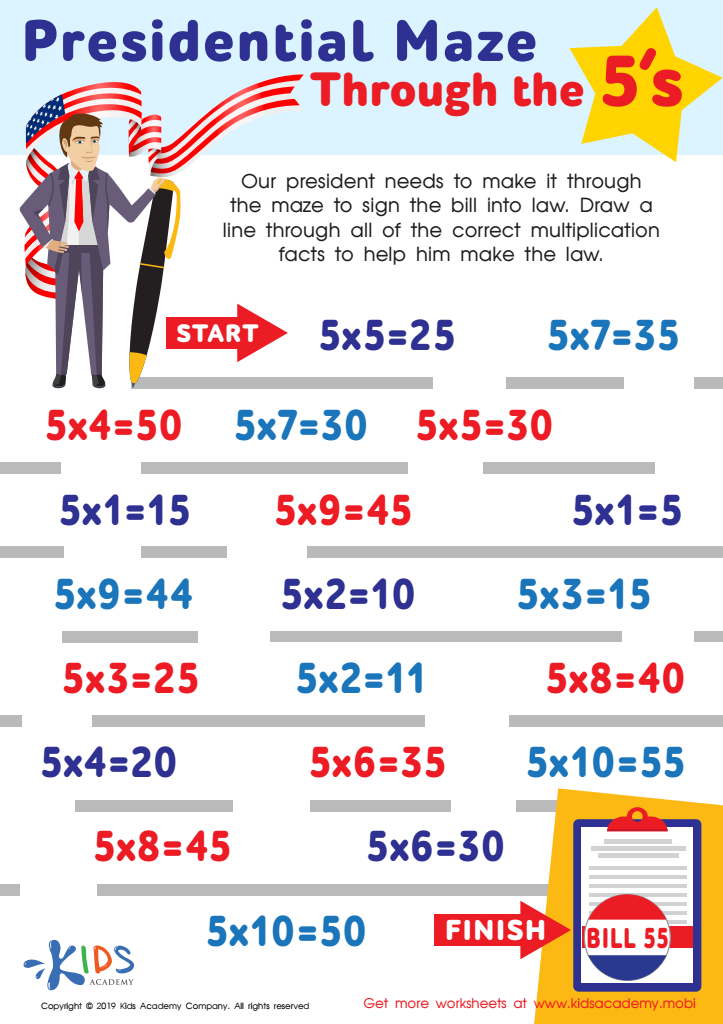
Presidential Maze Through the 5’s Worksheet
 Assign to My Students
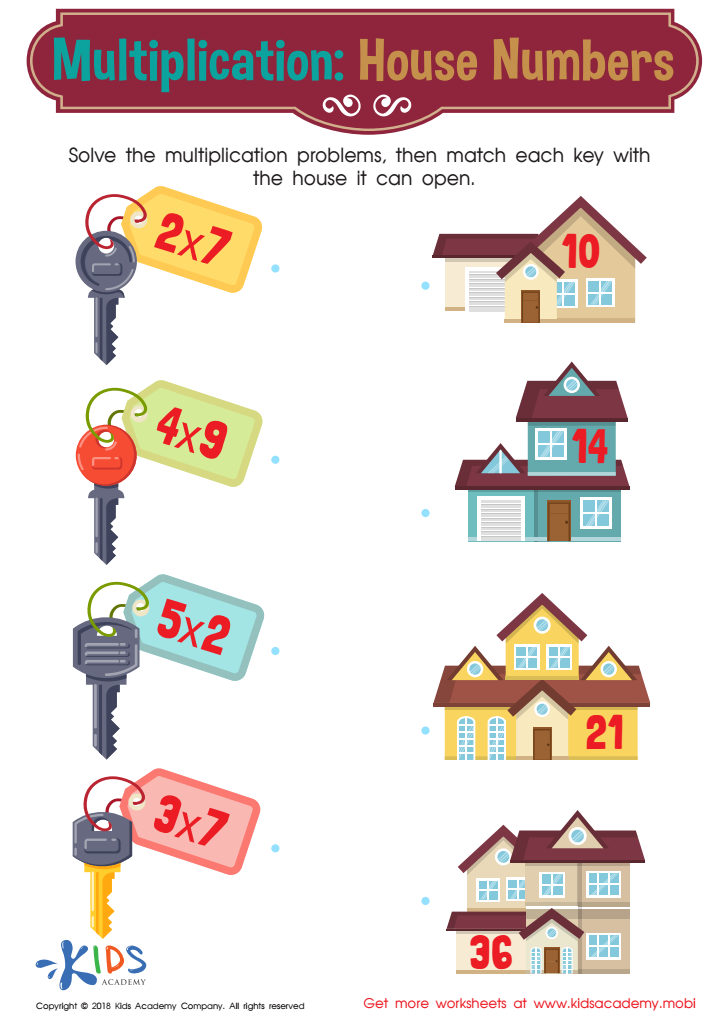
House Numbers Worksheet
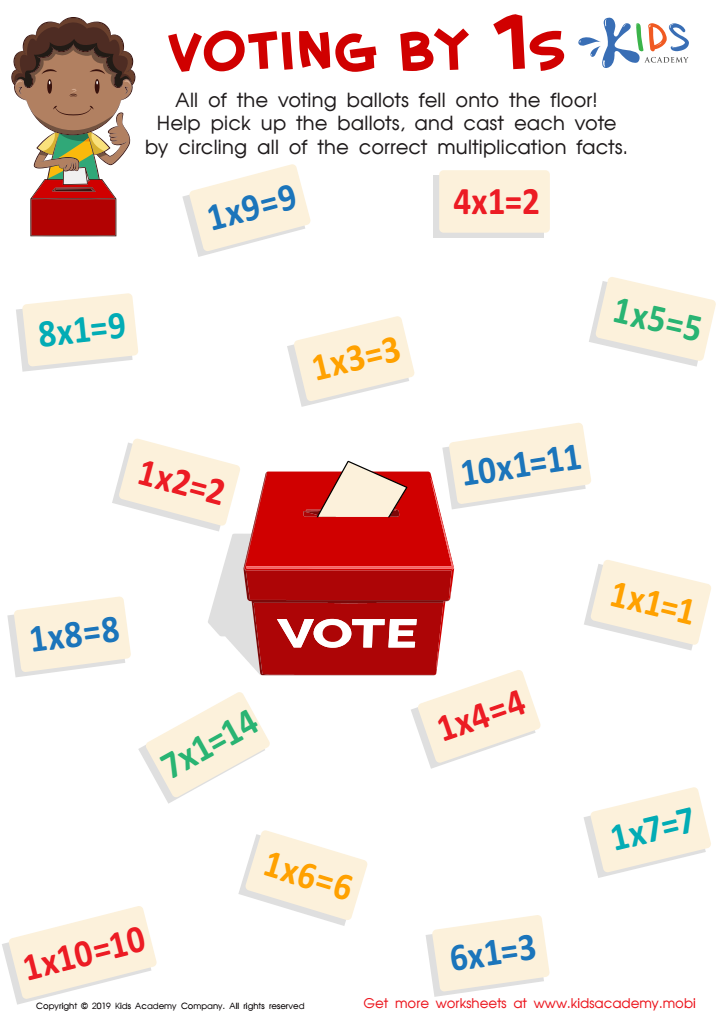
Voting by 1s Worksheet
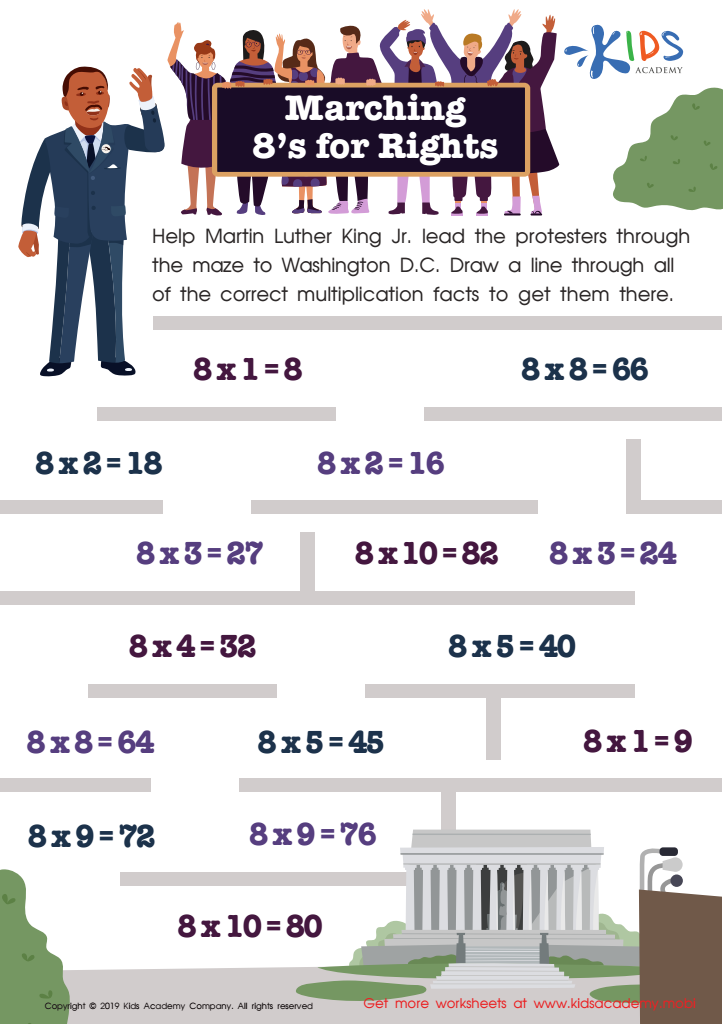
Marching 8’s for Rights Worksheet






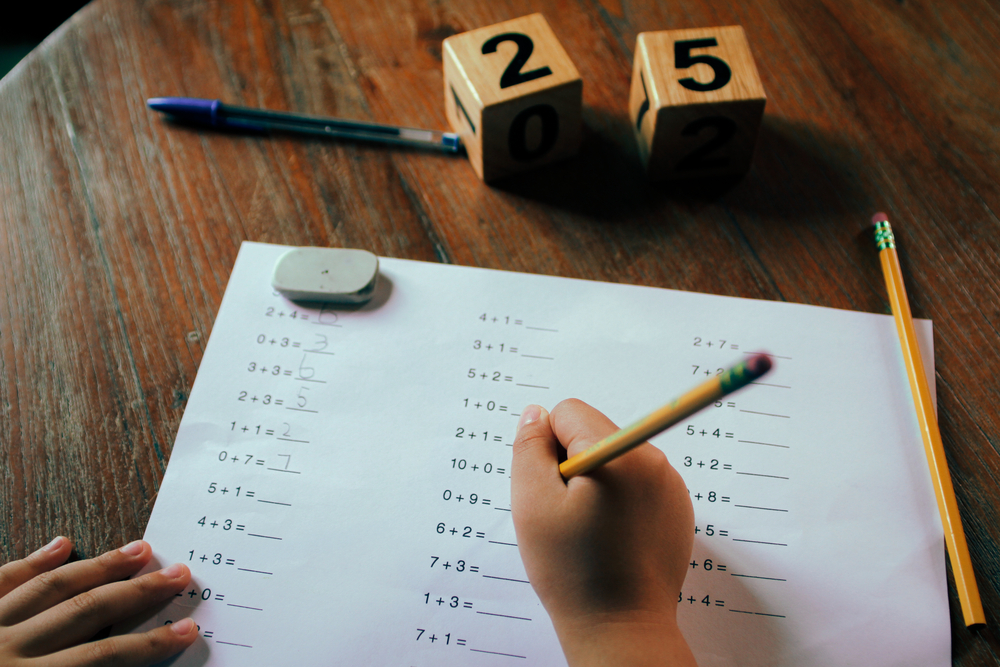
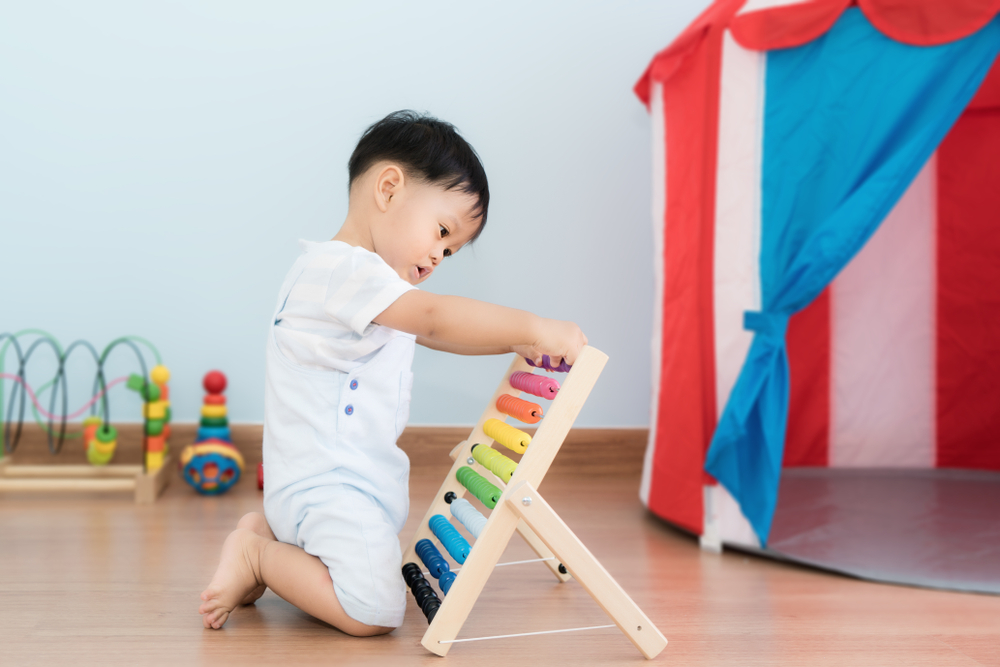
Counting skills and multiplication form the foundation of a child's mathematical understanding, crucial for their cognitive development between the ages of 3-8. During this critical stage, children are naturally inclined to explore numbers and relationships, making it an ideal time to introduce and nurture these concepts.
For parents and teachers, fostering counting skills helps children develop logical thinking, problem-solving, and critical thinking abilities. These foundational skills enable children to understand more complex math later in their education. Counting is not just about numbers; it encourages children to recognize patterns, sequences, and relationships, laying the groundwork for understanding multiplication.
Multiplication, often perceived as an abstract concept, becomes more accessible when children can confidently count. By integrating early multiplication practices into games and everyday activities, caregivers can help demystify and contextualize the process, nurturing both understanding and enthusiasm. Moreover, these skills contribute to improving children's confidence and self-esteem in mathematics, a subject that can often be daunting.
Incorporating counting and early multiplication can also prepare children for future academic challenges, equipping them with the necessary tools to succeed in higher-level math. Ultimately, prioritizing these skills fosters a positive, engaging attitude towards learning that can last a lifetime.








