
Historical Knowledge Multiplication Worksheets for Ages 3-8
5 filtered results
Difficulty Level
Grade
Age
-
From - To
Subject
Activity
Standards
Welcome to our engaging collection of Historical Knowledge Multiplication Worksheets designed for young learners aged 3-8! These entertaining and educational resources combine foundational math skills with fascinating historical themes, making learning multiplication fun and meaningful. Children will explore significant figures and events alongside practicing their multiplication facts. Each worksheet is tailored to spark curiosity, enhance critical thinking, and promote a love for history and math. Ideal for classroom or home use, these worksheets cater to diverse learning styles and help children build confidence in their multiplication skills while discovering the past. Start your educational journey today!
Favorites
With answer key
Interactive
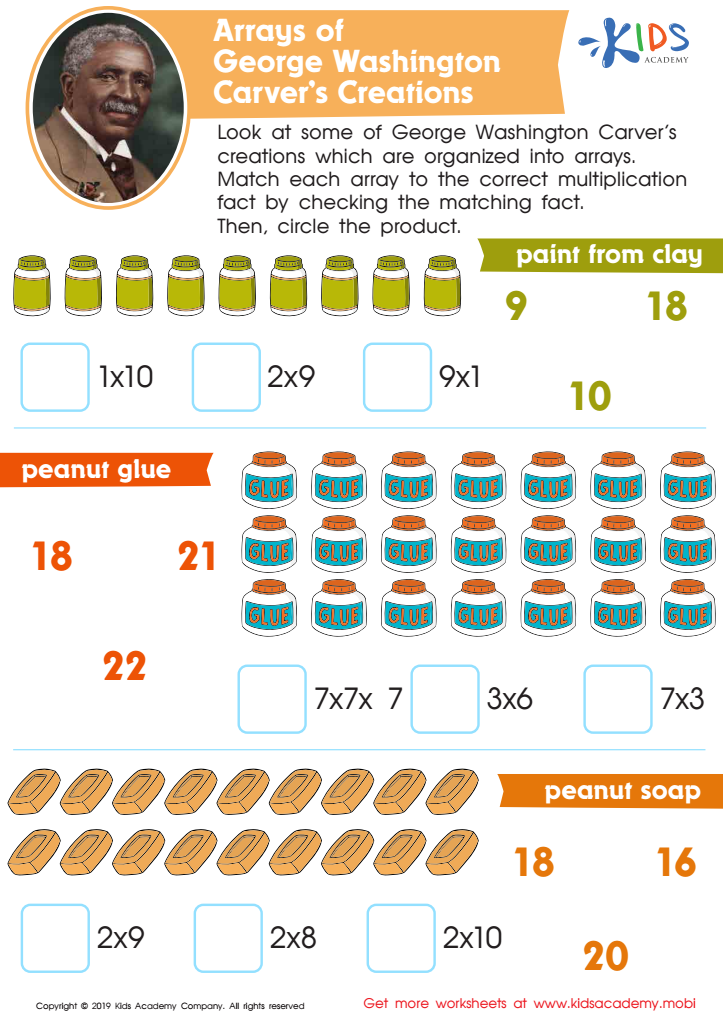
Arrays of George Washington Carver’s Creations Worksheet
Remind your child of what George Washington Carver created. Can they tell you? This worksheet has arrays with his creations. Match the array to the multiplication fact and help your child to circle the product.
 Assign to My Students
Arrays of George Washington Carver’s Creations Worksheet
Worksheet
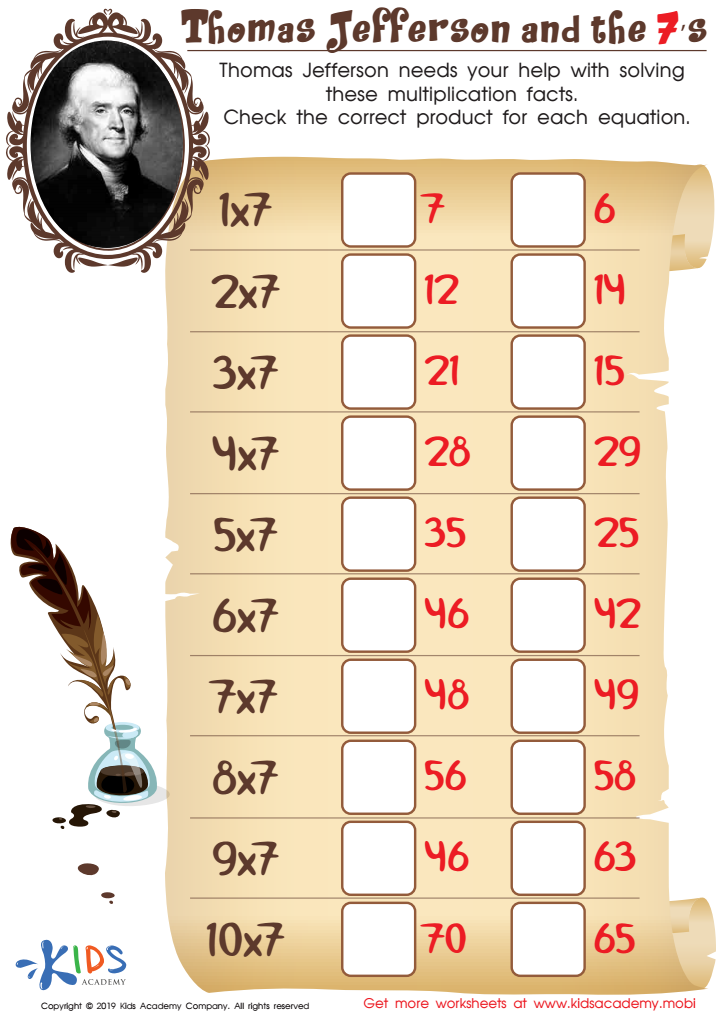
Thomas Jefferson and the 7’s Worksheet
Thomas Jefferson championed education and wants kids to know their times tables. Help your child with this worksheet focusing on 7's. Check the box for the correct answer for each multiplication problem. Make sure your child gets the facts right!
Thomas Jefferson and the 7’s Worksheet
Worksheet
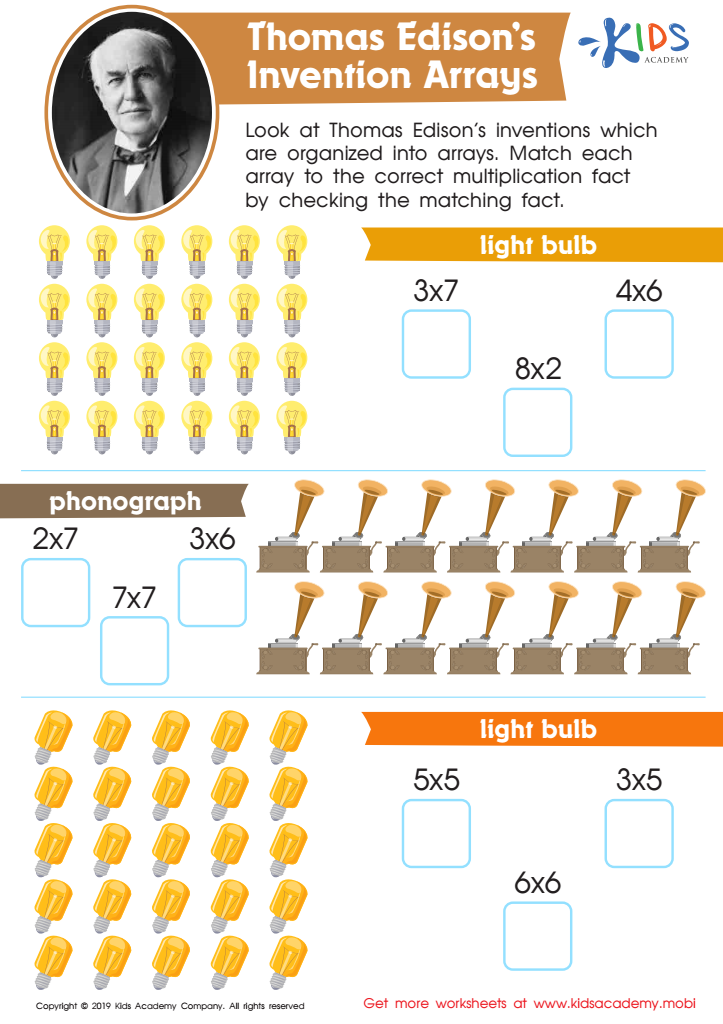
Thomas Edison’s Invention Arrays Worksheet
Test your students' knowledge on history by asking them what Thomas Edison invented. If they get the right answer, provide more information on other inventors. Check out this printout of Edison's light bulb inventions laid out in arrays. Get them to match each array to the correct multiplication fact.
Thomas Edison’s Invention Arrays Worksheet
Worksheet
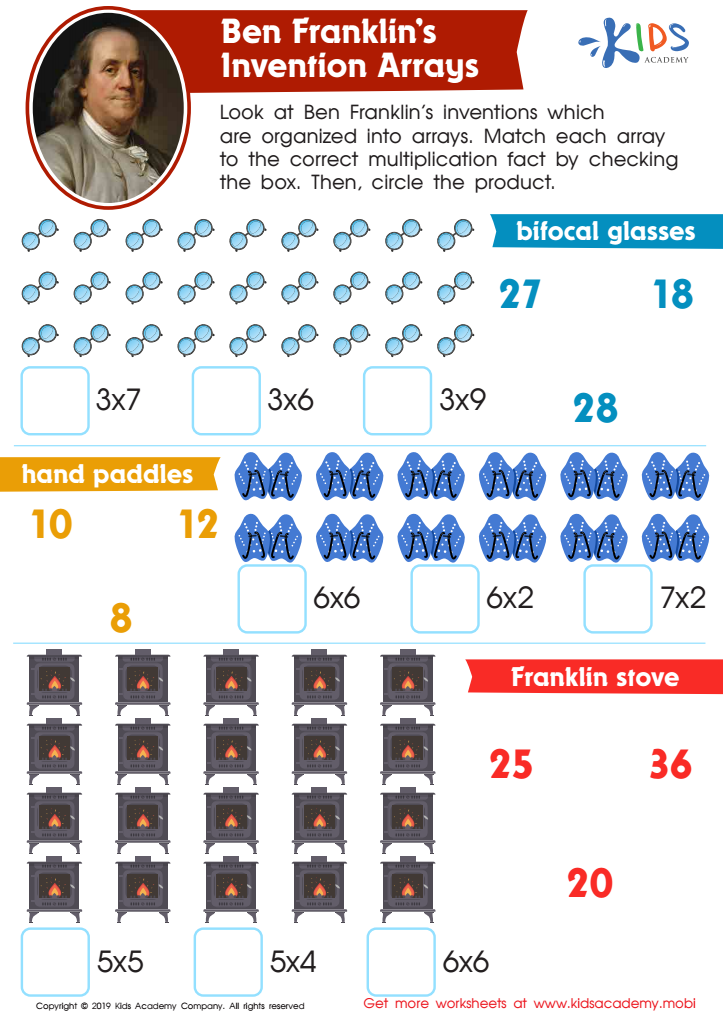
Ben Franklin’s Invention Arrays Worksheet
Have your child guess some of the inventors of the popular items we use today. For instance, the light bulb was invented by Thomas Edison. Look at Ben Franklin's inventions and help your kids match the arrays to the correct multiplication fact. Check the box and circle the product.
Ben Franklin’s Invention Arrays Worksheet
Worksheet
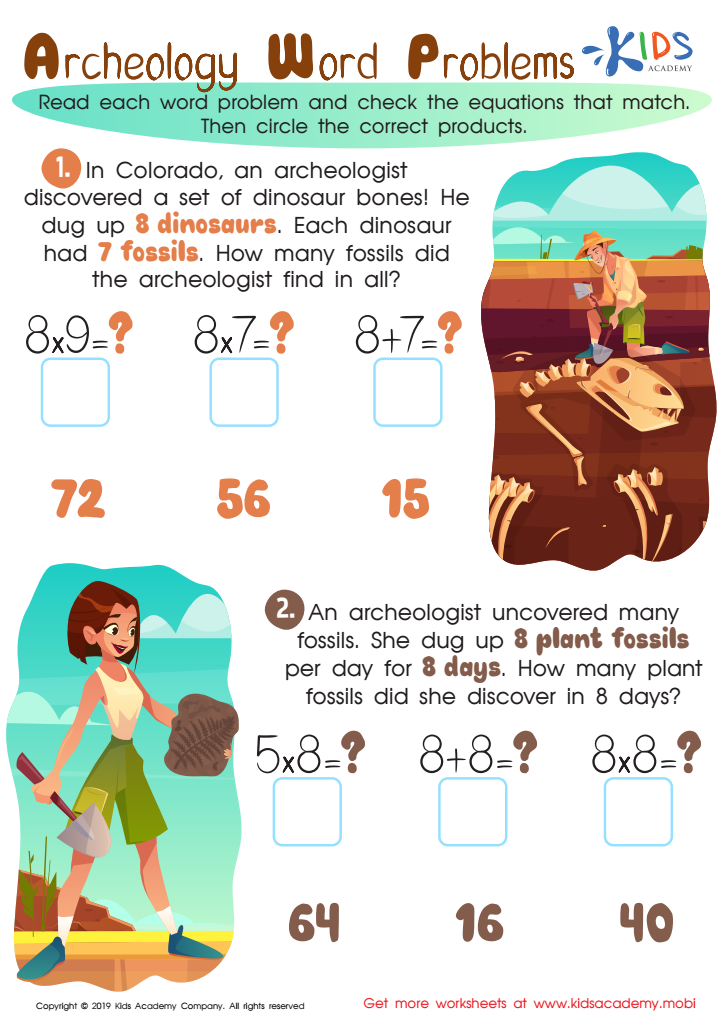
Archeology Word Problems Worksheet
Encourage your child to explore their career options! Show them an archeologist's job with this worksheet - featuring a picture of a dinosaur bone discovery. Read the accompanying text, then solve the word problems. Help your kids circle the correct answers to better understand this profession.
Archeology Word Problems Worksheet
Worksheet
Join Kids Academy for Free
Who is primarily going to use this learning content?







Historical Knowledge Multiplication, especially for ages 3-8, plays a crucial role in developing a child's understanding of the world and its diverse cultures. Early exposure to history cultivates a sense of identity and belonging, as children learn about their heritage and the stories of others. This foundational knowledge fosters empathy and encourages inclusiveness, teaching young learners to appreciate different perspectives.
Furthermore, connecting historical events and figures to a child's personal experience can spark curiosity and imagination, stimulating critical thinking skills. By weaving together lessons of the past with relatable contexts, educators and parents can enhance cognitive development and promote a love for learning.
Incorporating historical knowledge encourages children to ask questions, explore connections, and seek understanding beyond their immediate environment. This skill set is essential as it lays the groundwork for analytical thinking and problem-solving abilities needed in later academic levels.
Lastly, engaging young children in history helps to build literacy and communication skills, as they share stories and create narratives based on their learnings. For these reasons, parents and educators should prioritize historical knowledge multiplication in early education, creating a well-rounded and informed generation.








