Times table familiarity Multiplication Worksheets for Ages 3-8
3 filtered results
-
From - To
Discover the perfect way to introduce young learners to multiplication with our Times Table Familiarity Multiplication Worksheets, designed for kids ages 3-8. Developed by education experts, these engaging and colorful worksheets make learning fun and effective. They help build a strong foundation in math by focusing on times table familiarity, vital for boosting confidence and mastering multiplication facts. Each worksheet provides a variety of exercises tailored to different learning styles, making it easy for kids to grasp the basics. Ensure your child achieves math success and enjoys the process with our expertly crafted worksheets!
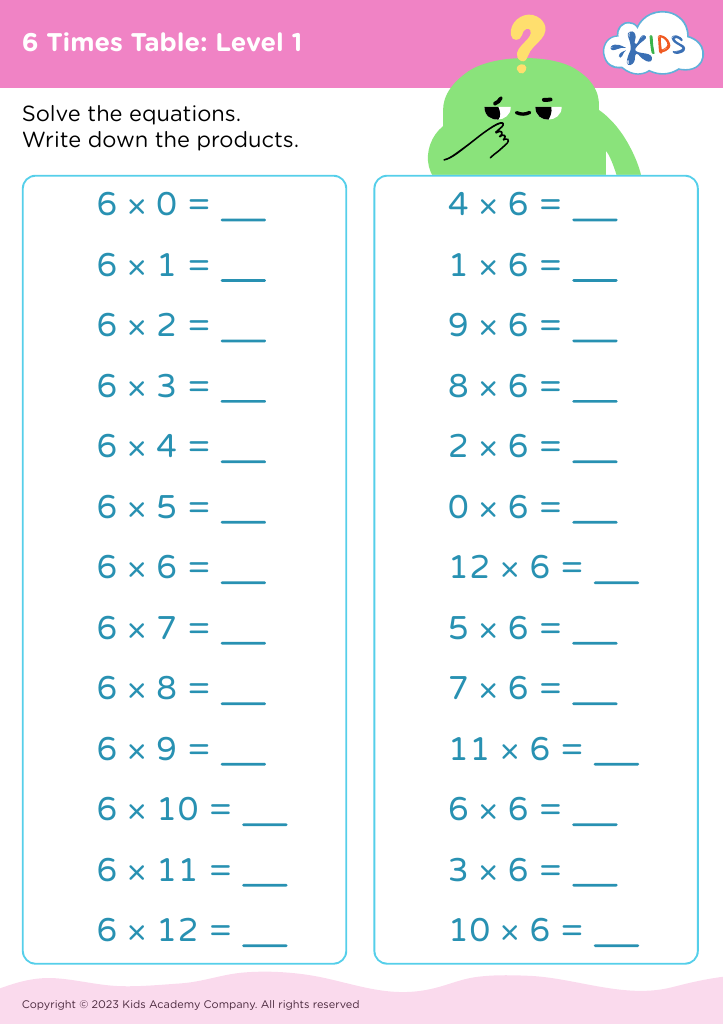
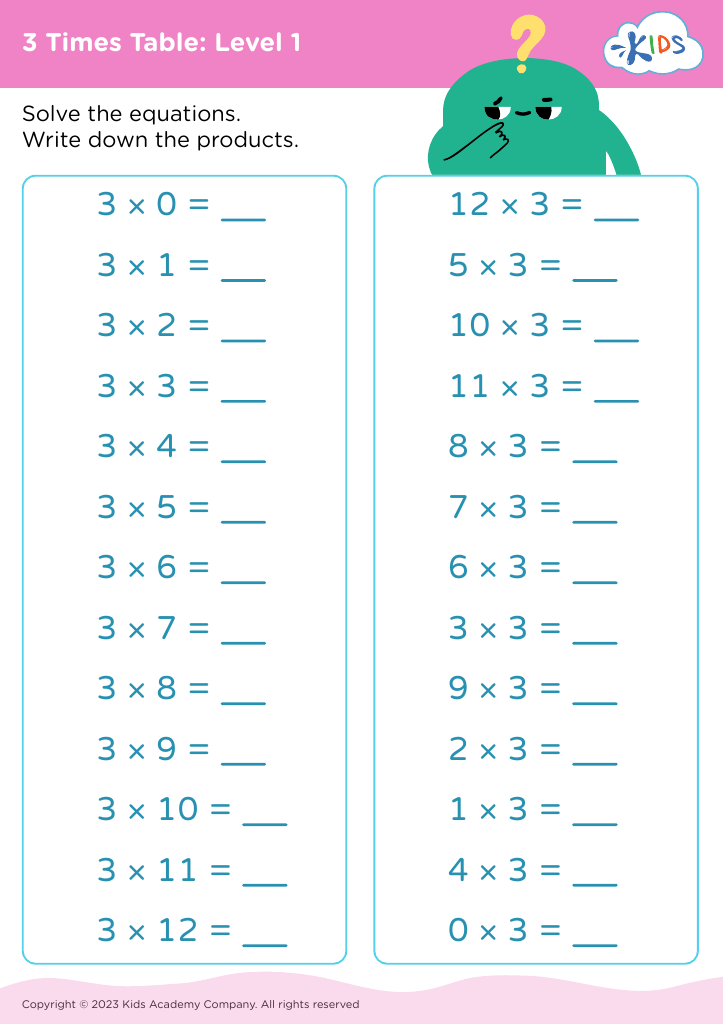
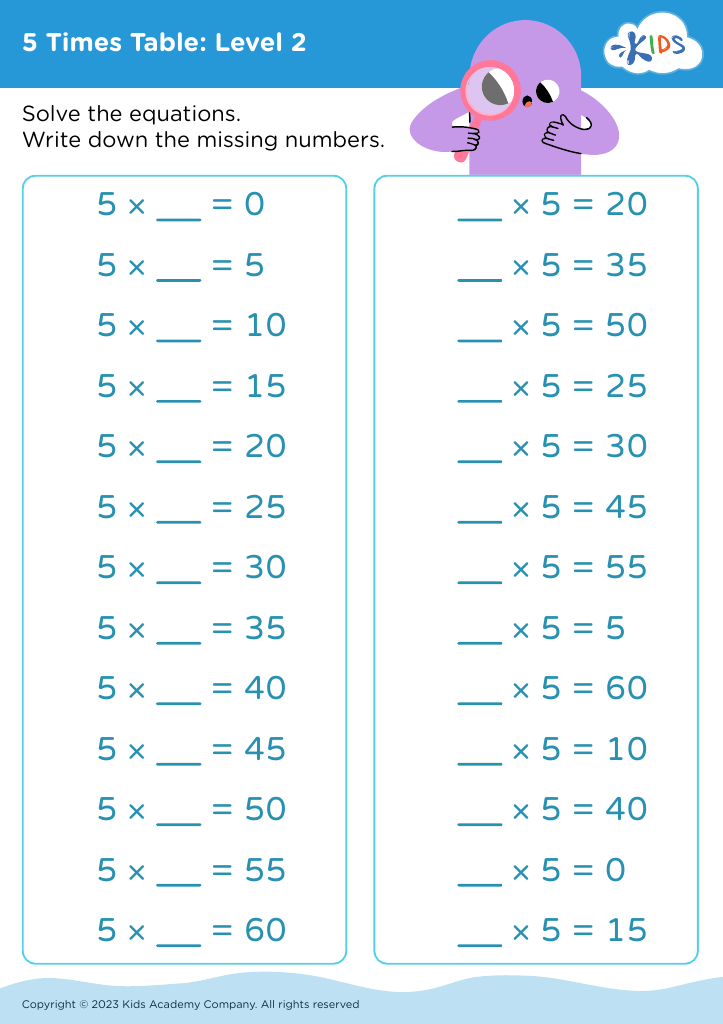








Familiarity with times tables for children ages 3-8 is vital for several reasons, benefiting both their academic and cognitive development. Mastery of basic multiplication lays the foundation for more advanced mathematical concepts, ensuring a smoother transition to topics such as division, fractions, and algebra. Moreover, times tables improve mental arithmetic abilities, enhancing problem-solving skills and boosting confidence in handling mathematical tasks.
Mathematics is integral to numerous aspects of everyday life. Understanding times tables helps young children grasp patterns and relationships between numbers, thereby sharpening their logical thinking and analytical skills. This also fosters a positive attitude toward mathematics from an early age, reducing anxiety and building a sense of achievement.
Parents and teachers play a key role in making learning fun and engaging through activities and games. Early familiarity with times tables supports consistent practice and reinforcement, critical for deep comprehension and long-term retention.
Educational success in early childhood often correlates with future academic achievement. Thus, investing time in teaching multiplication not only equips children with essential skills for school but also cultivates their intellectual curiosity, laying the groundwork for lifelong learning and success.








