Understanding times tables Multiplication Worksheets for Ages 3-8
6 filtered results
-
From - To
Explore our "Understanding Times Tables Multiplication Worksheets" designed for children aged 3-8! These engaging resources help young learners grasp the concept of multiplication in a fun and interactive way. With colorful worksheets tailored to different skill levels, kids can practice times tables through various activities that enhance their understanding of basic multiplication concepts. Our worksheets support essential math skills, making learning enjoyable while fostering confidence in young mathematicians. Ideal for both classroom and home settings, these resources cater to diverse learning styles, ensuring every child can thrive. Start your child’s multiplication journey today with our comprehensive and user-friendly worksheets!
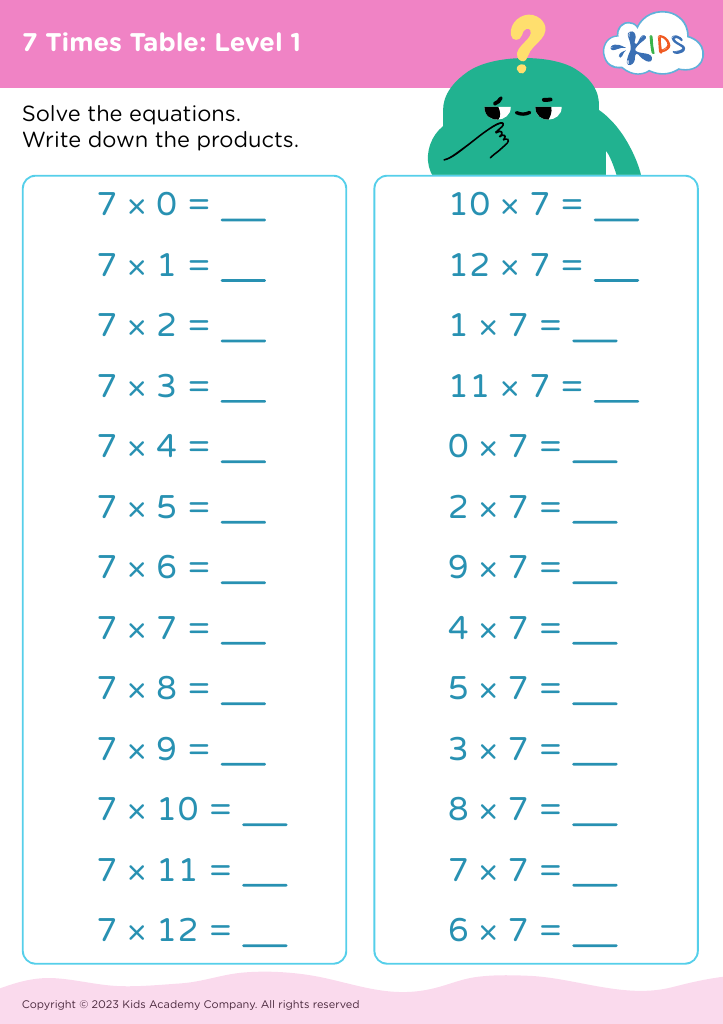
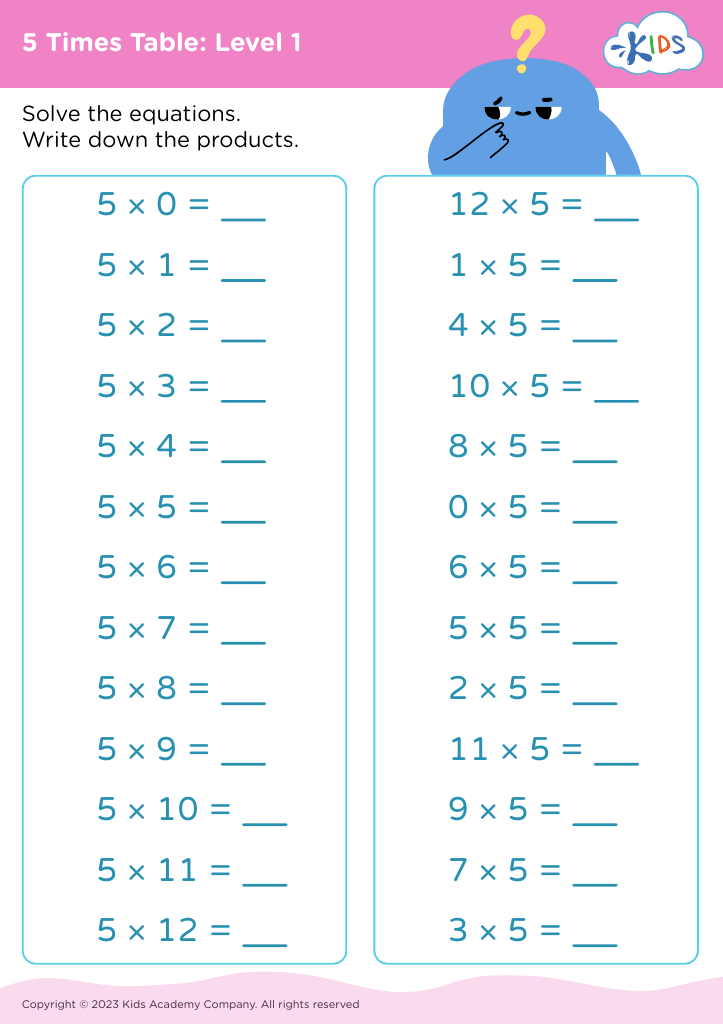
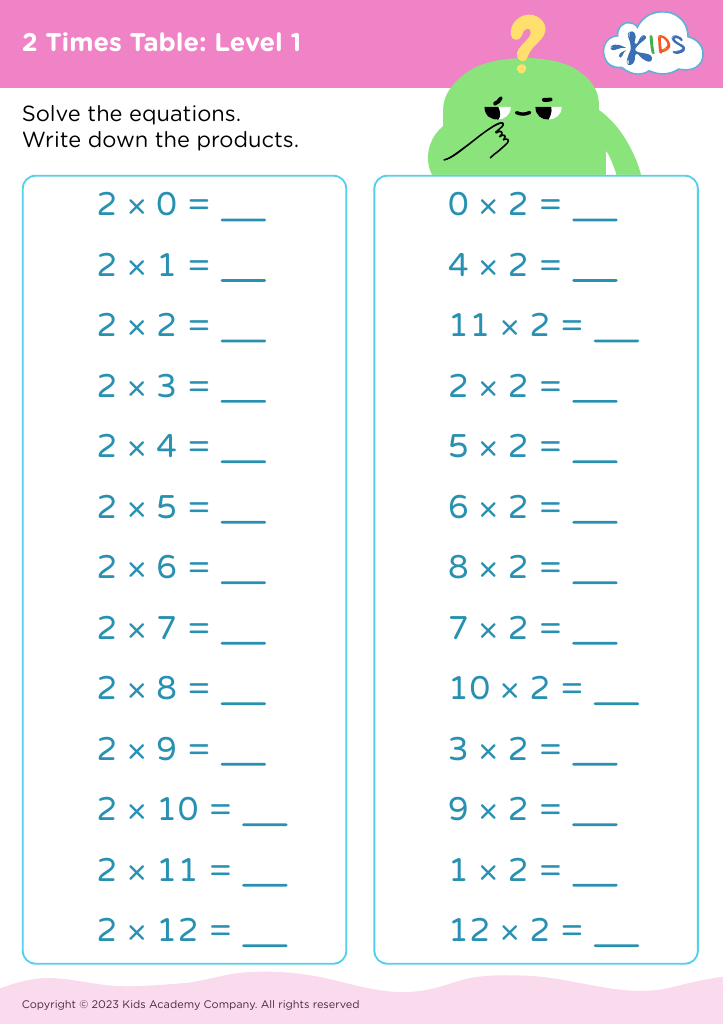
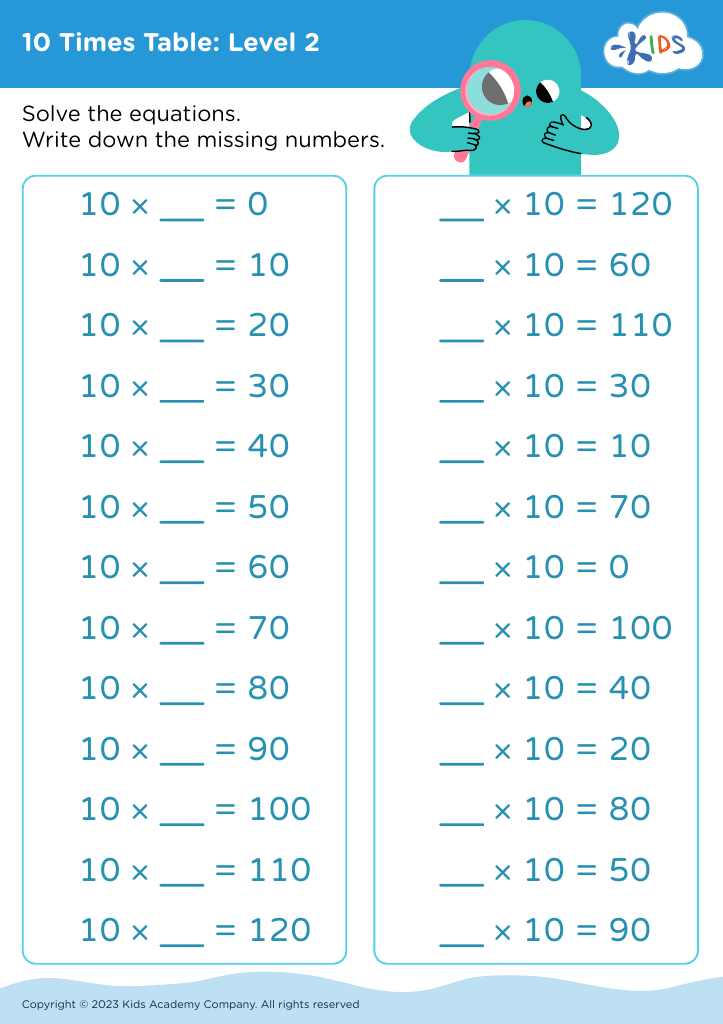
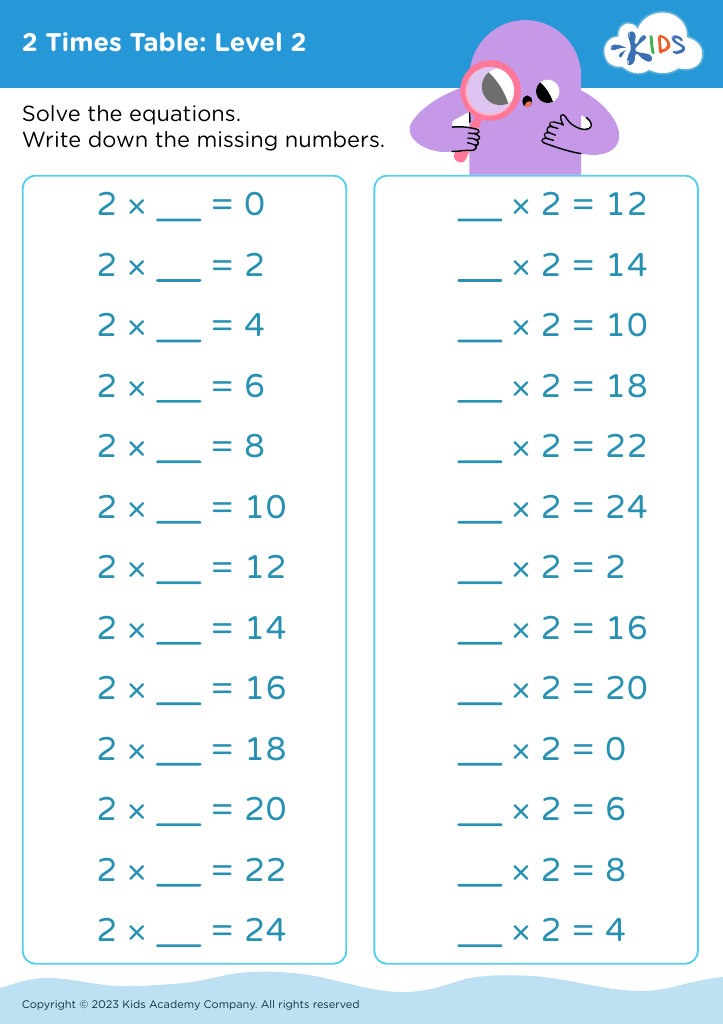
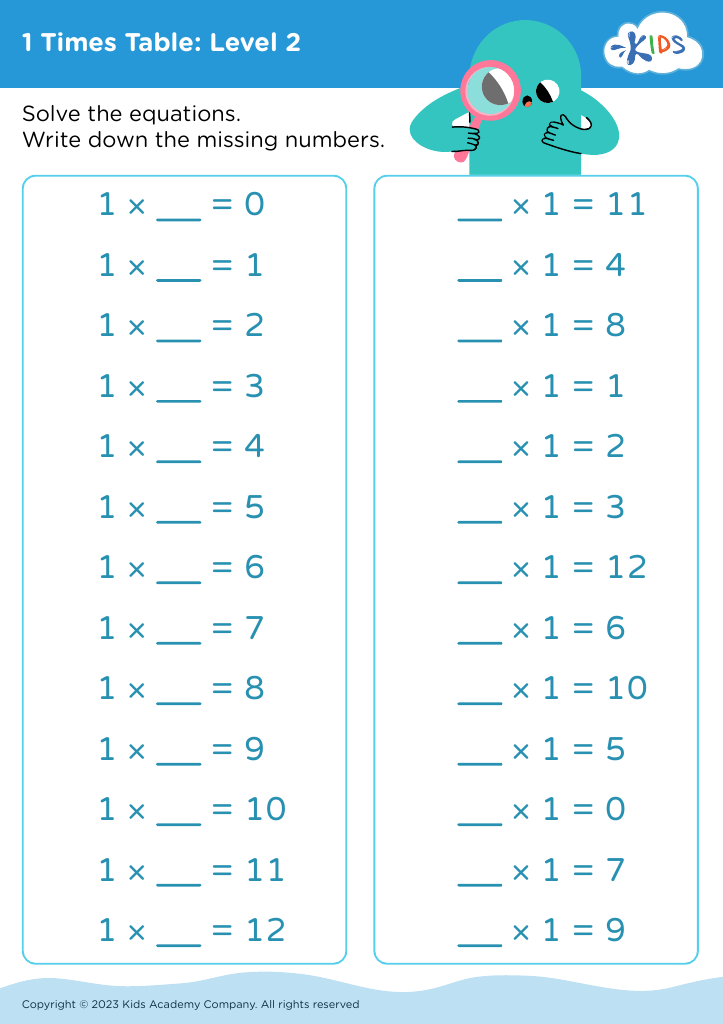







Understanding times tables and multiplication at an early age is crucial for children's mathematical development and overall academic success. For ages 3-8, introducing these concepts fosters a strong foundation in numeracy that will benefit them in later years. Mastery of multiplication helps children develop logical thinking, problem-solving skills, and a better grasp of mathematical relationships.
For parents and teachers, engaging children with times tables in a fun and interactive way encourages a positive attitude toward math. Incorporating games, songs, and hands-on activities makes learning enjoyable, promoting retention and a sense of achievement. As multiplication concepts are tied to everyday experiences, such as sharing items into groups or counting in multiples, children can see the practicality of math in their daily lives.
Building confidence in multiplication also prepares children for more complex math topics they will encounter in the future, such as division, fractions, and algebra. A strong understanding of these foundational skills can reduce anxiety around math and promote a growth mindset, empowering kids to tackle challenges with determination. Ultimately, prioritizing multiplication understanding in early education sets the stage for a lifelong appreciation of learning and problem-solving.








