Number identification Numbers 0–10 Worksheets for Ages 3-8
3 filtered results
-
From - To
Empower your child's mathematical journey with our engaging "Number Identification 0–10 Worksheets for Ages 3-8." These thoughtfully designed printable worksheets are perfect for young learners embarking on their number recognition adventure. Each worksheet provides fun and interactive activities to help children confidently identify and differentiate numbers. Ideal for preschool, kindergarten, and early elementary students, this collection boosts early math skills through visually appealing graphics and playful exercises. Perfect for classroom use or at-home practice, these worksheets lay a strong foundation for future math success, making learning numbers an enjoyable experience for young minds. Download now and bring learning to life!
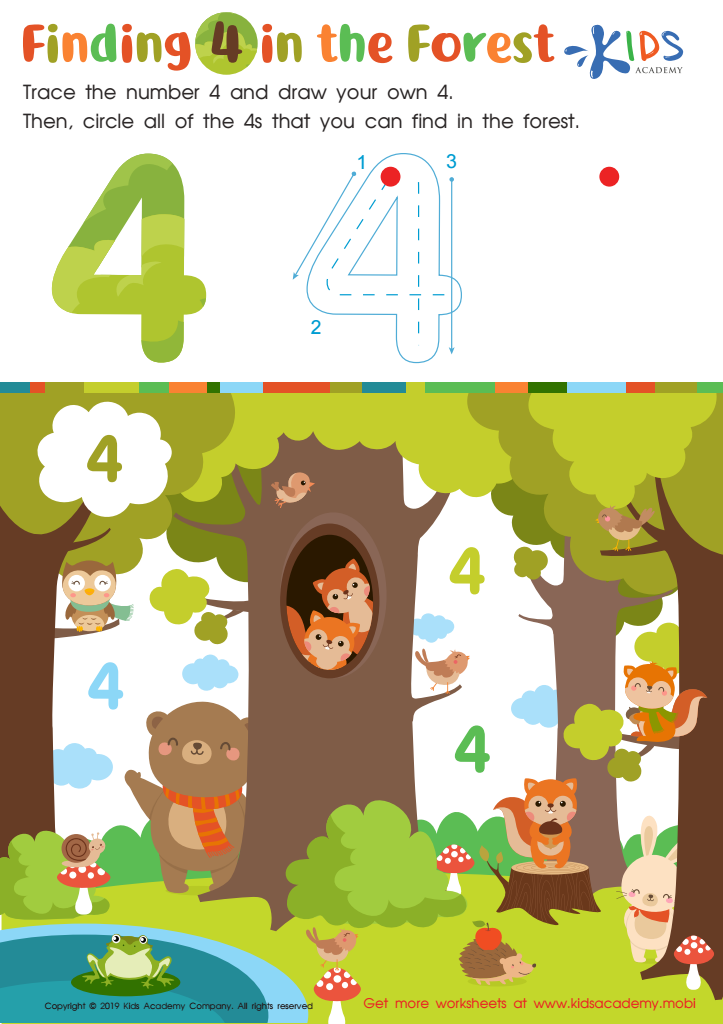
Finding 4 in the Forest Worksheet
 Assign to My Students
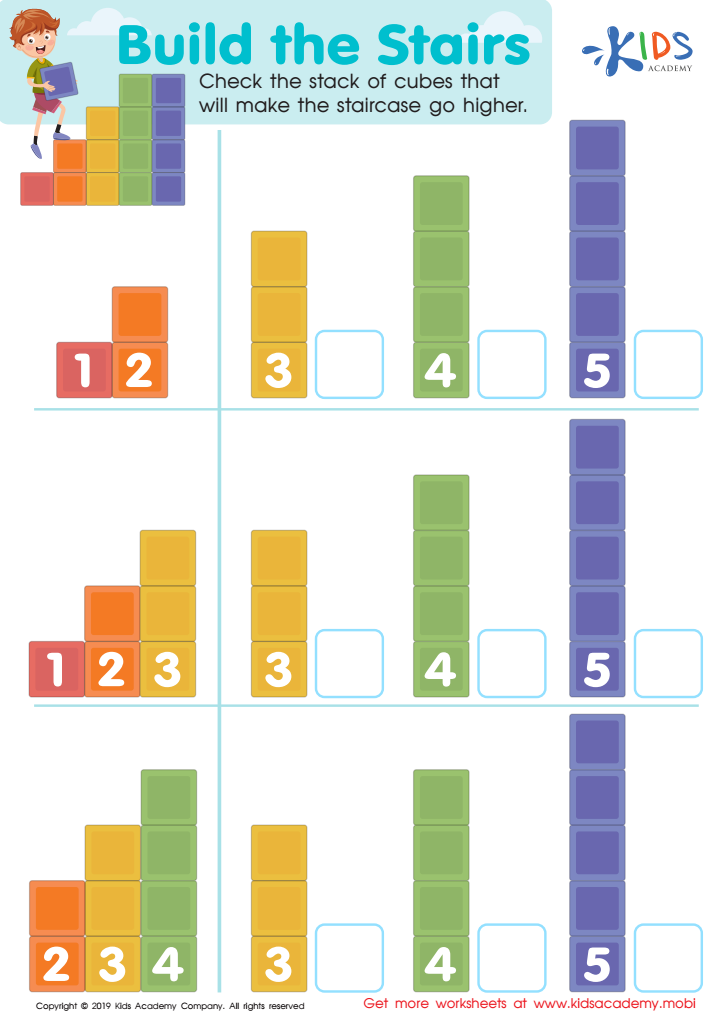
Build the Stairs Worksheet
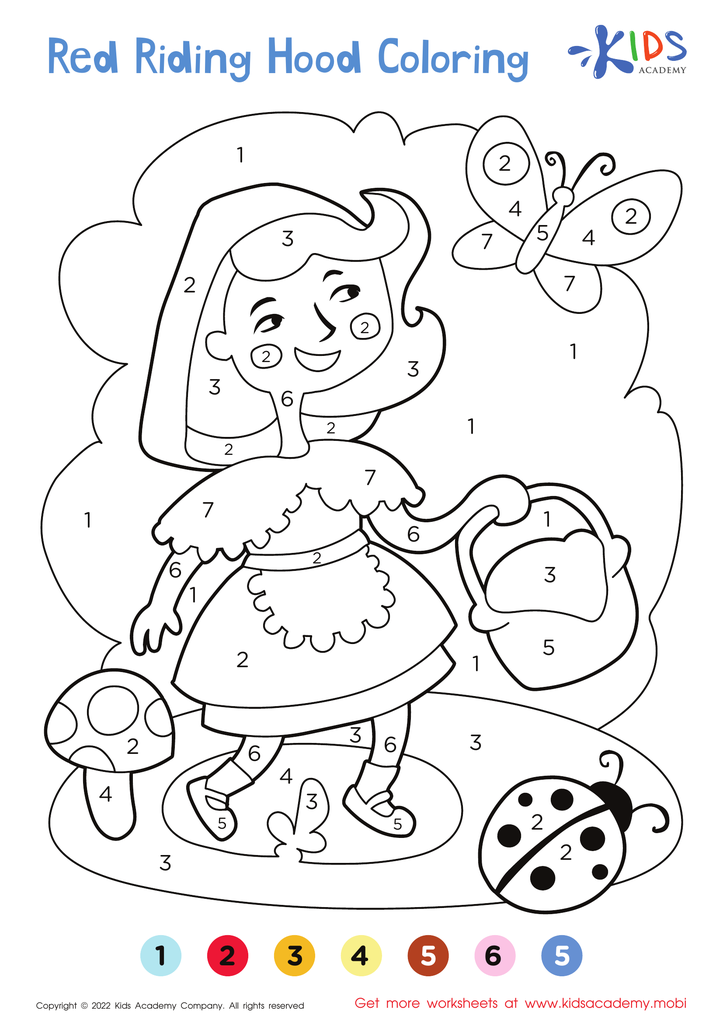
Little Red Riding Hood – Coloring by Numbers








Parents and teachers should prioritize the identification of numbers 0–10 in children ages 3-8 because these formative years are critical for laying the foundation of mathematical understanding. Mastery of number identification serves as a cornerstone for countless future mathematical concepts, such as addition, subtraction, and even more complex operations.
Recognizing numbers helps children begin to understand quantity, which is essential for developing counting skills and the ability to compare numbers and amounts. This early numeracy sets the stage for problem-solving abilities that are applicable in academic disciplines and daily life. For instance, knowing that 3 is less than 5 forms an early appreciation for the comparative size of numbers, which can be practically applied to situations like sharing toys or assessing time.
Furthermore, number identification aids in cognitive development and enhances memory by challenging children to quickly recall the names and sequences of numbers. It also promotes fine motor skills when children begin to write these numbers down, integrating cognitive and physical learning.
High engagement with number activities and games can make this learning process enjoyable, fostering a positive attitude towards mathematics from a young age. By prioritizing number identification, parents and teachers can ensure children are well-equipped for educational success and everyday mathematical tasks, giving them confidence in their abilities right from the start.








