Categorization skills Sorting Worksheets for Ages 3-8
5 filtered results
-
From - To
Boost your child's cognitive development with our "Categorization Skills Sorting Worksheets for Ages 3-8." Designed to enhance young learners' critical thinking and organizational skills, these printable worksheets offer fun and engaging sorting activities. Kids will learn to categorize objects by color, shape, size, and more, fostering their ability to identify patterns and make connections. Ideal for preschool to early elementary students, these exercises support structured learning at home or in the classroom. Start your child's journey towards mastering categorization with our expertly crafted resources! Perfect for developing essential skills in an enjoyable way.
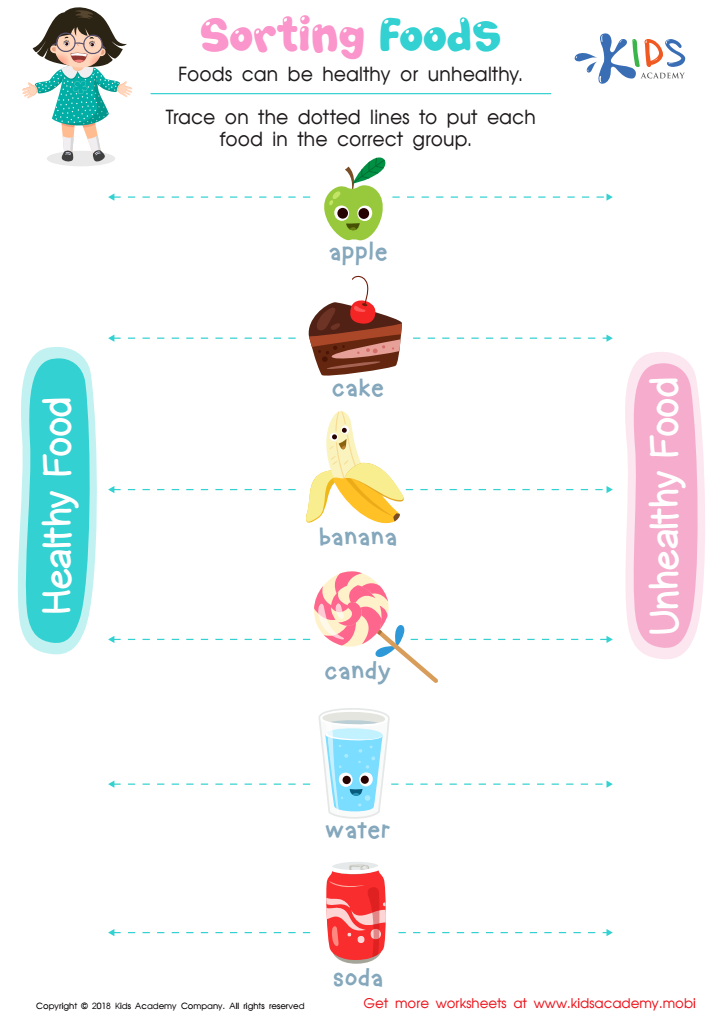
Sorting Food Worksheet
 Assign to My Students
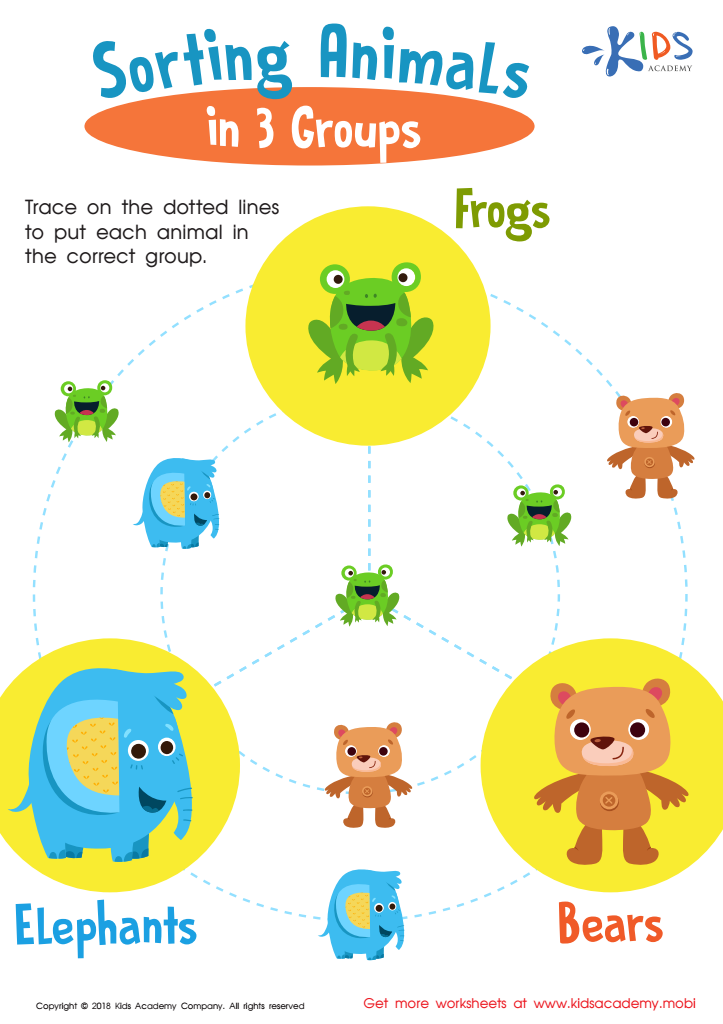
Sorting Animals in 3 Groups Worksheet
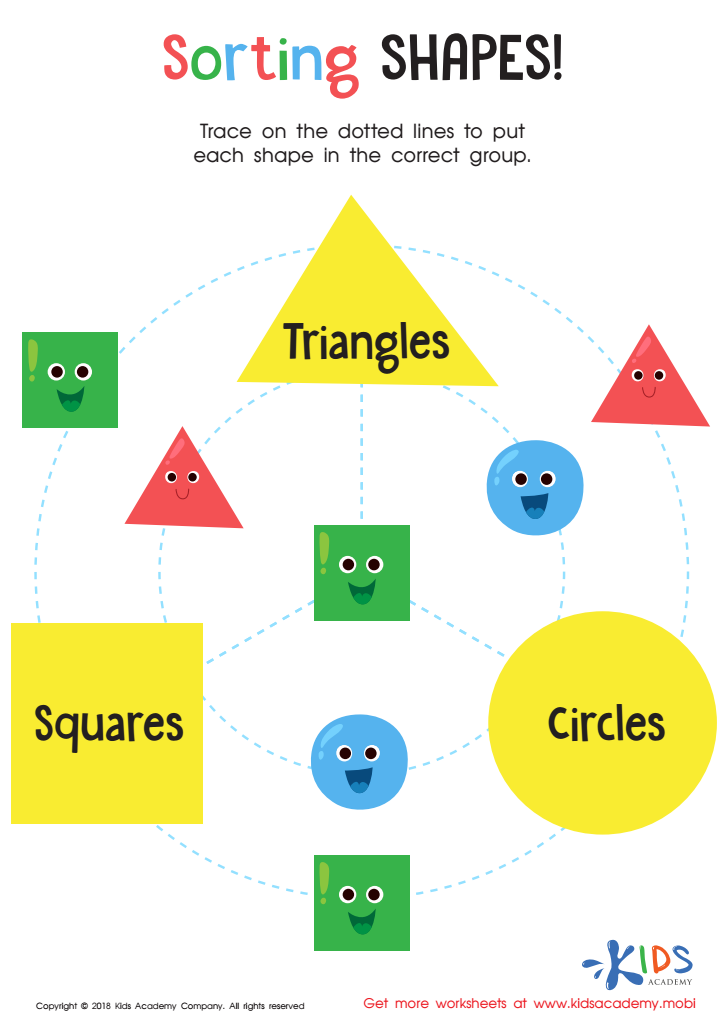
Sorting Shapes - Part 3 Worksheet
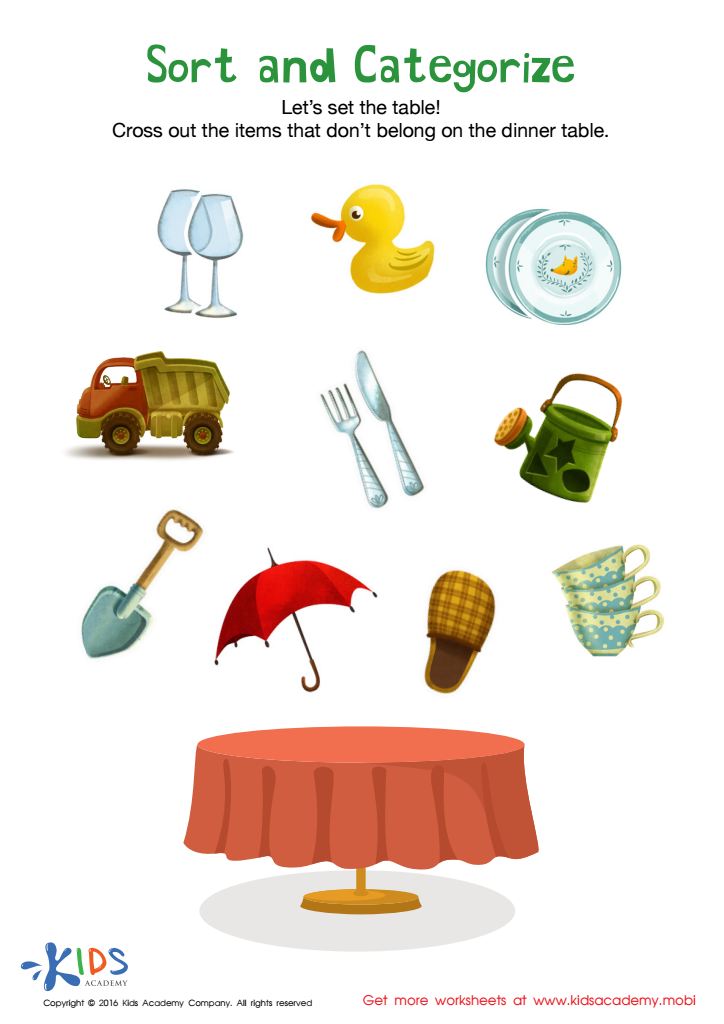
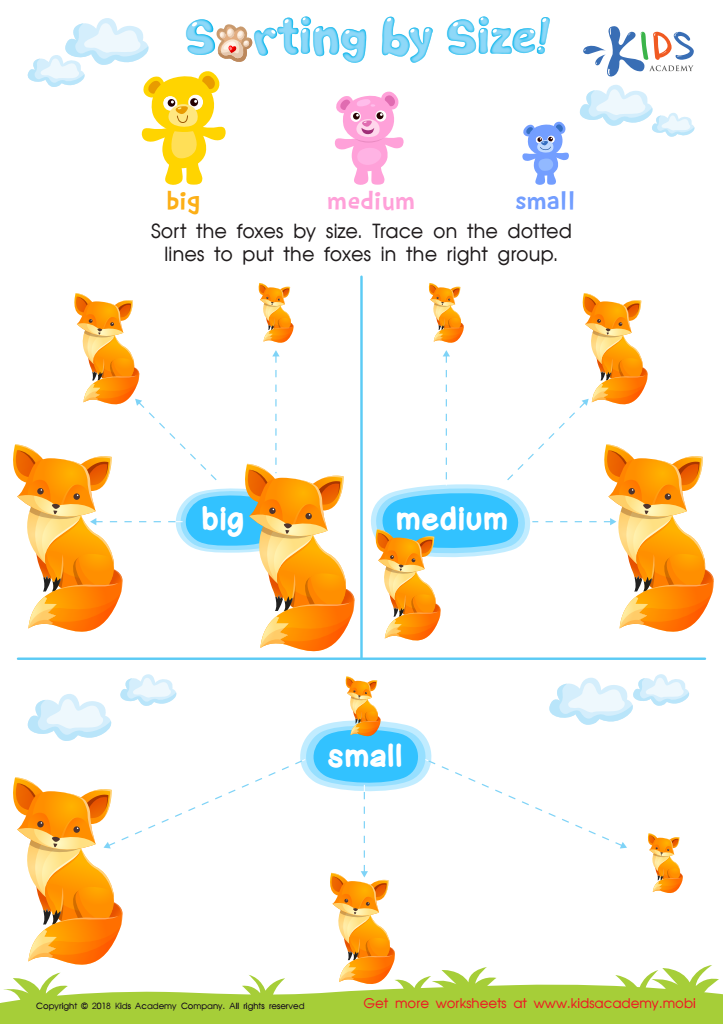
Sorting by Size Worksheet








Categorization skills, essential for children aged 3-8, directly influence cognitive development, laying the groundwork for advanced thinking and learning. These skills help children understand and organize the world, as they learn to sort objects, ideas, and information into groups based on common characteristics. This foundational ability promotes critical thinking, problem-solving, and decision-making.
For parents and teachers, nurturing categorization skills involves providing structured and playful sorting activities that can range from organizing toys by color or shape to grouping everyday items at home or in the classroom. Through these activities, children practice observation, comparison, and analysis—key components of advanced learning. Categorization also strengthens language skills, as children use descriptive words and articulate their reasoning.
Furthermore, early competency in categorization can enhance mathematical understanding, as it mirrors activities like classifying numbers and shapes. It aids in reading readiness by helping children recognize letter patterns and word families, thus supporting their overall academic success. Additionally, these skills foster cognitive flexibility and attention to detail, fostering lifelong learning habits.
In summary, categorization not only equips children with essential cognitive skills but also supports their emotional and social development by providing them with a structured way to understand their surroundings. Therefore, parents and teachers should prioritize and integrate these activities into daily routines to foster a supportive learning environment.








