Sorting skills Sorting Worksheets for Ages 3-8
5 filtered results
-
From - To
Unlock your child's potential with our engaging Sorting Skills Worksheets, designed specifically for ages 3-8! These activities promote critical thinking, improve cognitive abilities, and enhance fine motor skills through fun and interactive sorting exercises. Children will explore various concepts such as shapes, colors, and sizes, helping them develop essential sorting abilities that are foundational for future math learning. Each worksheet is tailored to ensure it's age-appropriate and captivating for young learners. Foster creativity and concentration as your child sorts objects and gains confidence in their math skills. Start your sorting adventure today and watch your child's learning flourish!
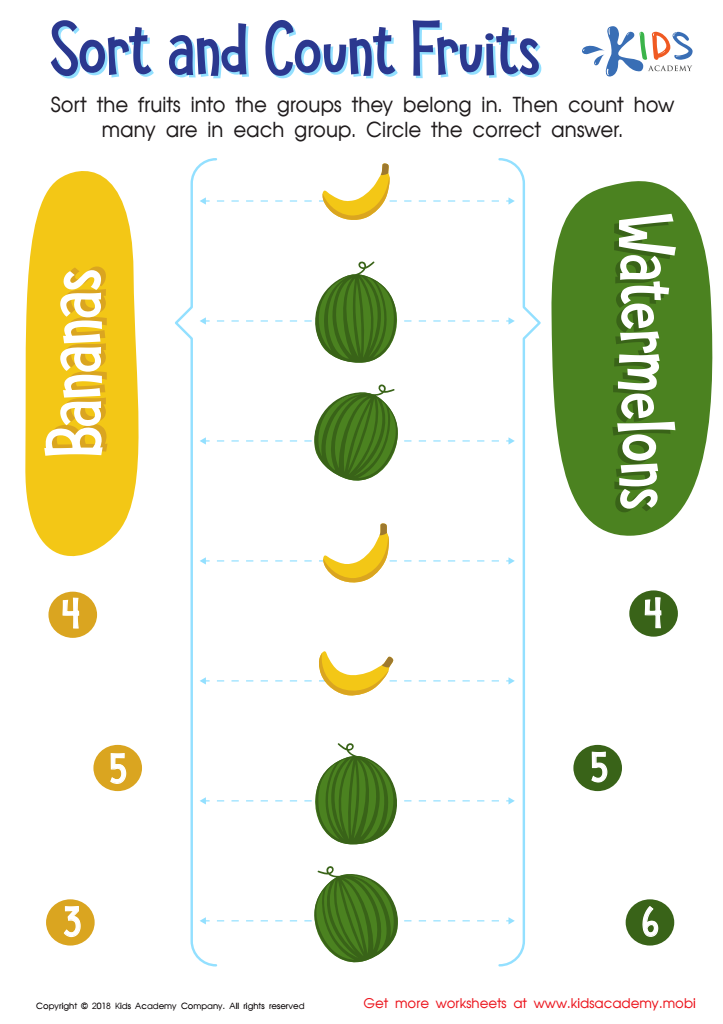
Sort and Count Fruits Worksheet
 Assign to My Students
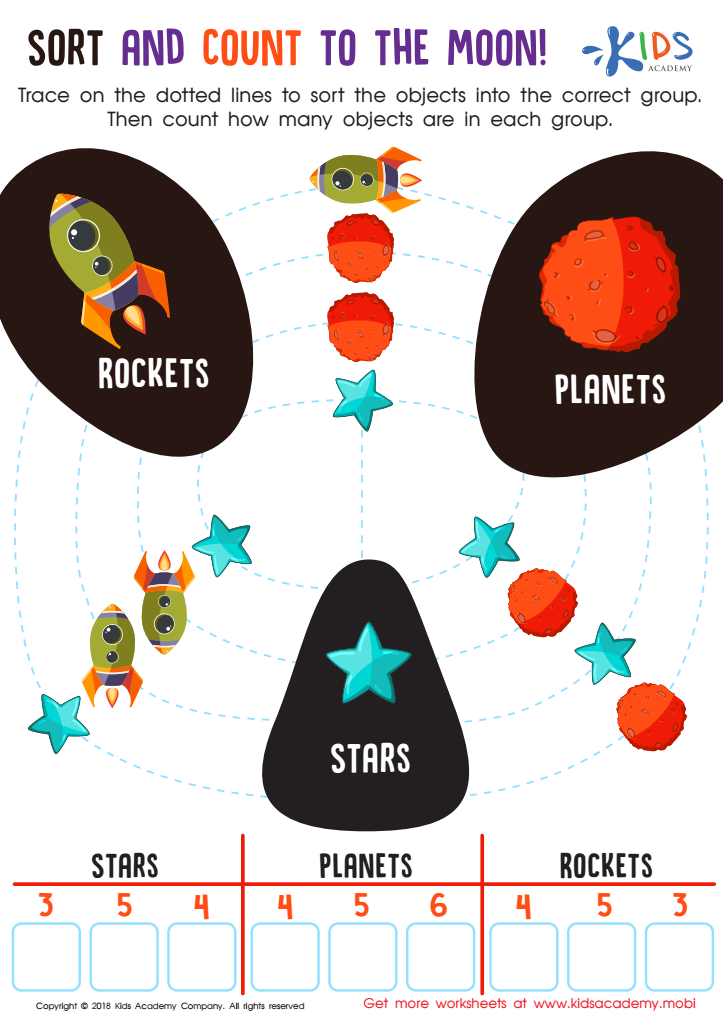
Sort and Count to the Moon Worksheet
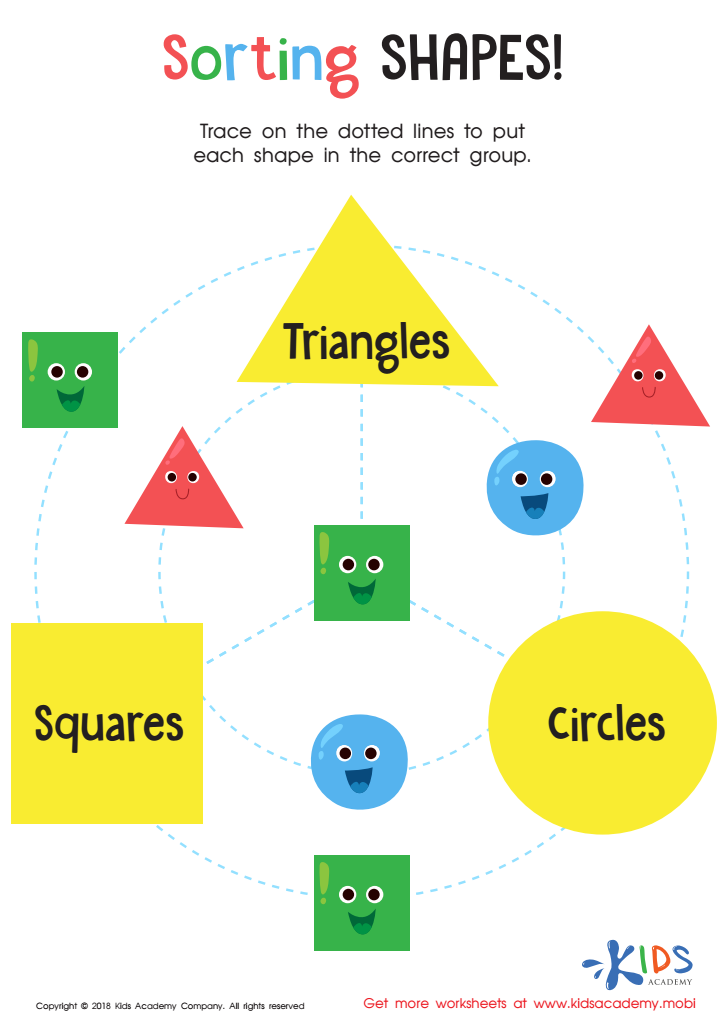
Sorting Shapes - Part 3 Worksheet
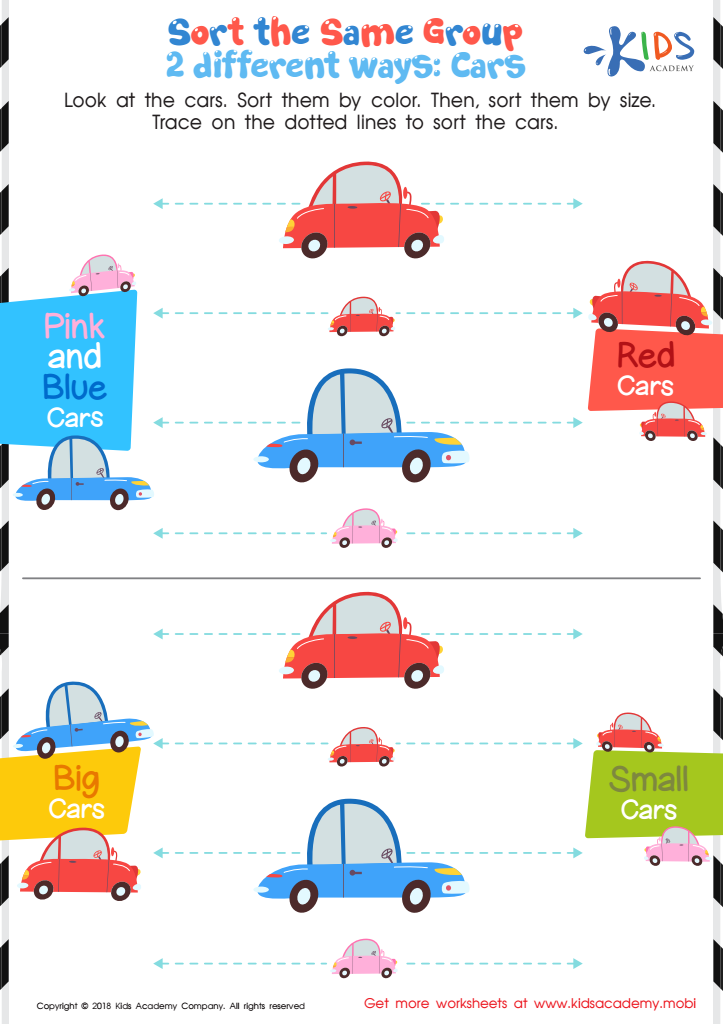
Sort the Same Group 2 Different Ways: Cars Worksheet
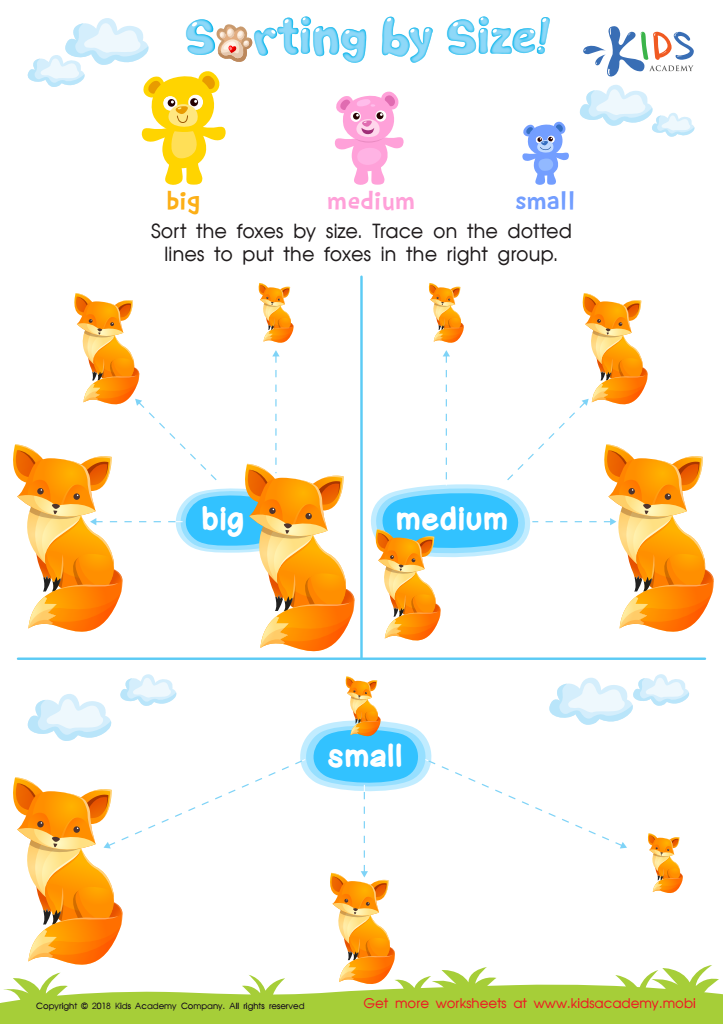
Sorting by Size Worksheet








Sorting skills are crucial for young children ages 3-8, as they lay the foundation for vital cognitive, social, and emotional development. Parents and teachers should care about sorting skills for several reasons.
Firstly, sorting helps enhance critical thinking and problem-solving abilities. By grouping objects based on size, shape, color, or other attributes, children learn to recognize patterns and categorize information, which are essential skills in mathematics and science.
Secondly, sorting activities promote fine motor skills. Engaging in hands-on sorting tasks aids in developing hand-eye coordination and dexterity, which are important for writing and other basic tasks as children grow.
Moreover, sorting strengthens vocabulary and communication skills. As children articulate their sorting choices, they learn new words and concepts, enhancing language development.
Finally, sorting encourages social interaction. Collaborative sorting activities foster teamwork and turn-taking, teaching children important social skills like cooperation and patience.
In summary, sorting skills nurture critical cognitive abilities, fine motor development, language enrichment, and social interaction. Investing time in activities that promote sorting can have long-lasting benefits in a child’s overall growth and readiness for future academic challenges.








