
Logical thinking development Subtraction Worksheets for Ages 3-8
3 filtered results
Difficulty Level
Grade
Age
-
From - To
Subject
Activity
Standards
Enhance your child's logical thinking skills with our engaging Subtraction Worksheets designed for ages 3-8! These worksheets provide a fun and interactive way for young learners to grasp fundamental subtraction concepts while fostering critical thinking abilities. Each activity encourages problem-solving and encourages creative approaches to math challenges. Our carefully curated exercises not only simplify subtraction but also promote cognitive development essential for future academic success. Instill a love for learning in your child as they advance through relatable scenarios and vibrant visuals that make math enjoyable. Perfect for homeschoolers and classroom settings alike, these worksheets are a must-have resource for young learners!
Favorites
With answer key
Interactive
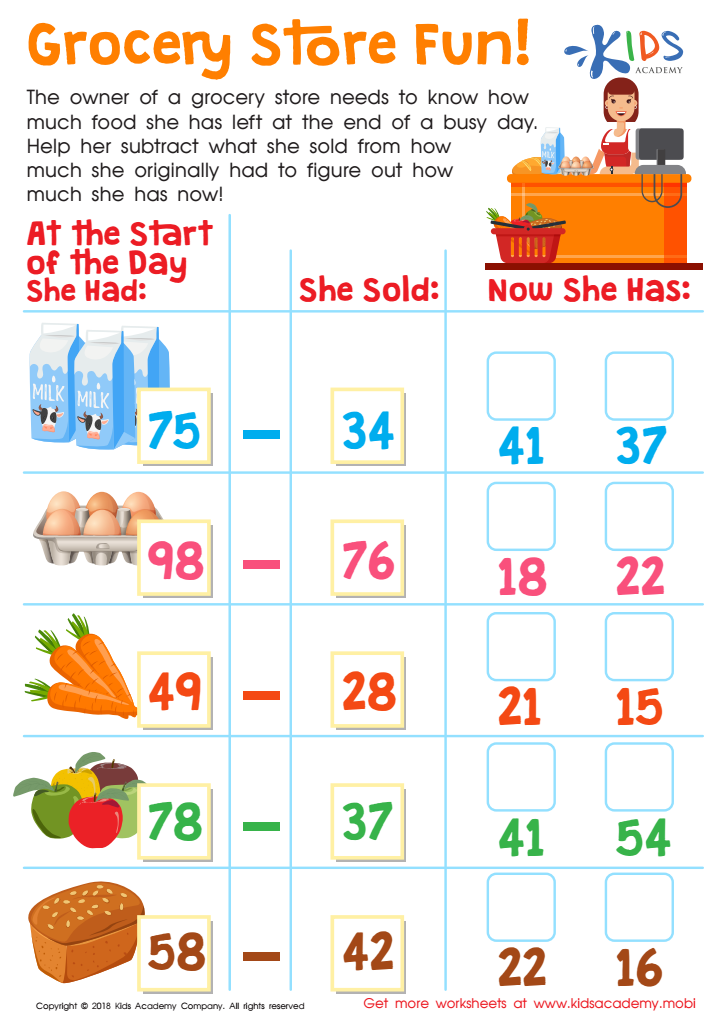
Grocery Store Fun! Worksheet
Let your kids have fun with this store worksheet. It requires them to help the owner by subtracting what she has sold from the original amount to figure out how much is left. Have them read and solve the equations in the printout to give the store owner the answer.
 Assign to My Students
Grocery Store Fun! Worksheet
Worksheet
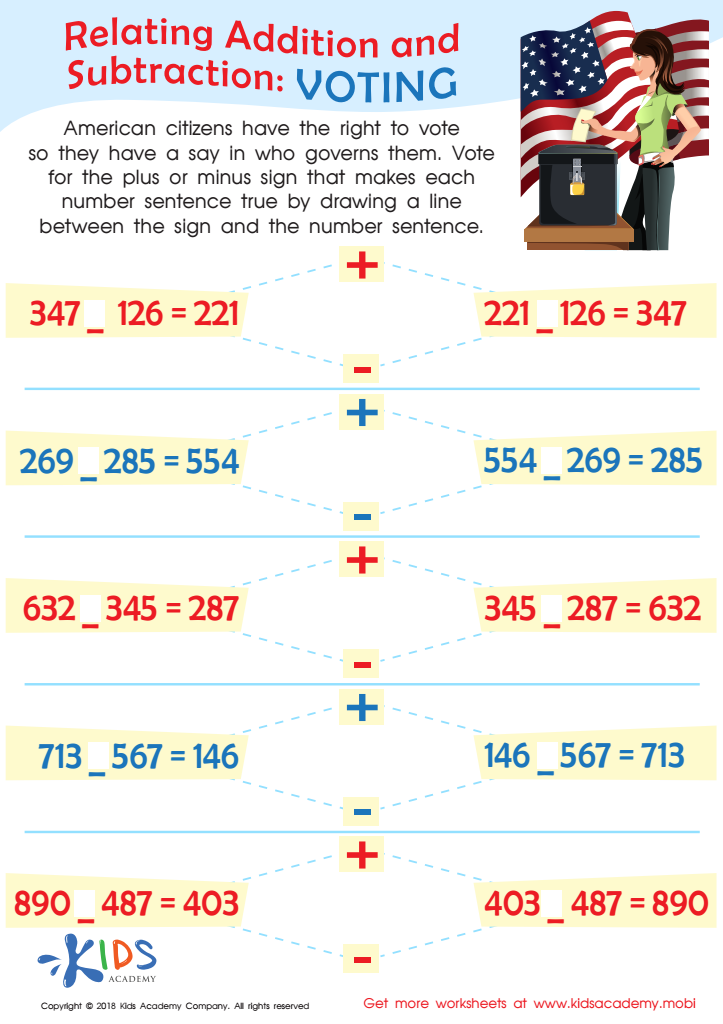
Voting Worksheet
This worksheet combines Social Studies and Math, teaching kids the democratic concept of voting. Guide learners to observe the problem, and decide if it needs a plus or minus. They "vote" for the correct answer by drawing a line from the problem to the correct operation symbol. Tally up the votes to check the answers!
Voting Worksheet
Worksheet
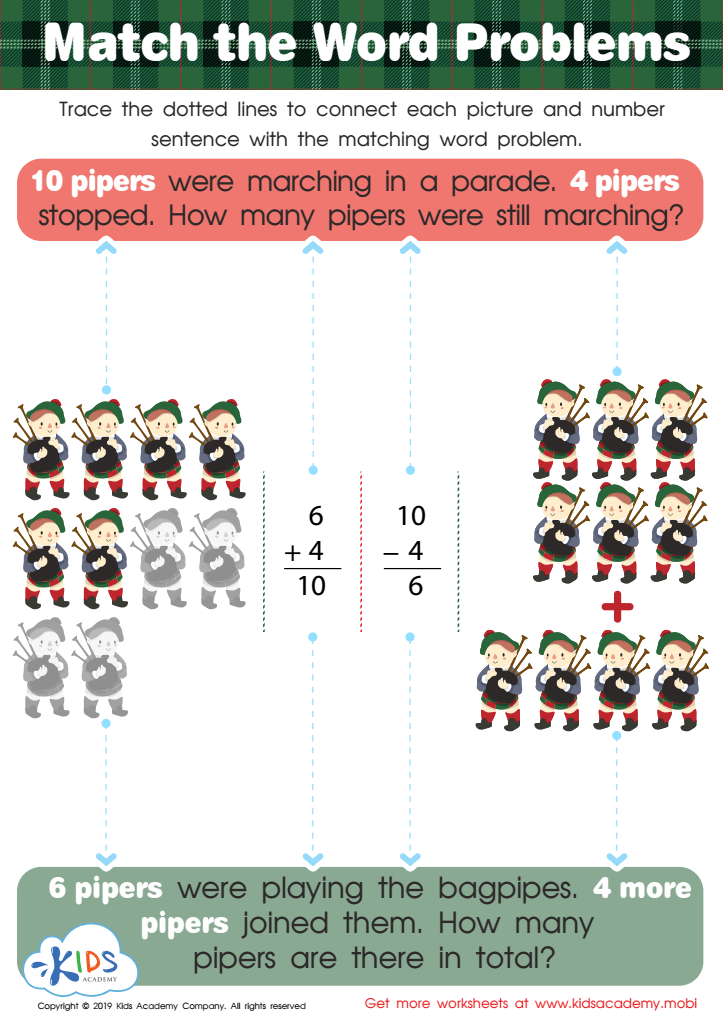
Match the Word Problems Worksheet
Read this word problem to your kids: Help them understand how it can be translated into a number problem. Trace the dotted lines to see how each picture and number sentence match the problem. With this worksheet, you can show your kids how easy it is to transform a word problem into a number problem.
Match the Word Problems Worksheet
Worksheet
Join Kids Academy for Free
Who is primarily going to use this learning content?






.jpg)

Logical thinking development, especially in the context of subtraction, is crucial for children aged 3-8, as it lays the foundation for future math skills and critical reasoning abilities. During these formative years, children are naturally curious and eager to explore concepts, making it an ideal time to introduce logical reasoning. Educators and parents should care about this development because proficiency in subtraction is not merely about finding answers; it’s about understanding relationships between numbers, which fosters deeper comprehension in mathematics overall.
Subtraction involves breaking down problems into smaller, more manageable parts. When children engage in logical thinking activities that focus on subtraction, they learn to analyze situations, make predictions, and draw conclusions. This skill transfers to various real-world scenarios, enhancing their ability to navigate challenges both in and outside the classroom.
Furthermore, logical thinking development nurtures resilience and patience. When children encounter difficult subtraction problems and learn to work through them, they build confidence in their abilities. Consequently, supporting logical thinking through subtraction paves the way for success in advanced math skills and helps develop a well-rounded, problem-solving mindset that extends beyond arithmetic to everyday decision-making. In summary, fostering these skills at an early age supports holistic child development and academic readiness.








