
Understanding patterns Times Tables Worksheets for Ages 3-8
3 filtered results
Difficulty Level
Grade
Age
-
From - To
Subject
Activity
Standards
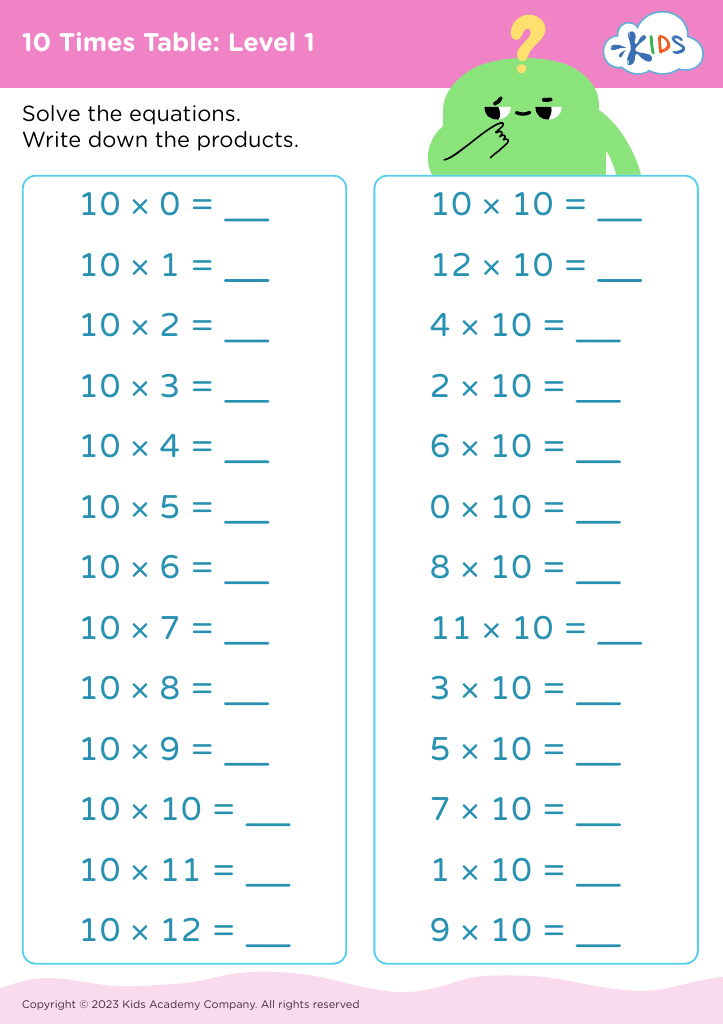
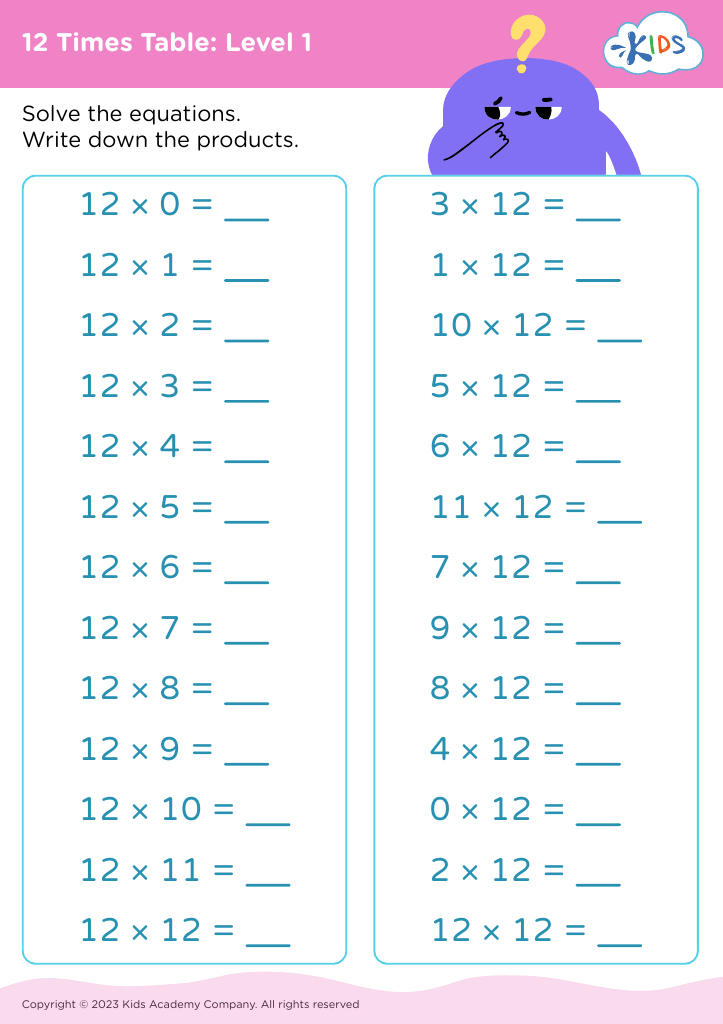
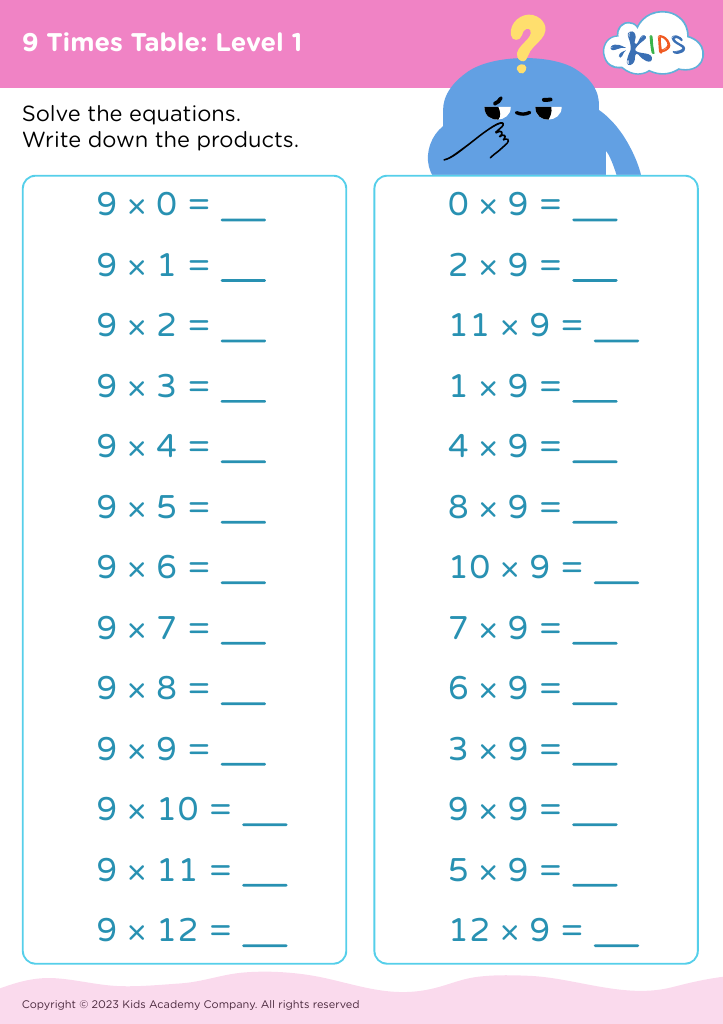
Unlock the potential of young learners with our engaging "Understanding Patterns Times Tables Worksheets" tailored for ages 3-8. Designed to captivate young minds, these worksheets merge fun with foundational math skills, fostering an early love for numbers and pattern recognition. Each activity encourages kids to explore multiplication concepts through engaging, age-appropriate exercises that align with their learning journey. Perfect for both home and classroom environments, our worksheets boost confidence and ensure a solid understanding of times tables, paving the way for future math success. Crafted by educational experts, this resource supports effective and enjoyable learning for young math enthusiasts.
Favorites
With answer key
Interactive
Join Kids Academy for Free
Who is primarily going to use this learning content?





Understanding patterns in times tables is crucial for young children aged 3-8 as it lays the foundation for future mathematical learning. Recognizing and internalizing these patterns can profoundly influence a child's numeracy skills and confidence in handling math.
Firstly, children at this age are highly receptive to patterns, which are visible in the repetitive nature of times tables. Grasping these patterns aids in quicker recall and excellent mental math skills. Instead of rote memorization, recognizing that, for instance, multiples of two always end in 0, 2, 4, 6, or 8 makes learning less daunting and more intuitive.
Furthermore, understanding times tables strengthens problem-solving abilities. Mastery of multiplication aids in grasping related concepts like division, fractions, and algebra, creating a robust mathematical foundation. Children with strong times table knowledge can approach complex problems with confidence.
Finally, early proficiency in multiplication boosts academic confidence and reduces math anxiety. When children feel competent in math, they tend to enjoy it more, fostering a positive attitude toward learning and academics.
In summary, parents and teachers should prioritize understanding patterns in times tables for young children because it enhances numeracy, builds problem-solving skills, and promotes a confident, positive learning attitude.








