Logical Reasoning Two-step Word Problems Worksheets for Ages 3-8
3 filtered results
-
From - To
Our Logical Reasoning Two-step Word Problems Worksheets offer engaging activities designed for children ages 3-8. These worksheets develop critical thinking and problem-solving skills through fun and challenging puzzles. Each worksheet features multi-step problems that require young learners to use logic and reasoning to find the correct answers. Perfect for home or classroom use, these exercises align with educational standards, ensuring age-appropriate complexity. With colorful illustrations and relatable scenarios, kids stay motivated while building a strong math foundation. Boost your child’s confidence and proficiency in logical reasoning with our expertly crafted resources. Ideal for enhancing cognitive skills and academic success.
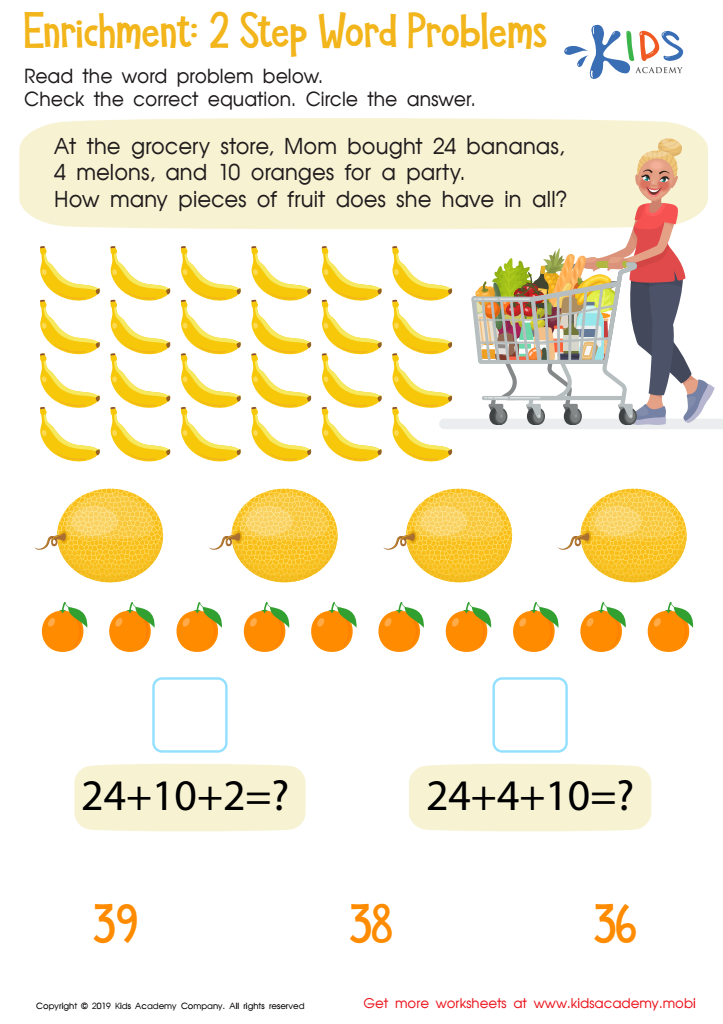
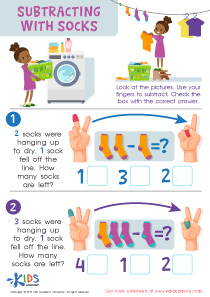
Enrichment -2 Step Word Problems Worksheet
 Assign to My Students
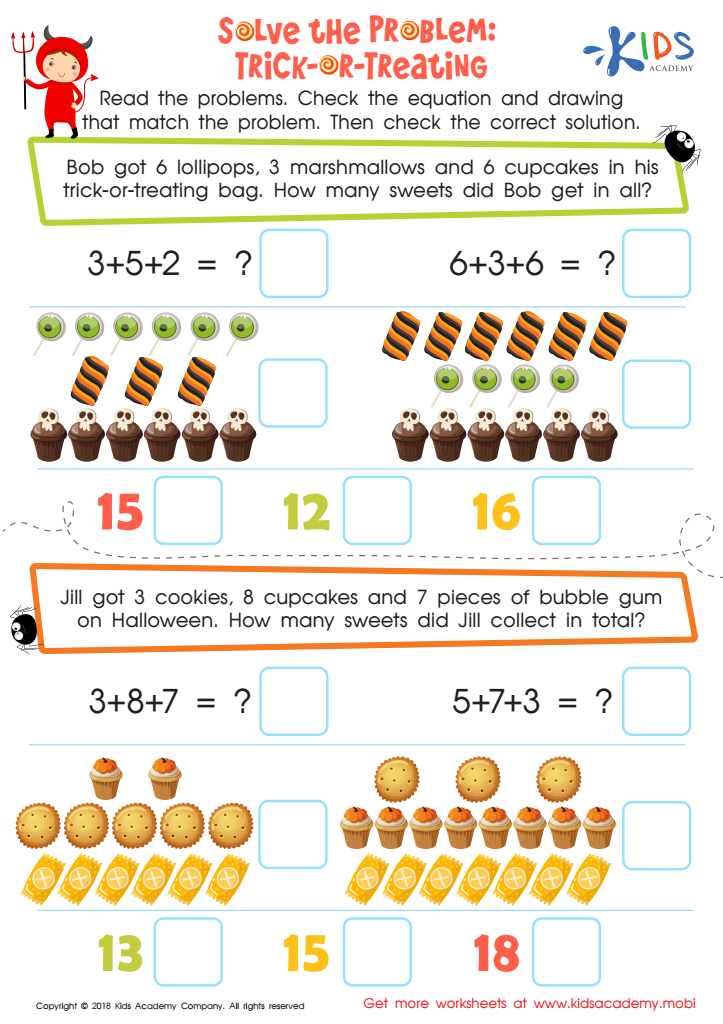
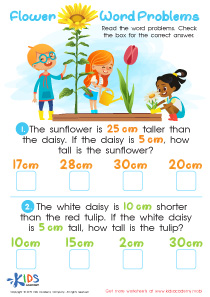
Solve the Problem: Trick–or–treating Worksheet
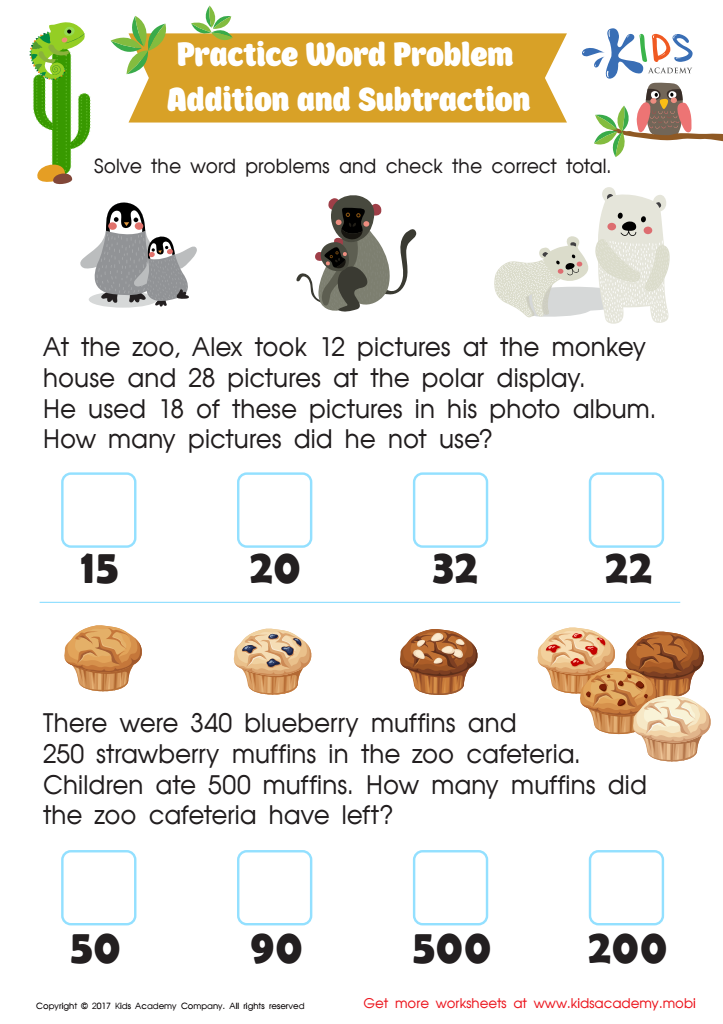
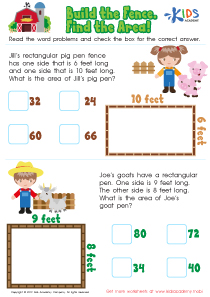
Addition and Subtraction: Word Problems Worksheet



Caring about Logical Reasoning Two-Step Word Problems for children aged 3-8 is vital as it fosters essential cognitive development and problem-solving skills that form the foundation for future learning. At this early age, children's brains are highly adaptable, ready to absorb and comprehend fundamental concepts that will support more complex thinking later on.
Engaging in these types of word problems enhances critical thinking, challenging children to think beyond straightforward solutions and encouraging a deeper understanding of relationships and sequences. This not only improves their mathematical reasoning and numerical skills but also aids in the development of language and comprehension, as they need to understand and process the information in the problem before attempting to solve it.
Moreover, such exercises boost children's confidence and persistence. Figuring out two-step problems teaches them how to tackle challenges systematically. They learn to break down problems into manageable parts, making them feel accomplished when they find the solution, which fosters a growth mindset.
Parents and teachers thus play a crucial role by introducing and encouraging these activities, ensuring children develop necessary, foundational cognitive tools early on. These skills extend beyond mathematics, influencing overall academic success and everyday decision-making abilities, thus nurturing competent, confident, and capable individuals.