Attention to Detail Building Vocabulary Worksheets for Ages 3-8
5 filtered results
-
From - To
Attention to Detail Building Vocabulary Worksheets for Ages 3-8
Our "Attention to Detail Building Vocabulary Worksheets" are designed for children ages 3-8 to enhance reading and vocabulary skills while fostering meticulousness. These engaging printable worksheets utilize vibrant images and fun exercises to help young learners identify differences, expand their vocabulary, and develop critical attention to detail. Perfect for early readers, these activities promote better word recognition and comprehension, refining their focus and observational skills. Use these educational tools to support your child's learning journey and watch as their language abilities grow, one word at a time. Explore our workbook series today to nurture budding readers!
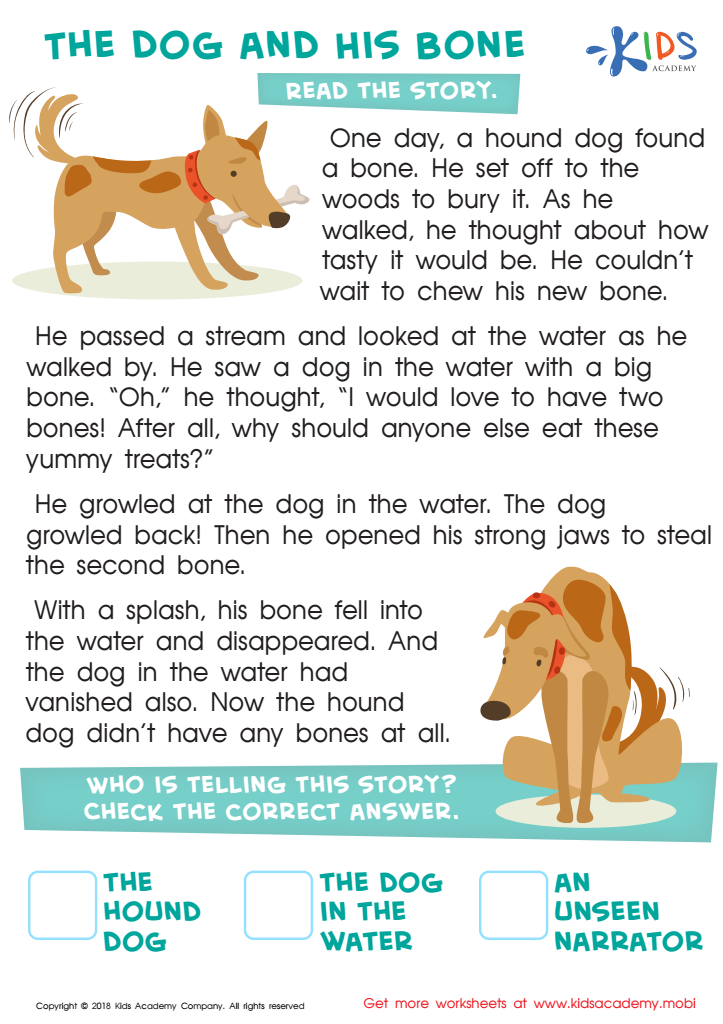
The Dog and His Bone Worksheet
 Assign to My Students











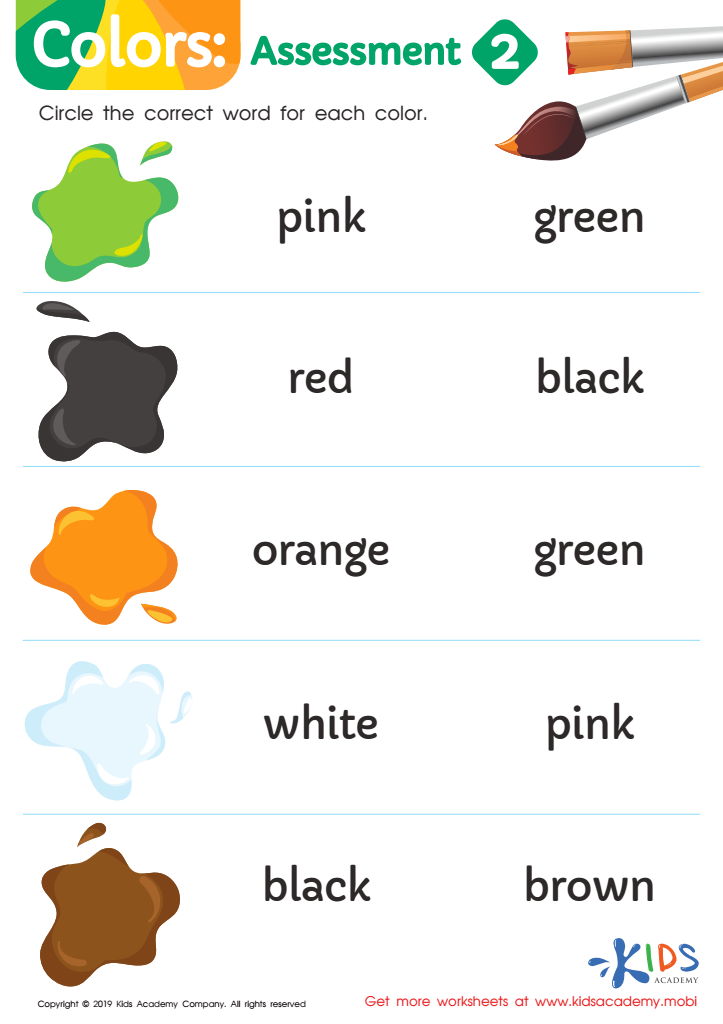
Colors: Assessment 2 Worksheet
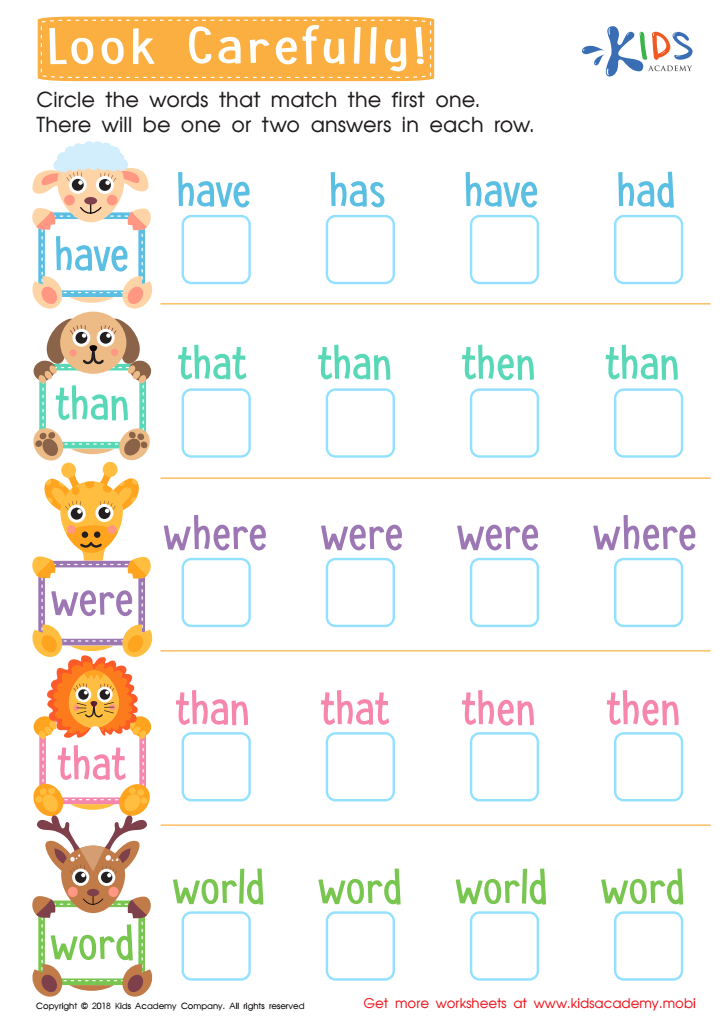
Look Carefully Worksheet
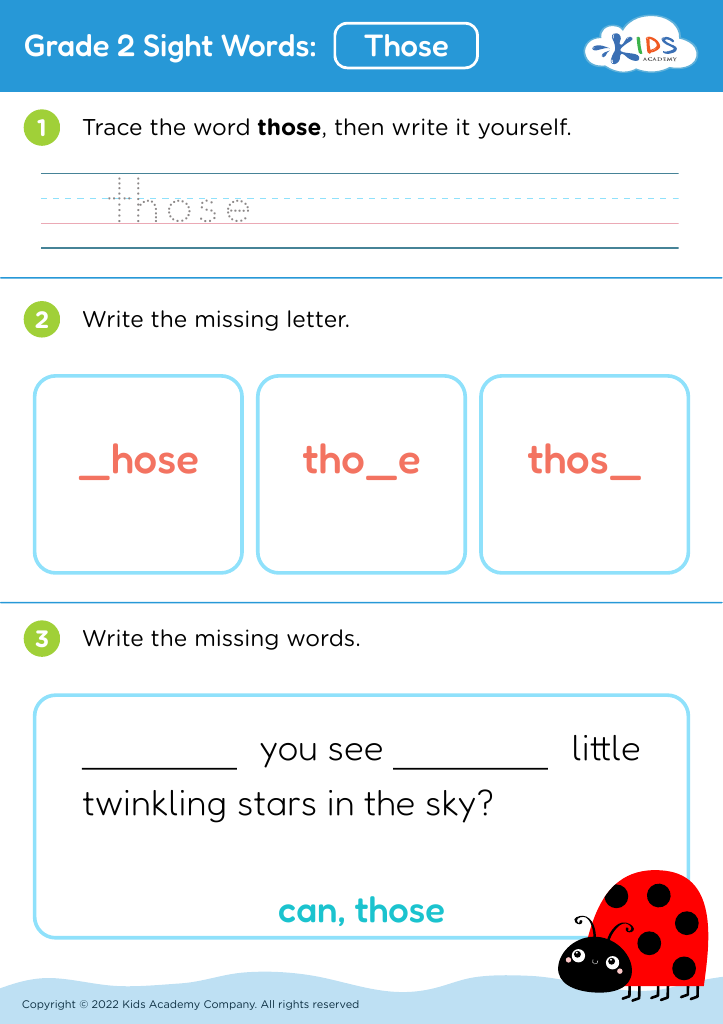
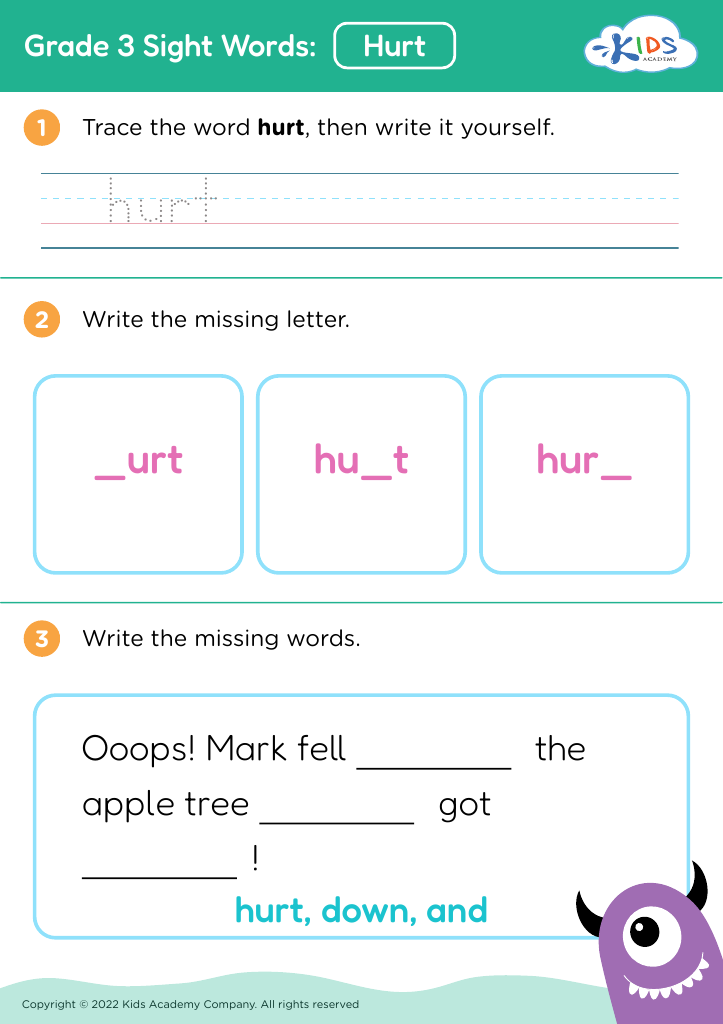








Attention to detail and building vocabulary in young children, ages 3-8, is crucial for several reasons. During these formative years, children's brains are incredibly receptive to new information and learning experiences. Developing a strong vocabulary enhances their ability to communicate effectively, comprehend stories, follow instructions, and express their thoughts and emotions clearly. Language skills are foundational to literacy, which predicts academic success in later years.
Attention to detail, on the other hand, aids children in recognizing differences and similarities, which is critical for problem-solving, reading comprehension, and everyday tasks. For example, noticing the differences between similar letters or words (such as 'b' and 'd' or 'cat' and 'cot') can significantly impact their reading and writing skills.
Parents and teachers play a pivotal role by creating rich, language-filled environments and providing activities that encourage focus. Reading books aloud, having conversations, and playing word games are simple yet powerful strategies that heighten children's vocabulary and attention to detail. In essence, these skills lay the groundwork for lifelong learning and are instrumental in a child's cognitive and social development, as well as their confidence in navigating the world around them.








