
Fraction comparison Building Vocabulary Worksheets for Ages 3-8
13 filtered results
Difficulty Level
Grade
Age
-
From - To
Subject
Activity
Standards
Unlock your child's potential with our Fraction Comparison Building Vocabulary Worksheets, designed for ages 3-8. These creative, engaging activities help young learners grasp the foundational concepts of fractions while expanding their vocabulary. Crafted by education experts, our worksheets use visual aids and relatable scenarios to make learning fun and effective. Whether comparing halves, thirds, or quarters, your child will develop critical skills that support mathematical and language development. Perfect for home or classroom use, these resources ensure kids build confidence and conquer early math challenges with ease. Foster better learning outcomes with Kids Academy’s customizable worksheet collection today!
Favorites
With answer key
Interactive
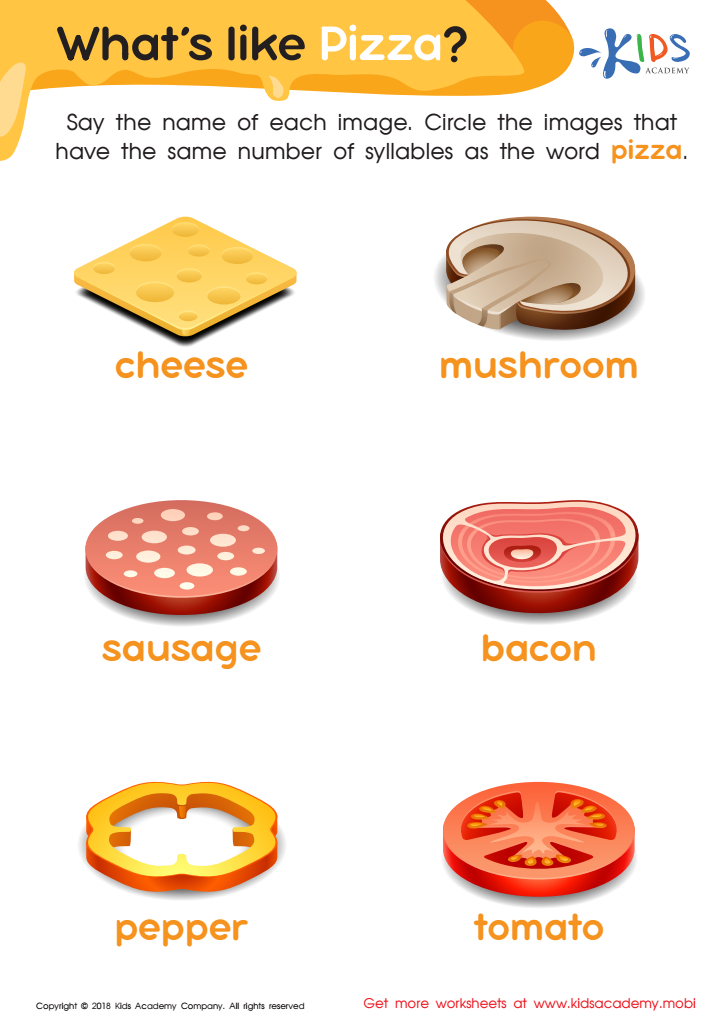
What's Like Pizza? Worksheet
Encourage your kids to exercise their minds with this pizza worksheet! Ask them to name the ingredients they like on their favourite pizzas. Then, help them circle the images that have the same number of syllables as 'pizza'. They'll have fun while learning too!
 Assign to My Students
What's Like Pizza? Worksheet
Worksheet











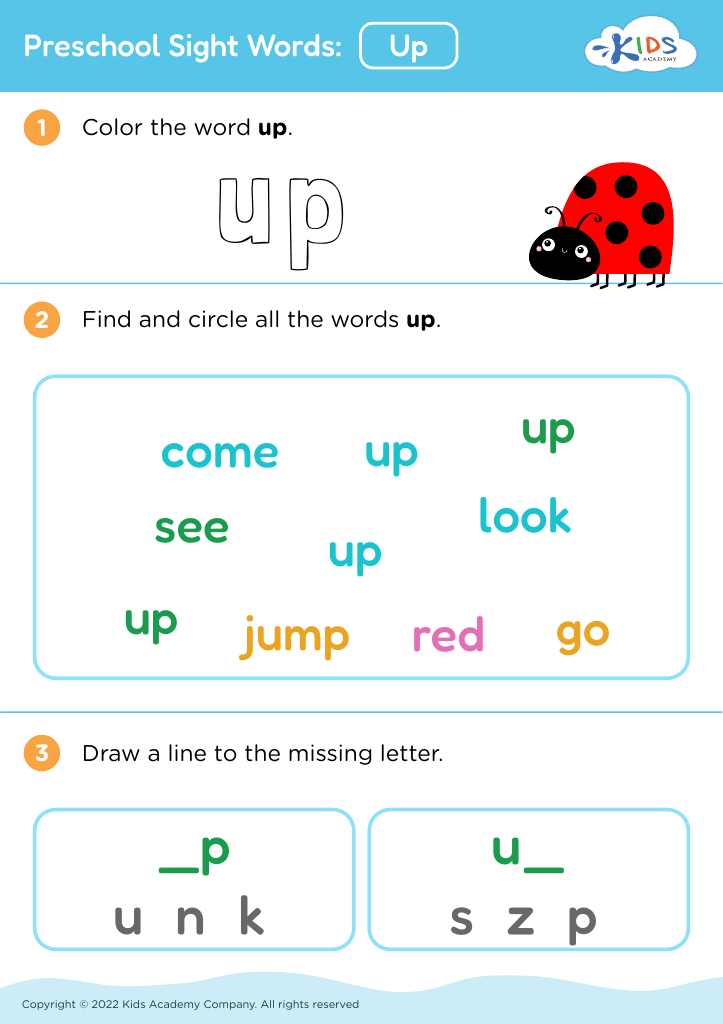
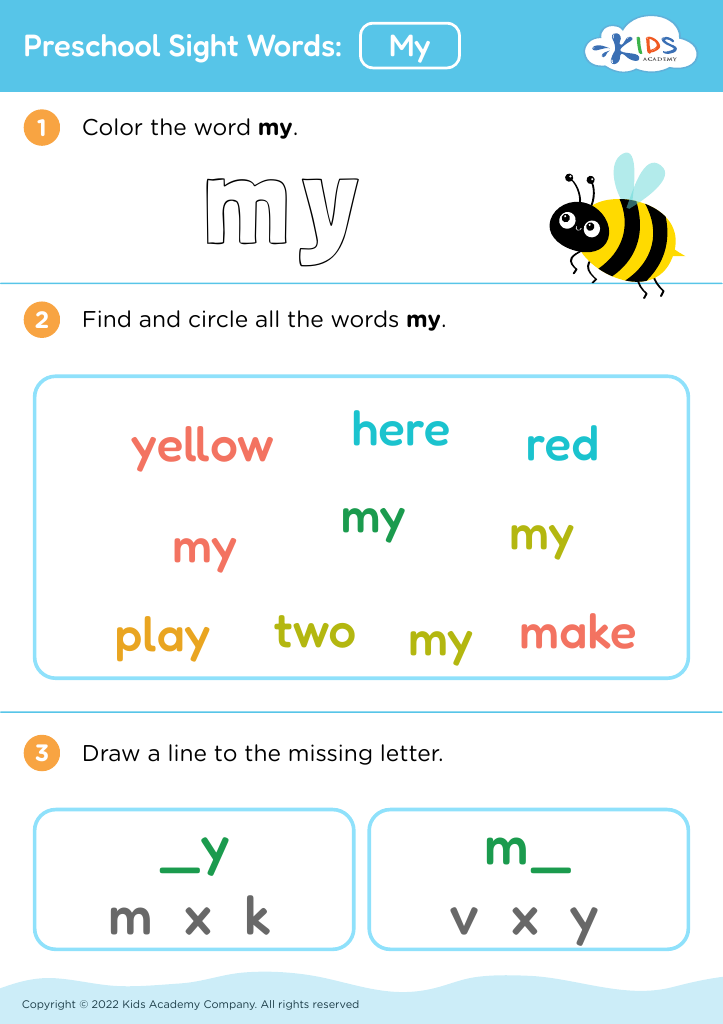
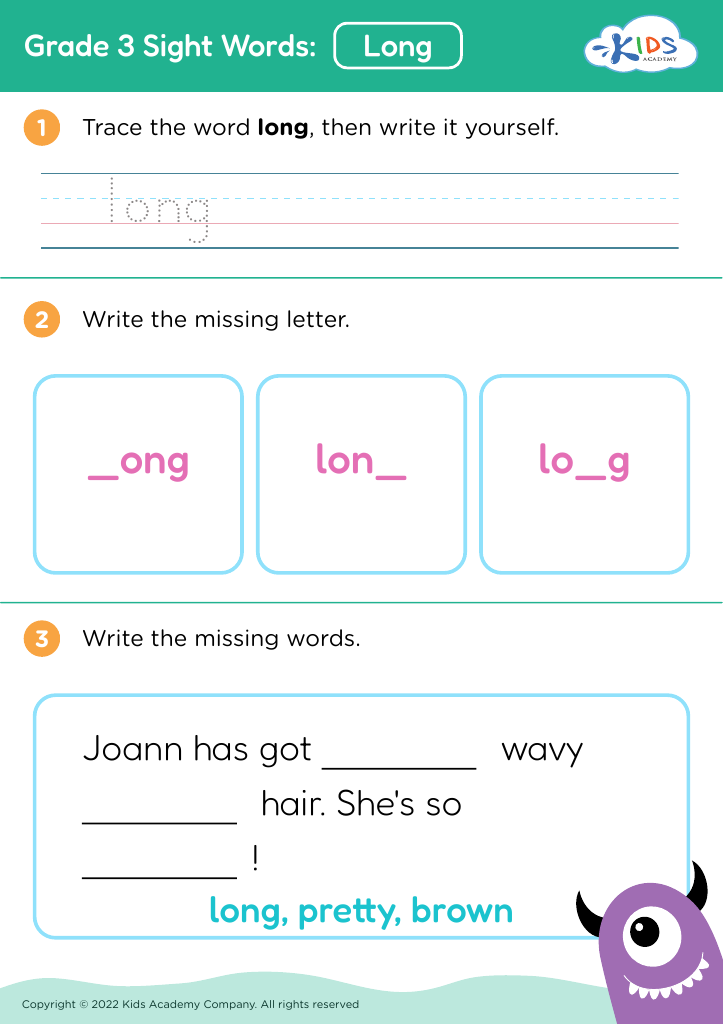
Join Kids Academy for Free
Who is primarily going to use this learning content?





.jpg)
.jpg)

Building vocabulary related to fraction comparison for children between ages 3-8 is crucial for both parents and teachers for several key reasons. At this young age, children's cognitive and language development experiences a rapid growth, with foundational math skills playing a significant role. Introducing terms like "half," "quarter," "greater than," "less than," and "equal to" early on helps demystify fractions and solidifies math understanding.
Firstly, a strong math vocabulary aids in better comprehension. When children understand the terms, they can more easily grasp the concepts and procedures behind fraction comparison, setting a foundation for more complex math topics in later years. Studies show that robust math skills early in life correlate with better academic performance across subjects.
Secondly, vocabulary development reinforces practical life skills. Understanding fractions is not just an academic requirement but a practical necessity, whether it's in cooking, sharing, or even in understanding time. Proficiency in these terms ensures children can apply their knowledge in everyday situations, thereby solidifying their learning.
Moreover, involving parents in the process fosters a supportive learning environment. When parents are familiar with the terminology, they can reinforce lessons at home, offering consistent support and creating a math-positive environment. In conclusion, building a strong fraction-related vocabulary early on opens the door to both academic success and crucial life skills.








