
Geography knowledge Building Vocabulary Worksheets for Ages 3-8
5 filtered results
Difficulty Level
Grade
Age
-
From - To
Subject
Activity
Standards
Our Geography Knowledge Building Vocabulary Worksheets for ages 3-8 offer a fun and engaging way for young learners to explore the world. Designed to enhance geographical awareness and vocabulary, these worksheets introduce key concepts and facts about maps, continents, countries, and natural landmarks. With a variety of visually appealing activities, children will develop their reading and comprehension skills while sparking curiosity about the planet. Ideal for classroom and home use, these printable resources support early learners in building a strong foundation in geography and language, making learning an adventure for your curious little explorers!
Favorites
With answer key
Interactive
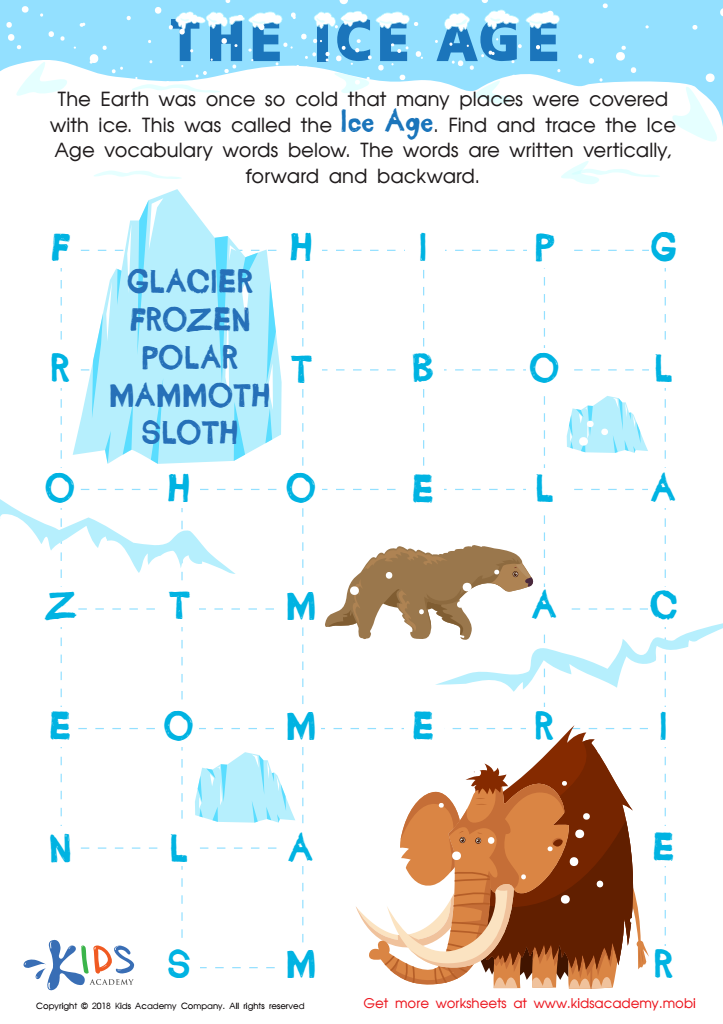
The Ice Age Worksheet
Let your child explore the Ice Age with this fun word search from Kids Academy! They can find words like glacier, frozen, polar, mammoth, and sloth. After finding each, discuss the meaning to help them build a better vocabulary and understanding of ancient history.
 Assign to My Students
The Ice Age Worksheet
Worksheet











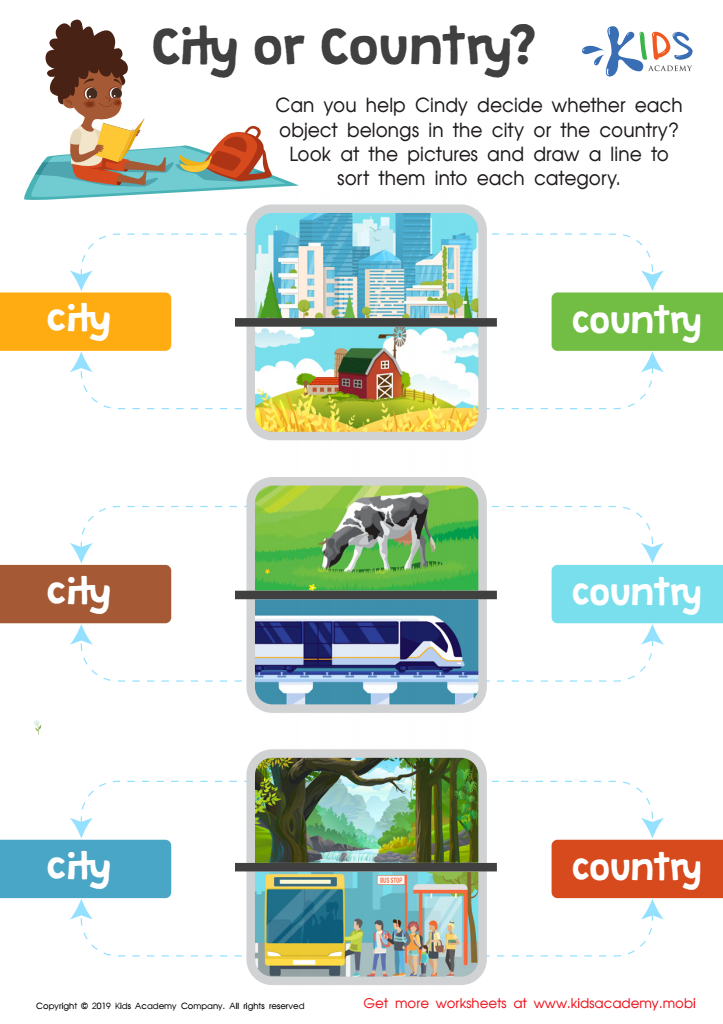
City or Country? Worksheet
Whether city or country, both have distinct attributes. Cities have skyscrapers, public transport, and many business people, whereas the countryside is rural and full of nature, often farms. Download this PDF to help your child and Cindy use traced lines to decide which picture fits city or country.
City or Country? Worksheet
Worksheet
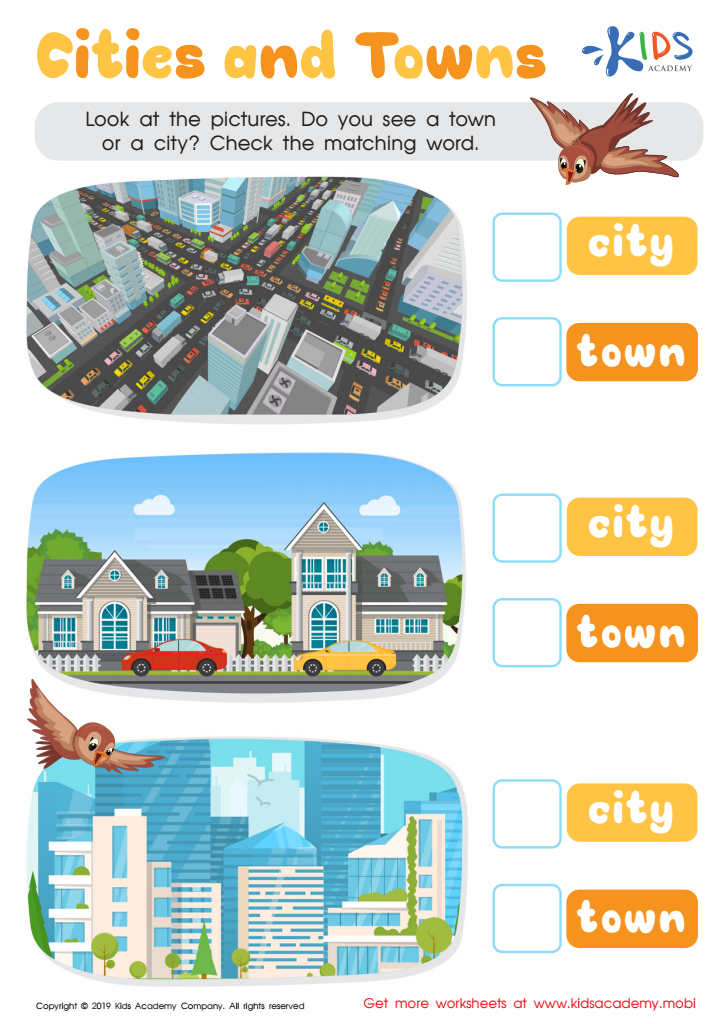
Cities and Towns Worksheet
Cities are buzzy and busy while towns tend to be peaceful. Ask your child if they can tell which one is which from a picture. This could be a great way to test their understanding of the differences between towns and cities. There are many businesses in cities, tall buildings and lots to do. Meanwhile towns are usually quieter.
Cities and Towns Worksheet
Worksheet
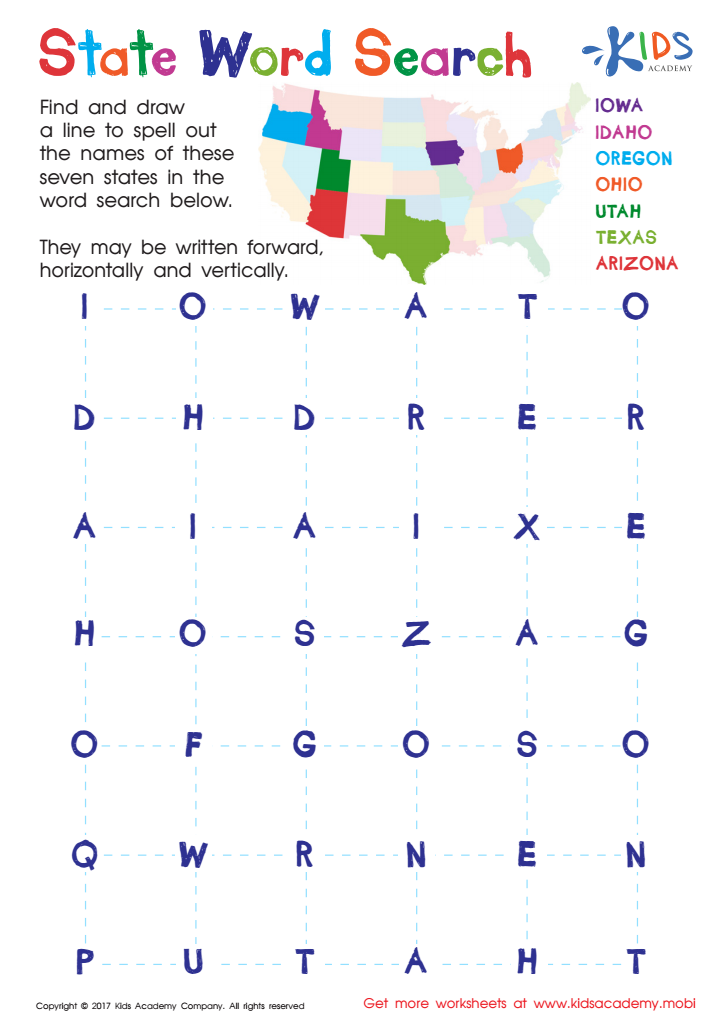
State Word Search Worksheet
Take a road trip across the US with this word search to help your child learn how to identify states. This engaging puzzle makes it easy to remember the 50 states. Get your kids to have fun and learn at the same time!
State Word Search Worksheet
Worksheet
Traditional Music Worksheet
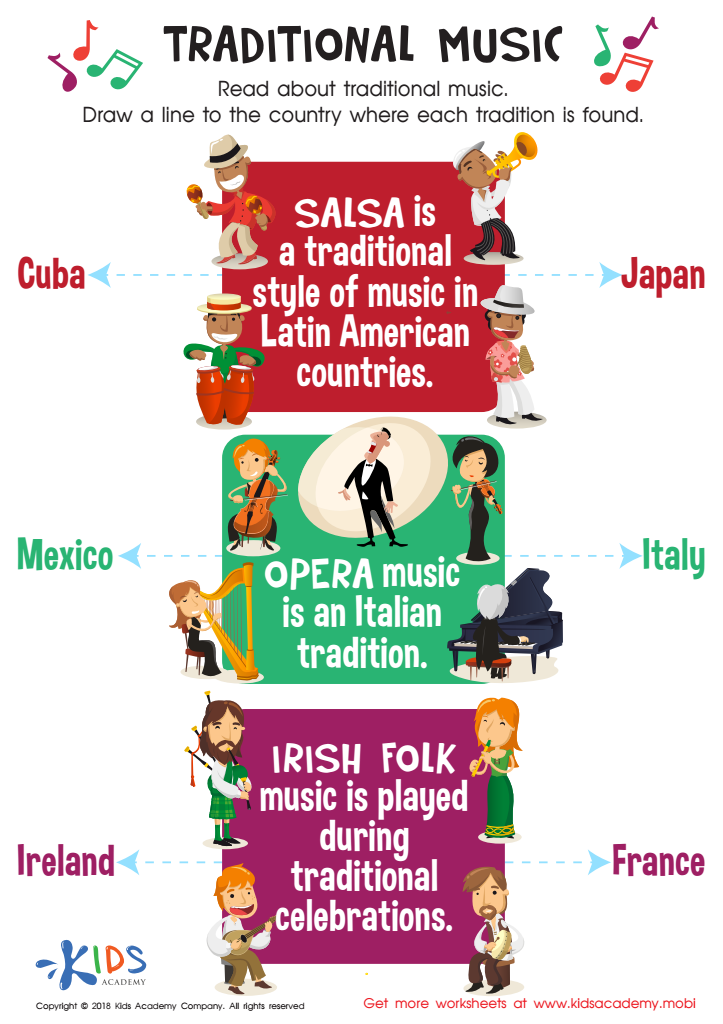
Exploring different countries' music is a great way for global learners to appreciate their place in the world. This worksheet helps them match music - like Salsa and Irish Folk - to various geographic regions with colorful visuals. It boosts reading comprehension while supporting their cultural understanding.
Traditional Music Worksheet
Worksheet
Join Kids Academy for Free
Who is primarily going to use this learning content?








Geography is more than just the study of places and maps; it is a crucial component of a child's world knowledge and cognitive development. For ages 3-8, building vocabulary related to geography enriches language skills and broadens their understanding of the world around them. Exposure to geographical terms like "continent," "ocean," and "mountain" lays a foundation for later learning by fostering curiosity and enhancing their comprehension skills. It helps children make connections between their immediate environment and the wider world, promoting a sense of spatial awareness.
Moreover, as children learn geographic vocabulary, they engage in conversations that enhance their critical thinking and reasoning abilities. This process encourages them to ask questions, seek answers, and develop problem-solving skills. For parents and teachers, focusing on geographic terms is a way to introduce cultural diversity and global awareness from a young age. Understanding basic geographical concepts helps children appreciate different cultures and communities, nurturing empathy and social understanding.
Integrating geography into everyday conversations and play activities, such as using maps, globes, and storytelling, can make learning engaging and fun. By prioritizing geographical vocabulary, parents and teachers support holistic development, ensure academic preparedness, and contribute to the formation of well-rounded, informed individuals.








