Moral lesson understanding Building Vocabulary Worksheets for Ages 3-8
3 filtered results
-
From - To
Enhance your child's vocabulary while instilling important moral lessons with our engaging Building Vocabulary Worksheets for ages 3-8. These carefully designed worksheets provide a fun and interactive way for young learners to explore essential values such as honesty, kindness, and respect. Each activity encourages critical thinking and character development, making learning both meaningful and enjoyable. With colorful visuals and relatable scenarios, children will easily connect words with their meanings and consequences. Perfect for at-home or classroom use, our worksheets help children not only to expand their vocabulary but also to understand and internalize important life lessons. Start nurturing well-rounded learners today!
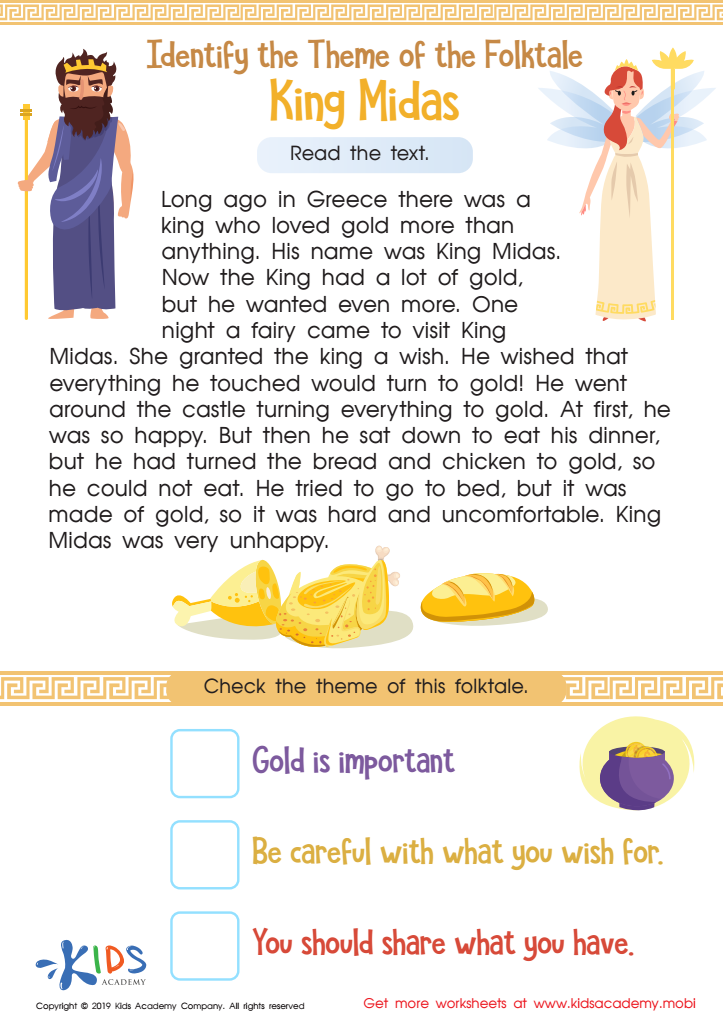
King Midas Worksheet
 Assign to My Students











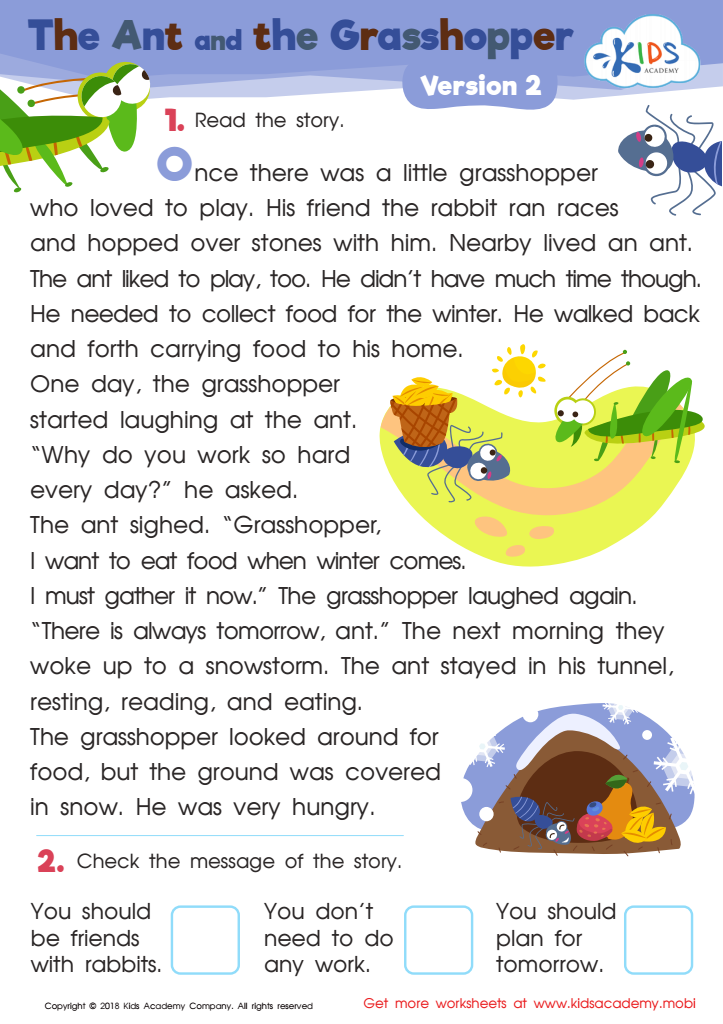
The Ant and The Grasshopper Version 2 Worksheet
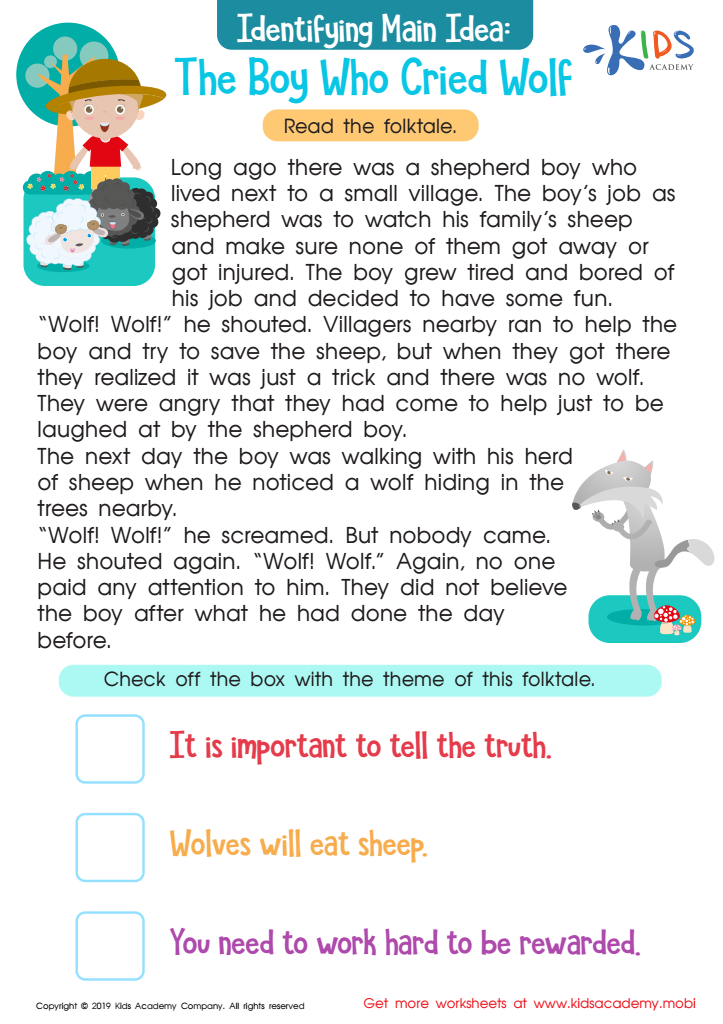
The Boy Who Cried Wolf Part 2 Worksheet








Parents and teachers play a crucial role in fostering moral lesson understanding and vocabulary development in children aged 3 to 8. At this formative stage, children are not only acquiring language skills but also learning to navigate complex social interactions. Understanding moral lessons helps children grasp concepts like empathy, honesty, and fairness, nurturing their emotional intelligence. When children engage with stories that incorporate these lessons, they also encounter new vocabulary, which enriches their language skills.
Building vocabulary is essential, as it enhances comprehension and encourages effective communication. A rich vocabulary allows children to express their thoughts and feelings more articulately, laying the groundwork for positive relationships and social skills. Furthermore, a strong vocabulary boosts literacy development, making reading and writing easier and more enjoyable.
By integrating moral lessons into vocabulary-building activities, educators and parents promote both ethical understanding and language proficiency simultaneously. This holistic approach supports children's cognitive and social development, enabling them to become compassionate, articulate individuals. In an increasingly interconnected world, equipping young learners with the tools to communicate effectively and understand moral frameworks is vital for their future success and well-being. Thus, prioritizing these elements in early education sets a solid foundation for lifelong learning and personal growth.








