Noun identification Building Vocabulary Worksheets for Ages 3-8
3 filtered results
-
From - To
Discover our engaging Noun Identification Building Vocabulary Worksheets tailored for children ages 3-8! Designed to enhance early literacy skills, these worksheets make learning fun as kids identify and categorize nouns in a variety of activities. From colorful illustrations to interactive exercises, our resources foster creativity and reinforce vocabulary growth. Perfect for teachers and parents, these worksheets support foundational reading skills while encouraging children to explore the world around them. Whether in the classroom or at home, our engaging materials provide a great way for young learners to develop their understanding of nouns and build a robust vocabulary. Start exploring today!
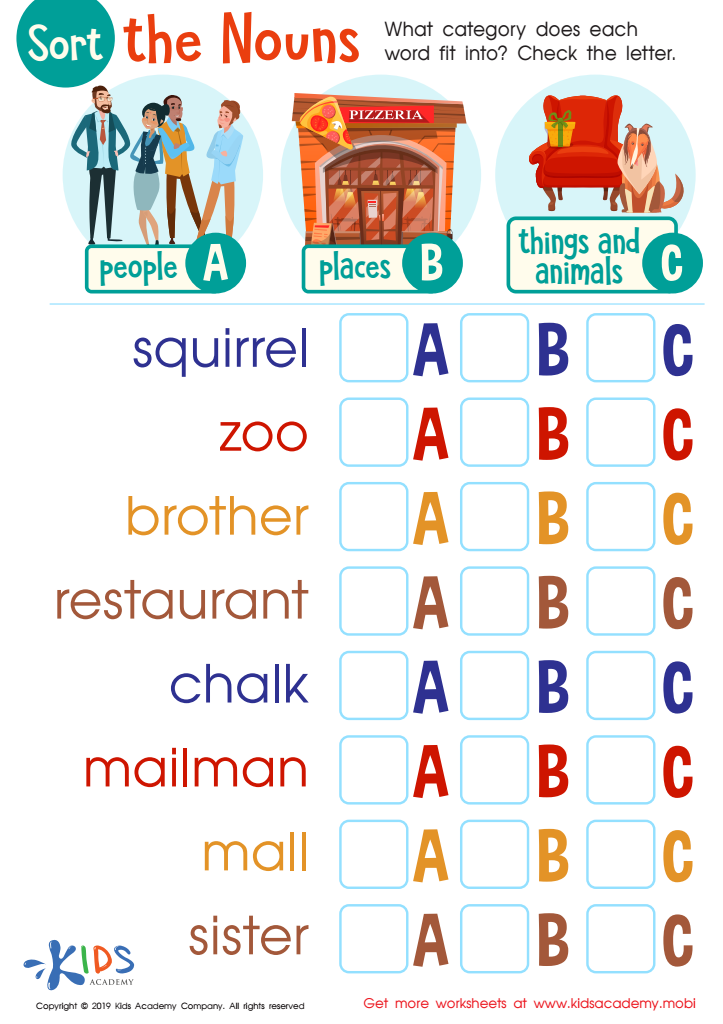
Sort the Nouns Worksheet
 Assign to My Students











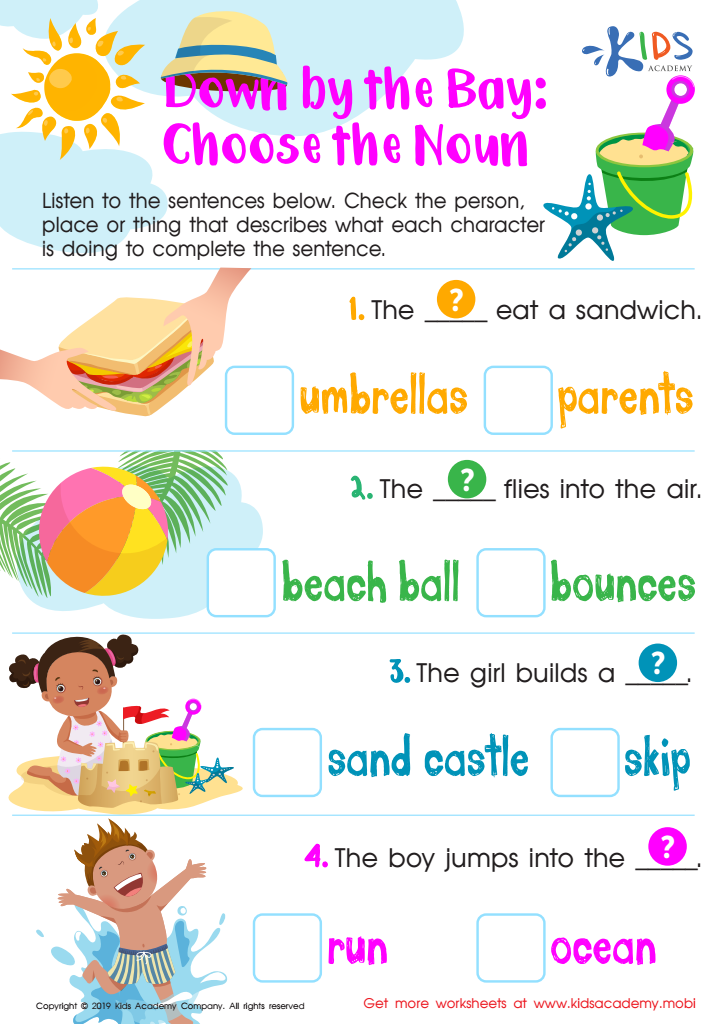
Down by the Bay: Choose the Noun Worksheet
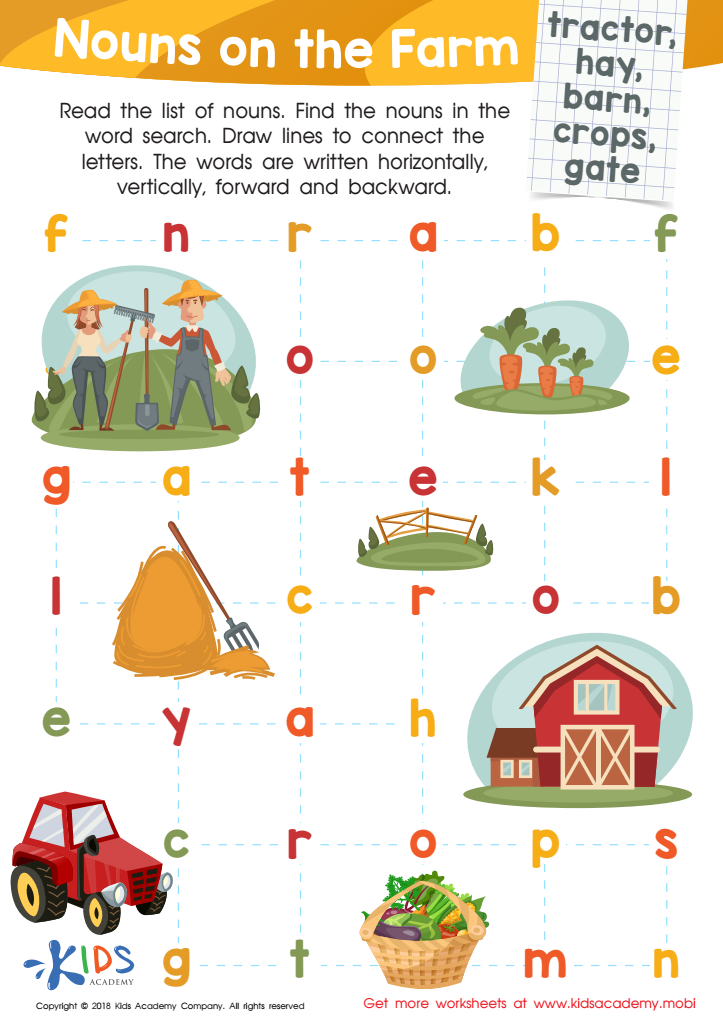
Nouns on the Farm Worksheet



.jpg)


.jpg)

Noun identification and vocabulary building are crucial components of early childhood education for children aged 3-8. Parents and teachers should care deeply about this aspect of learning for several reasons. First, nouns are foundational elements of language; they represent people, places, things, and ideas that children encounter daily. By helping children identify and understand nouns, adults empower them to express themselves more effectively and engage meaningfully in conversations.
Developing a robust vocabulary at a young age supports cognitive development and enhances comprehension skills. The more words children know, the better they are equipped to understand the world around them. This can lead to improved academic performance as they progress through school.
Additionally, a rich vocabulary fosters social skills, allowing children to articulate their thoughts and feelings confidently, thereby aiding in relationship-building with peers and adults. Strong communication skills developed through noun identification lays the groundwork for reading and writing proficiency, crucial for success in later grades.
Ultimately, prioritizing noun identification and vocabulary building in early education ensures children have the tools they need to communicate effectively, solve problems, and thrive as learners, preparing them for lifelong learning and interaction within their communities.








