
Rhyming skills Building Vocabulary Worksheets for Ages 3-8
3 filtered results
Difficulty Level
Grade
Age
-
From - To
Subject
Activity
Standards
Enhance your child’s language development with our Rhyming Skills Building Vocabulary Worksheets designed for ages 3-8. These engaging, interactive worksheets help young learners grasp the joy of rhyming while expanding their vocabulary. Through fun activities and colorful illustrations, children will not only develop phonemic awareness but also improve their reading readiness. Ideal for home or classroom use, these worksheets foster creativity and help build critical language skills. Perfect for teachers and parents seeking to make learning enjoyable, our resources encourage foundational literacy with a playful approach. Start your child’s rhyming journey today and watch their confidence soar!
Favorites
With answer key
Interactive
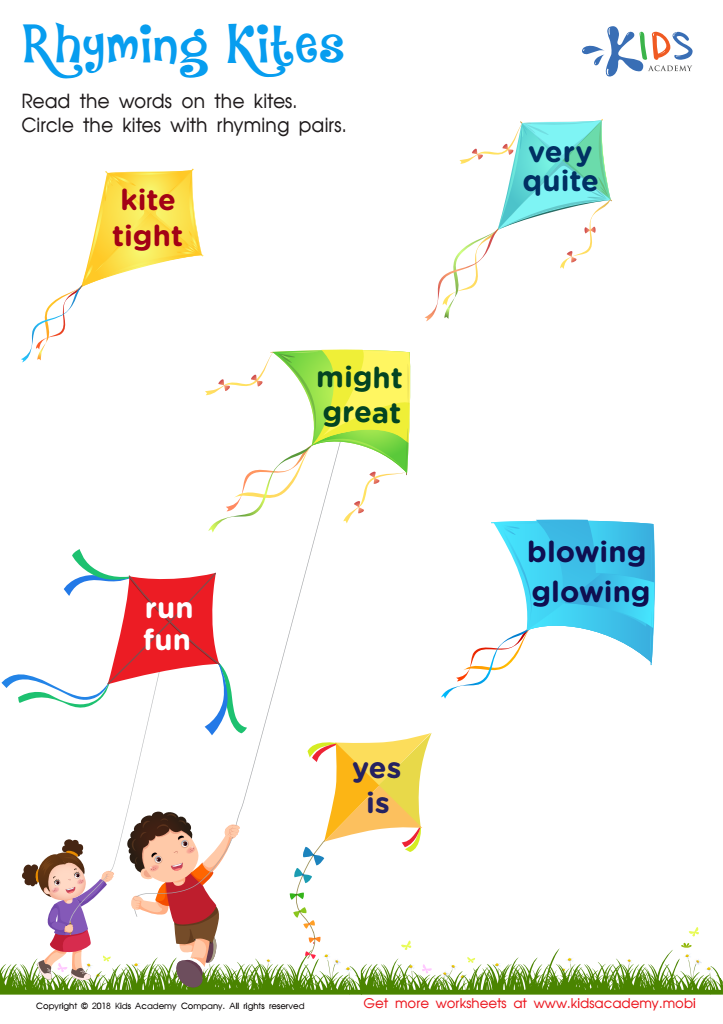
Rhyming Kites Worksheet
On a spring day, fly a kite! Kids Academy has a rhyming worksheet to boost your child's skills. Read the pairs of words aloud. Circle the kites if they rhyme, leave them blank if they don't. Listen carefully and find all the rhyming word pairs to complete this sheet!
 Assign to My Students
Rhyming Kites Worksheet
Worksheet











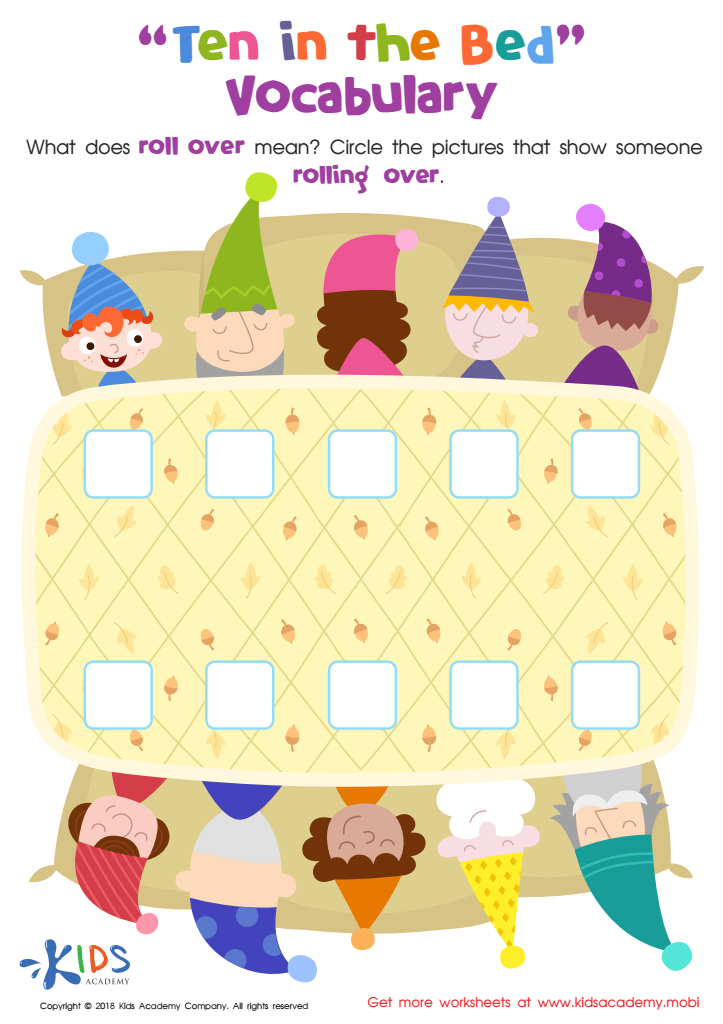
Ten in the Bed: Vocabulary Worksheet
It's essential for emerging readers to be proficient in positional and directional words. This worksheet uses cheerful faces to help students identify who has "rolled over". Knowing these words is an essential part of reading and writing for pre-K and Kindergarteners. It also helps them to follow directions and use precise language.
Ten in the Bed: Vocabulary Worksheet
Worksheet
Join Kids Academy for Free
Who is primarily going to use this learning content?





.jpg)


Rhyming skills are critical for children aged 3-8 as they serve as a foundational element in language development and literacy. When children engage with rhymes, they develop phonemic awareness—the ability to hear, identify, and manipulate sounds in words. This skill is essential for reading as it fosters an understanding of how sounds work together to form words.
Additionally, rhyming enhances vocabulary. When children learn rhyming words, they expand their lexical repertoire, often grouping words with similar endings and meanings. This not only makes learning new words more engaging but also helps them understand relationships between words. For instance, recognizing that "cat" and "hat" sound similar can aid in grasping other word families.
Moreover, engaging with rhymes promotes cognitive skills such as memory and pattern recognition. Songs, poems, and rhyming games are enjoyable, fostering a love for language and reading. As teachers and parents facilitate these activities—whether through reading aloud, playing rhyming games, or creating simple poems—they support their children’s literacy journey. In turn, this prepares them for future academic success, nurturing confident readers and communicators. Overall, emphasizing rhyming skills is an enriching investment in children’s lifelong learning.








