Analytical thinking Reading Fiction Worksheets for Ages 3-8
4 filtered results
-
From - To
Spark your child's analytical thinking and reading comprehension with our "Analytical Thinking Reading Fiction Worksheets for Ages 3-8". These engaging, expertly-crafted activities help young learners delve into delightful stories, fostering critical skills like identifying main ideas, making inferences, and understanding character motives. Perfect for early readers, each worksheet combines fun exercises with thoughtful questions designed to develop a deeper appreciation for fiction while stimulating cognitive growth. Explore our printable resources to enhance your child's analytical prowess in reading and cultivate a lifelong love of literature. Ideal for both classroom and at-home learning environments.
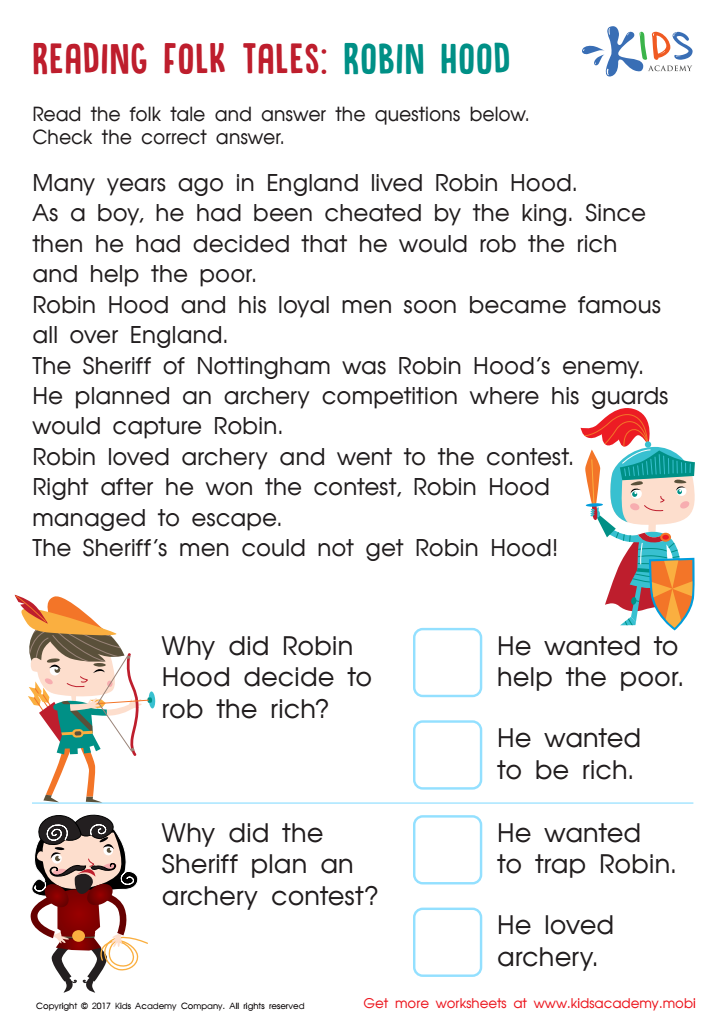
Robin Hood Folktale Worksheet
 Assign to My Students
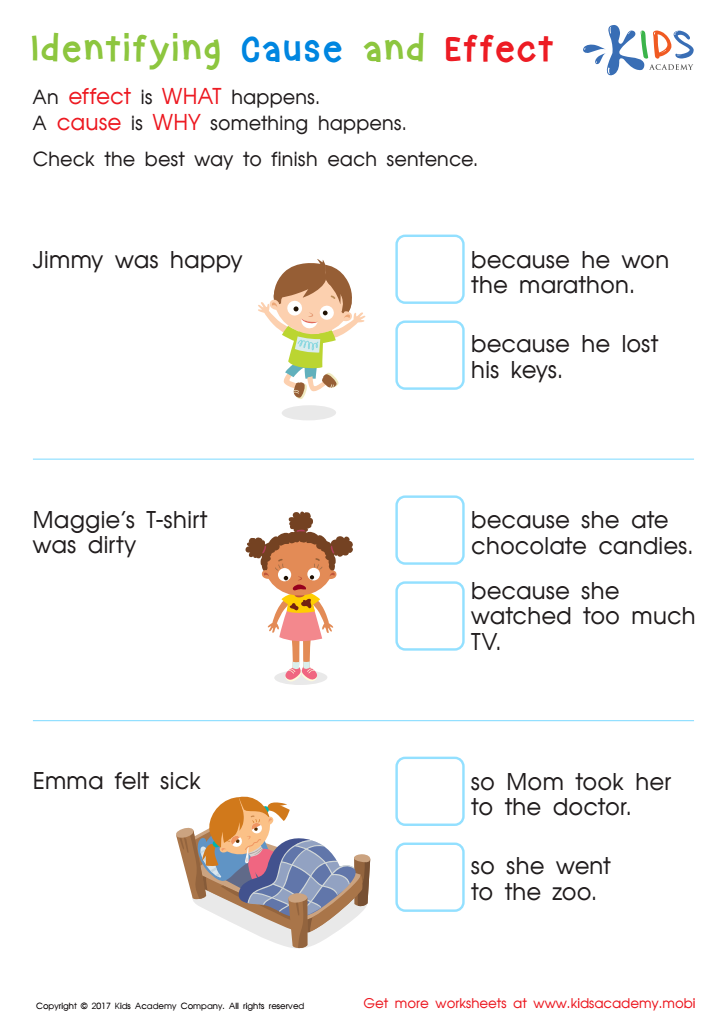
Indentifying Cause and Effect Worksheet
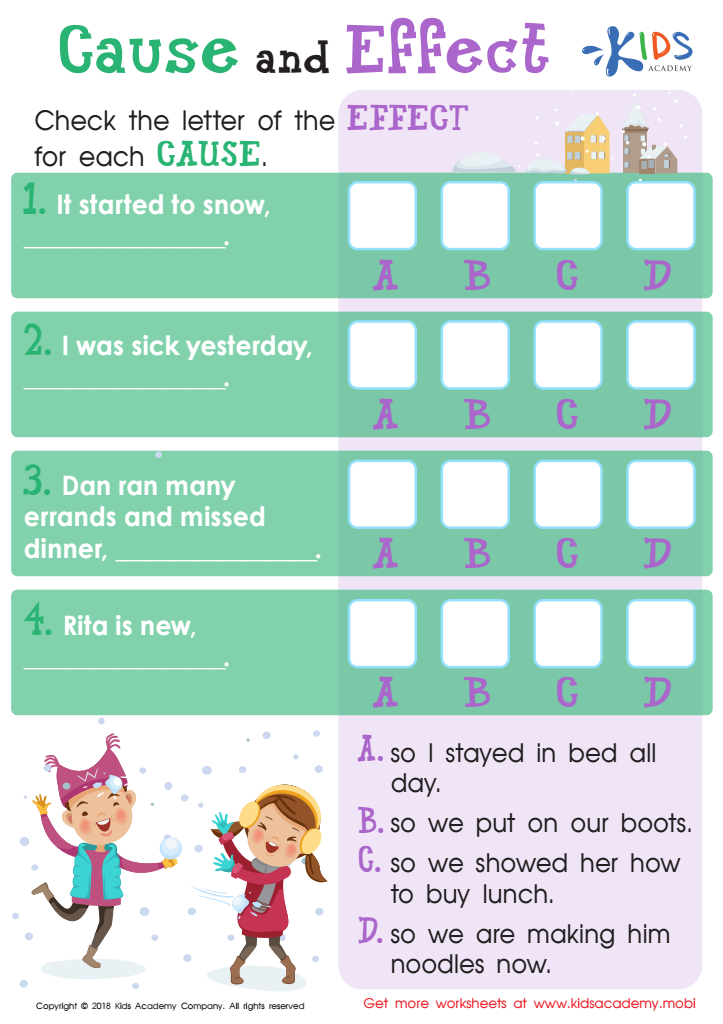
Cause and Effect Worksheet
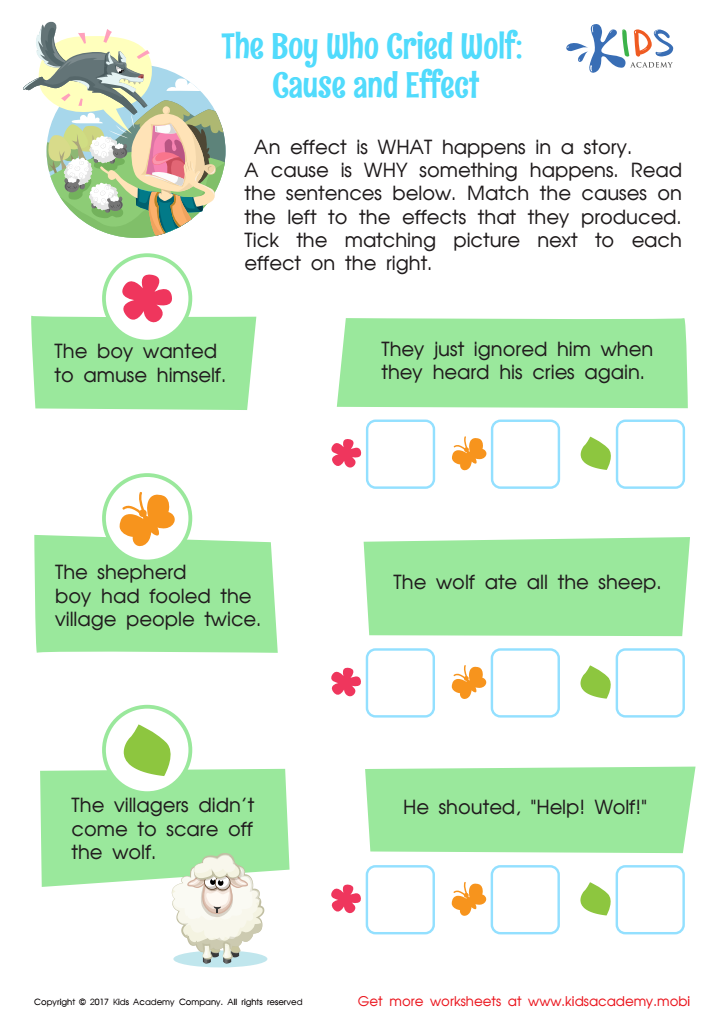
The Boy Who Cried Wolf: Cause and Effect Worksheet





.jpg)


Analytical thinking in reading fiction for children ages 3-8 is crucial because it lays the foundation for critical cognitive development and nurtures a love for learning. At this pivotal stage, children are absorbing information at an astonishing rate. By encouraging analytical thinking while engaging with fiction, parents and teachers help young minds develop essential comprehension skills, the ability to draw inferences, and the capacity to understand complex concepts.
When children analyze stories, they learn to predict outcomes, understand characters' motivations, and recognize cause-and-effect relationships. This enhances their problem-solving skills and boosts their creativity. Furthermore, this practice fosters empathy as they see the world from various perspectives, thus building their social and emotional intelligence.
Additionally, engaging in discussions about fiction cultivates robust language skills. It expands vocabulary, improves sentence structure, and promotes expressive language as children describe what they think and feel about the stories they read. This will be beneficial not only in academic settings but also in everyday communication.
By prioritizing analytical thinking in reading, parents and teachers are helping young readers become more proficient in literacy, more thoughtful in approach, and more adept at understanding the world around them. Consequently, this paves the way for lifelong critical thinking skills vital for their future academic and personal success.








