Attention to Detail Reading Fiction Worksheets for Ages 3-8
3 filtered results
-
From - To
Enhance your child's reading comprehension with our "Attention to Detail Reading Fiction Worksheets for Ages 3-8." These engaging worksheets are meticulously designed to help young readers hone their attention to detail while enjoying captivating fictional stories. Through interactive exercises and tailored activities, children will learn to identify key details, improve their focus, and boost their analytical skills. Ideal for early learners, educators, and parents, these worksheets pave the way for a strong foundation in attentive reading. Explore our carefully crafted resources to make reading both fun and educational for your little ones today!

The Dog and His Bone Worksheet
 Assign to My Students
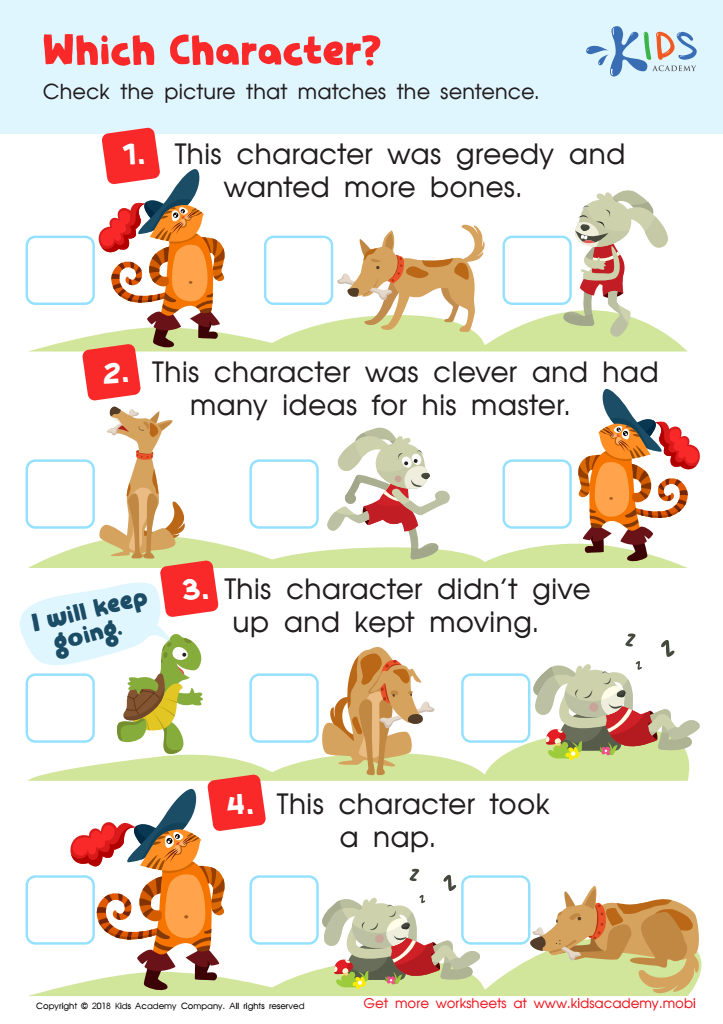
Which Character Worksheet

Take a Look - Part 1 Worksheet








Attention to detail when reading fiction to children aged 3-8 is fundamental for fostering their cognitive and socio-emotional development. Firstly, this practice enhances cognitive skills, such as memory and comprehension. When parents or teachers emphasize intricate details in stories, children learn to recognize patterns, predict outcomes, and grasp complex plot structures, which strengthens their analytical abilities.
Secondly, focusing on details enriches vocabulary and language skills. Children exposed to nuanced storytelling learn new words and expressions in context, which enhances their linguistic competence. Furthermore, attention to detail encourages active listening and critical thinking. When children are prompted to notice specifics, like character traits or subtle plot developments, they become more engaged and intellectually curious.
On an emotional level, detailed reading helps kids connect deeply with characters and situations, fostering empathy and moral development. For instance, understanding a character's motives or feelings can teach children about different perspectives and the complexities of human emotions.
Additionally, paying close attention during storytime can nurture a child's imagination and creativity. It sparks their curiosity, encouraging them to ask questions and explore narratives more inventively.
In essence, cultivating attention to detail in reading not only supports cognitive and linguistic growth but also fosters emotional intelligence, making it a crucial aspect of early childhood education.








