Cognitive Development Reading Fiction Worksheets for Ages 3-8
4 filtered results
-
From - To
Discover our engaging Cognitive Development Reading Fiction Worksheets designed specifically for children ages 3-8. These thoughtfully crafted resources promote critical thinking, comprehension, and imaginative skills through captivating stories and interactive activities. Each worksheet encourages young learners to explore connections, recall details, and express their understanding of various narratives. Our materials support diverse learning styles and foster a love for reading from an early age. Suitable for both homeschooling and classroom settings, these worksheets provide an enjoyable way to enhance cognitive abilities while honing reading skills. Encourage creativity and curiosity in your little ones today with our captivating reading fiction resources!
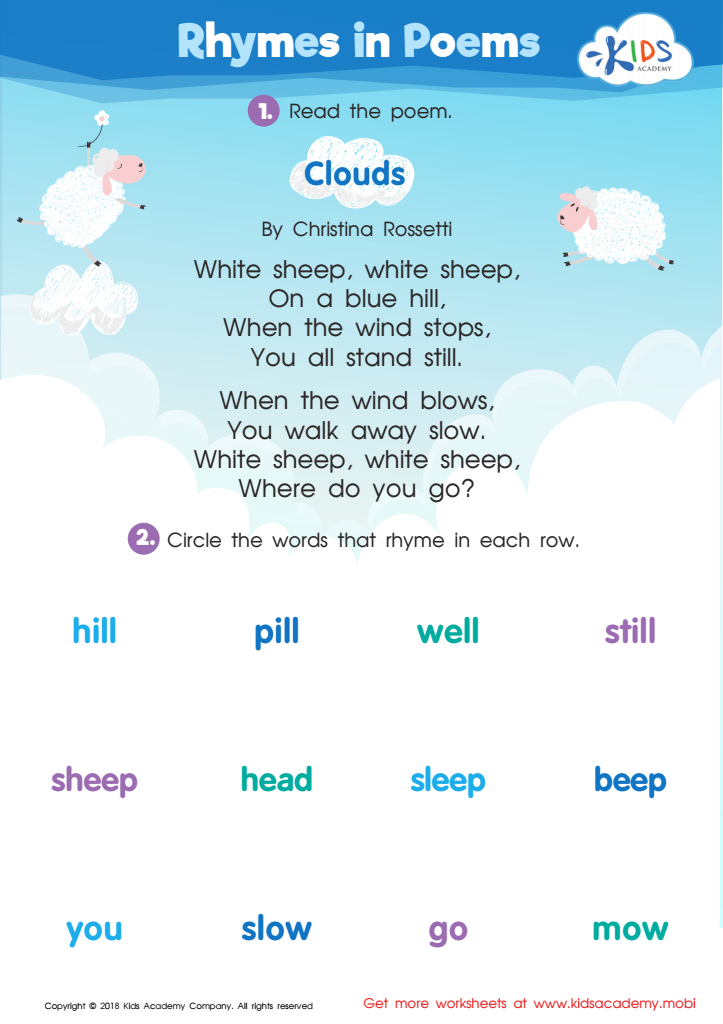
Rhymes in Poems Worksheet
 Assign to My Students
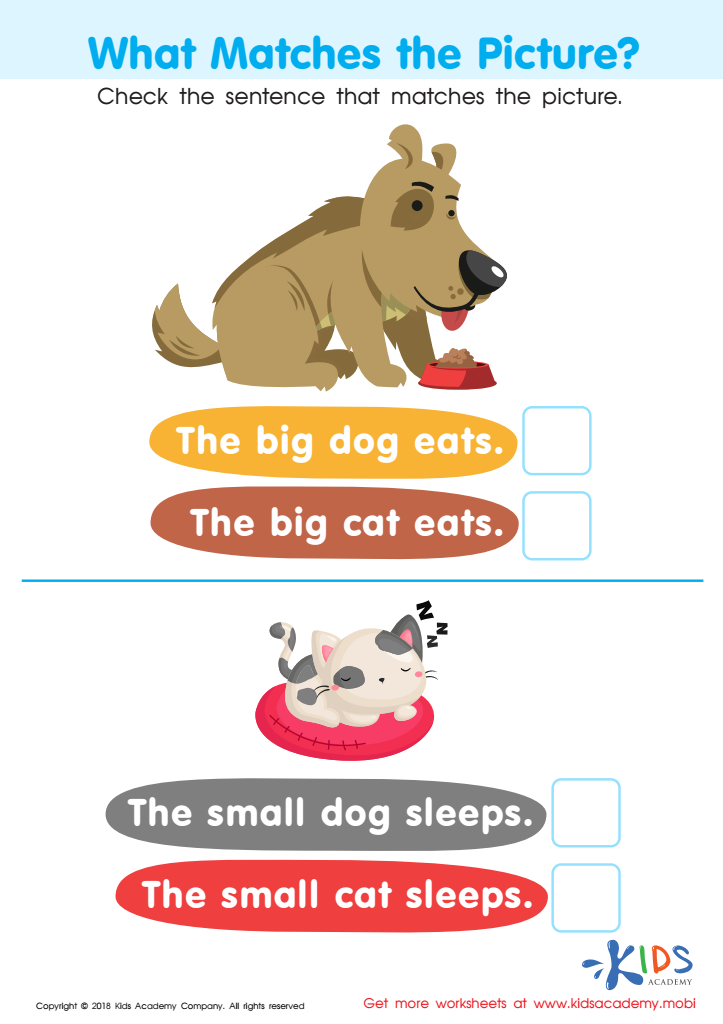
What Matches the Picture? Worksheet
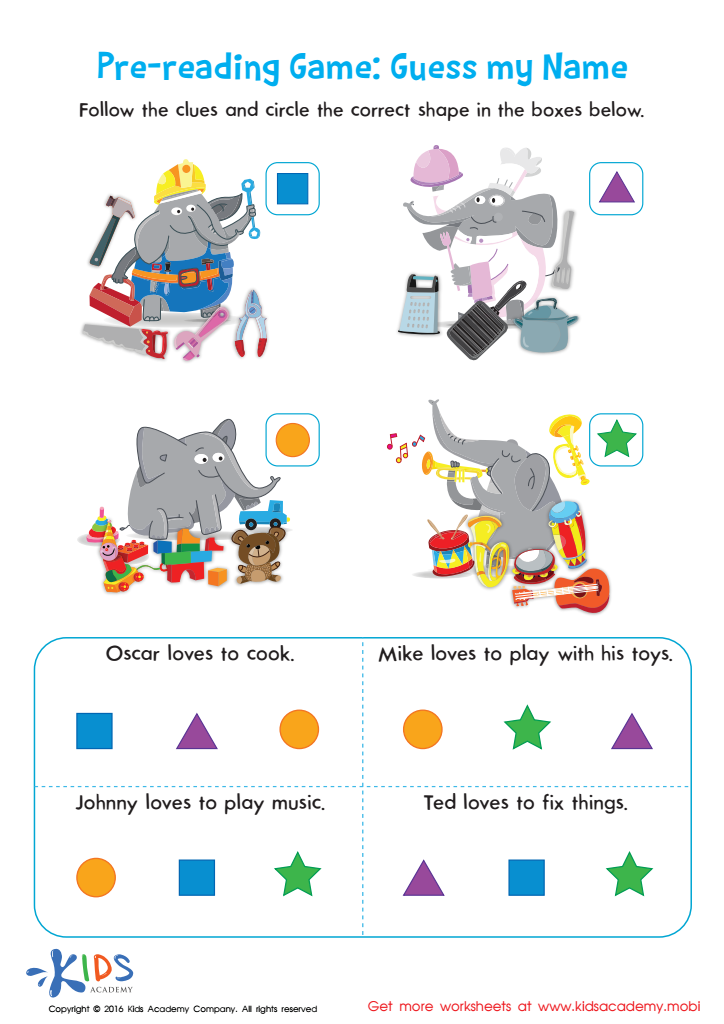
Pre Reading Worksheet Guess My Name
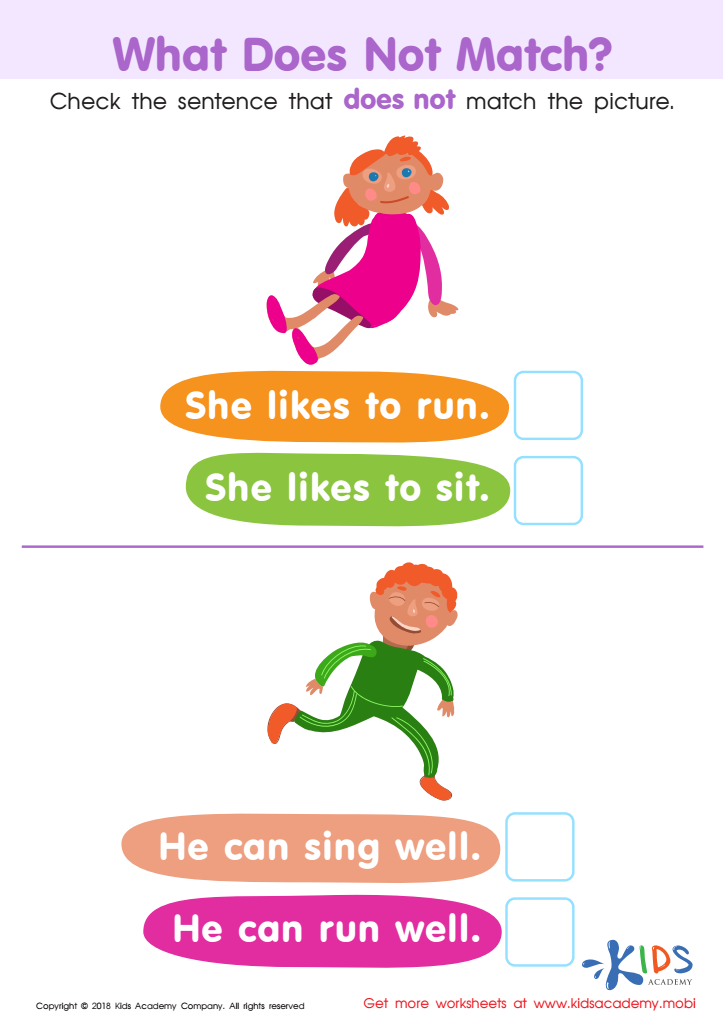
What Does Not Match? Worksheet








Cognitive development in early childhood is crucial as it lays the foundation for a child’s future learning and understanding of the world. Reading fiction to children aged 3-8 plays a vital role in enhancing this cognitive growth. When parents and teachers read stories aloud, children are exposed to new vocabulary, complex sentence structures, and varied themes, which significantly expand their language skills and comprehension. This exposure fosters critical thinking, as children learn to predict outcomes, infer character motives, and understand diverse perspectives.
Additionally, fiction stimulates imagination and creativity. Engaging with characters and vivid narratives encourages children to visualize scenarios, creating neural pathways that enhance problem-solving skills. Fiction also introduces moral dilemmas and life lessons, promoting social and emotional understanding amidst their developing cognitive grasp.
Moreover, shared reading experiences foster deep connections between caregivers and children, encouraging a love for literature and promoting intentional discussions that reinforce learning. This engagement not only supports cognitive milestones but also cultivates emotional security and self-esteem as children express their thoughts and feelings about the stories. Thus, prioritizing reading fiction from an early age ensures children develop the foundational cognitive skills necessary for lifelong learning and engagement with literature.








