Critical thinking skills Reading Fiction Worksheets for Ages 3-8
4 filtered results
-
From - To
Enhance your child's critical thinking through our engaging Reading Fiction Worksheets tailored for ages 3-8. These worksheets stimulate young minds by encouraging them to analyze stories, infer meanings, and draw conclusions, fostering essential cognitive skills. Each activity is designed to make reading fun and interactive, helping children understand characters, plot, and settings while developing their ability to think deeply and reflect. Ideal for both classrooms and at-home learning, these resources promote a love for reading and an aptitude for critical thought from an early age. Enrich your child’s educational journey with our expertly crafted worksheets!
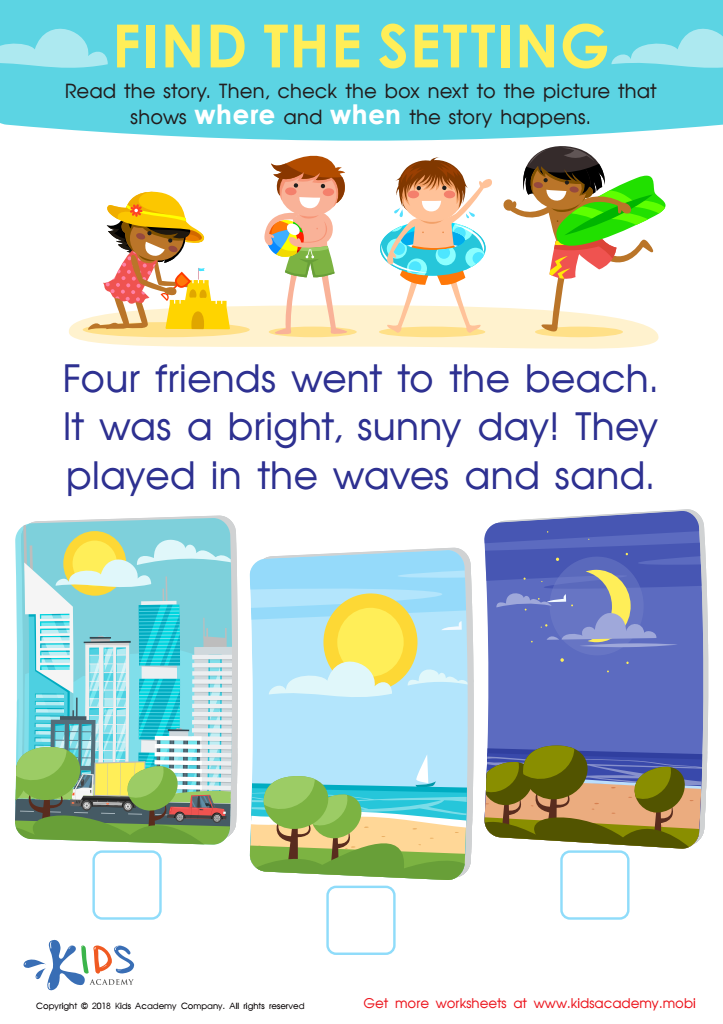
Find the Setting Worksheet
 Assign to My Students
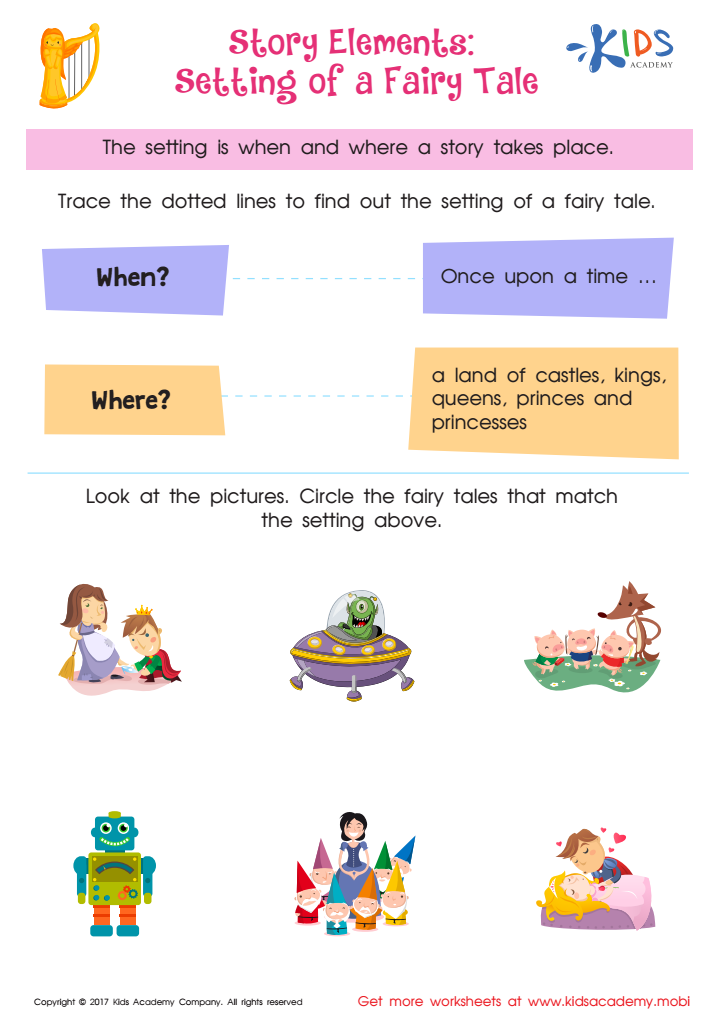
Story Elements: Setting of a Fairy Tale Printable
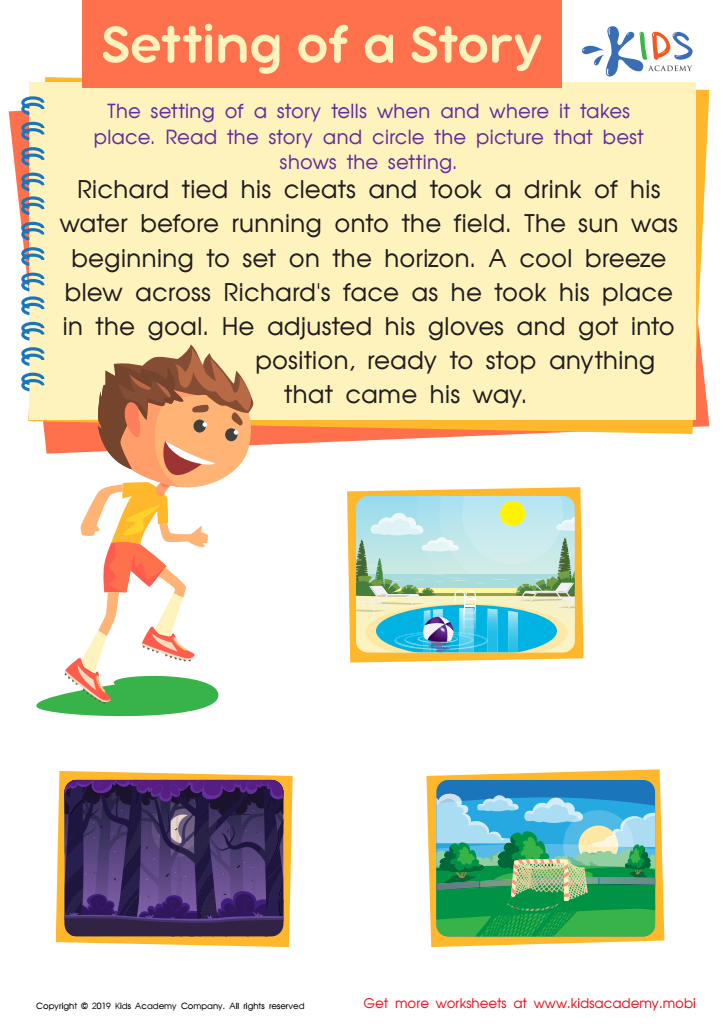
Setting of a Story Worksheet
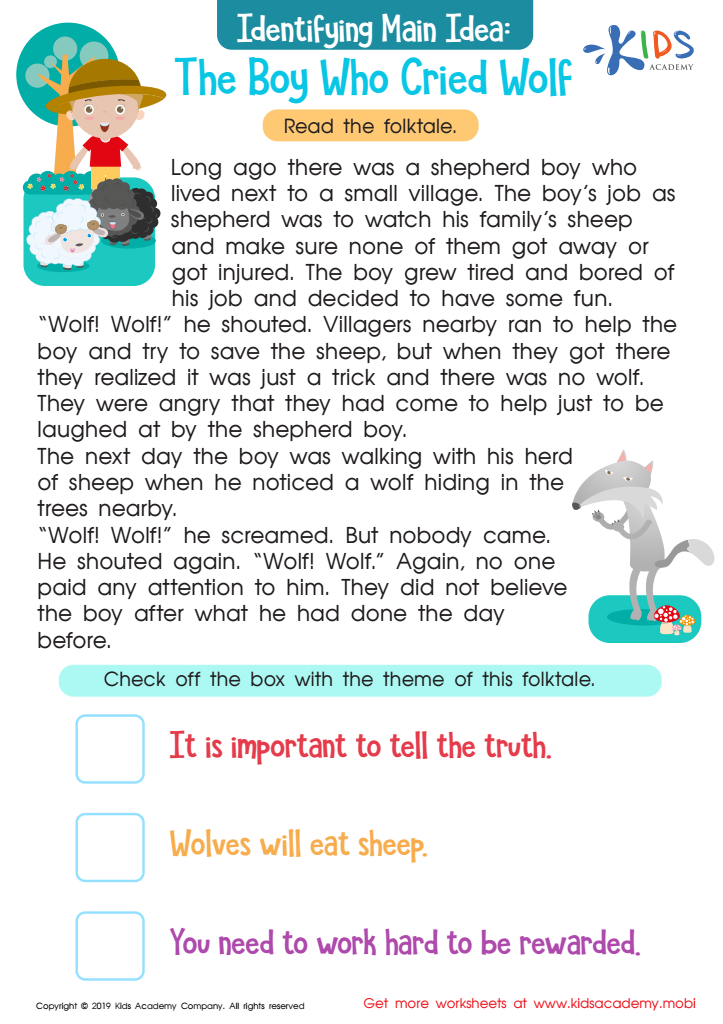
The Boy Who Cried Wolf Part 2 Worksheet








Critical thinking skills are crucial for young children, and reading fiction plays a significant role in their development. For children aged 3-8, reading fiction helps nurture imagination, empathy, and analytical skills. When parents or teachers encourage kids to explore stories, it prompts them to question, predict, and infer, laying the groundwork for critical thinking.
Fictional stories expose children to diverse scenarios and characters, enabling them to step into different perspectives. This practice enhances empathy as they understand feelings and viewpoints of others. It also stimulates their imagination, leading to creative problem-solving abilities. As children anticipate plot twists or ponder alternative endings, they exercise their brain, sharpening their analytical and inferential skills.
Moreover, reading fiction often involves recognizing patterns, making connections, and understanding sequencing—all elements of critical thinking. Asking children open-ended questions about the story ("Why do you think the character did that?" or "What could happen next?") can further engage their reasoning abilities.
Ultimately, fostering critical thinking skills through reading fiction aids cognitive and emotional development, preparing children for complex problem-solving and thoughtful decision-making in the future. By integrating storytime with critical thinking exercises, parents and teachers lay a solid foundation for lifelong learning and success.








