Filters

7 filtered results

Clear all filters
Favorites
With answer key
Interactive

7 filtered results

Difficulty Level

Grade


Explore a world of imagination and critical thinking with our Logical Reasoning Reading Fiction Worksheets for Ages 3-8. Designed to captivate young minds, these worksheets combine the joy of storytelling with essential logical reasoning skills. Each activity guides children through engaging fiction while challenging them to think ahead, draw conclusions, and make connections. Perfect for classroom or home use, our worksheets help build foundational reading comprehension and problem-solving abilities, fostering confidence and creativity. Give your child a head start on cognitive development with our fun and educational logical reasoning worksheets and watch their minds grow!

Check out this FREE Trial Lesson on Reading Fiction for age 3-8!

Folktales

Favorites
With answer key
Interactive
  • 3-8
  • Logical Reasoning
  • Reading Fiction
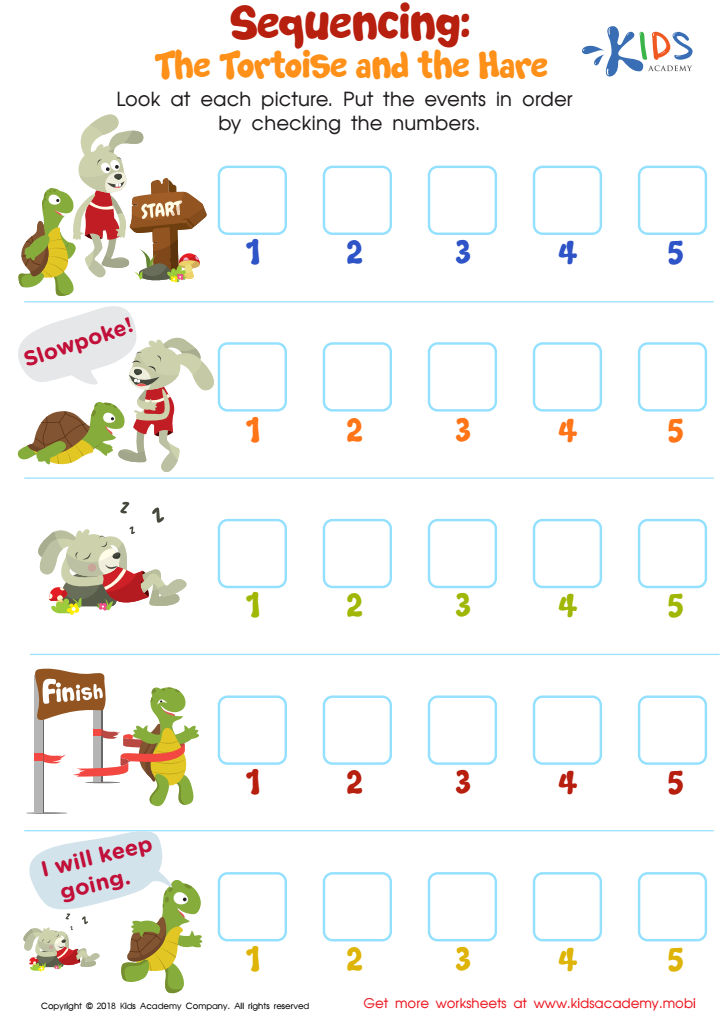
Sequencing: The Tortoise and the Hare Worksheet

Sequencing: The Tortoise and the Hare Worksheet

Help your child become an independent reader and critical thinker with a sequencing worksheet from Kids Academy! Have them read the classic tale of the tortoise and the hare and use the accompanying worksheet to check their understanding of the story's sequence of events. Have kids identify the correct order of events by selecting the box next to the correct number for each image!
Sequencing: The Tortoise and the Hare Worksheet
Worksheet
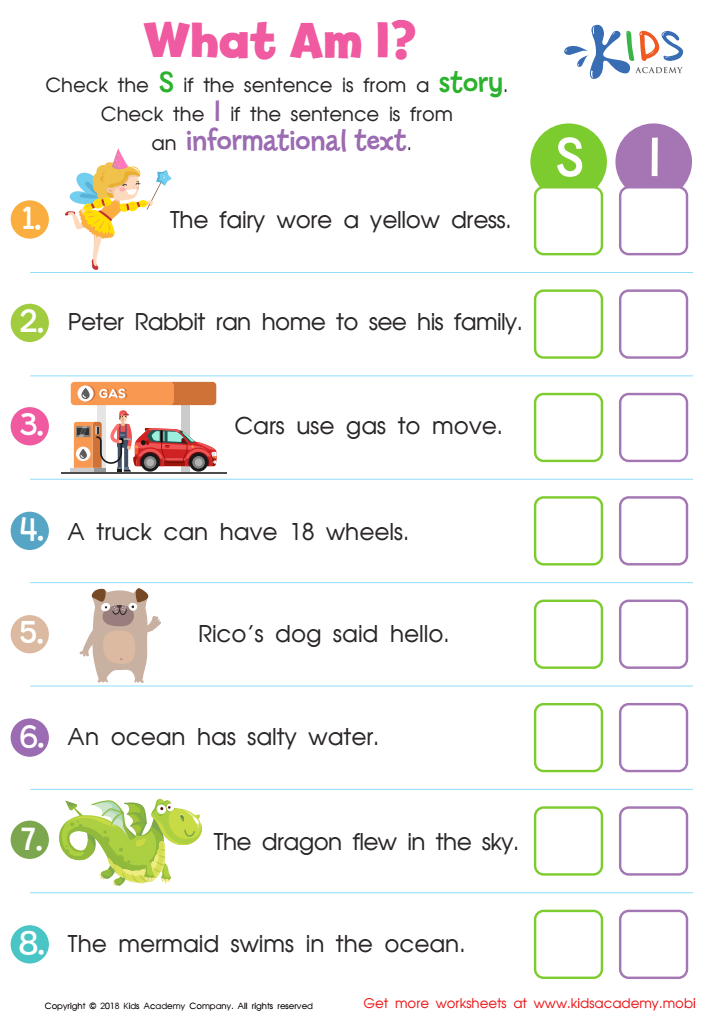
What Am I? Worksheet

What Am I? Worksheet

This worksheet assesses students' ability to differentiate between stories and texts they read for facts. Students learn to distinguish between reading for pleasure and reading for information. It includes statements from both a story and an informational text, and students must decide what type of text it is.
What Am I? Worksheet
Worksheet
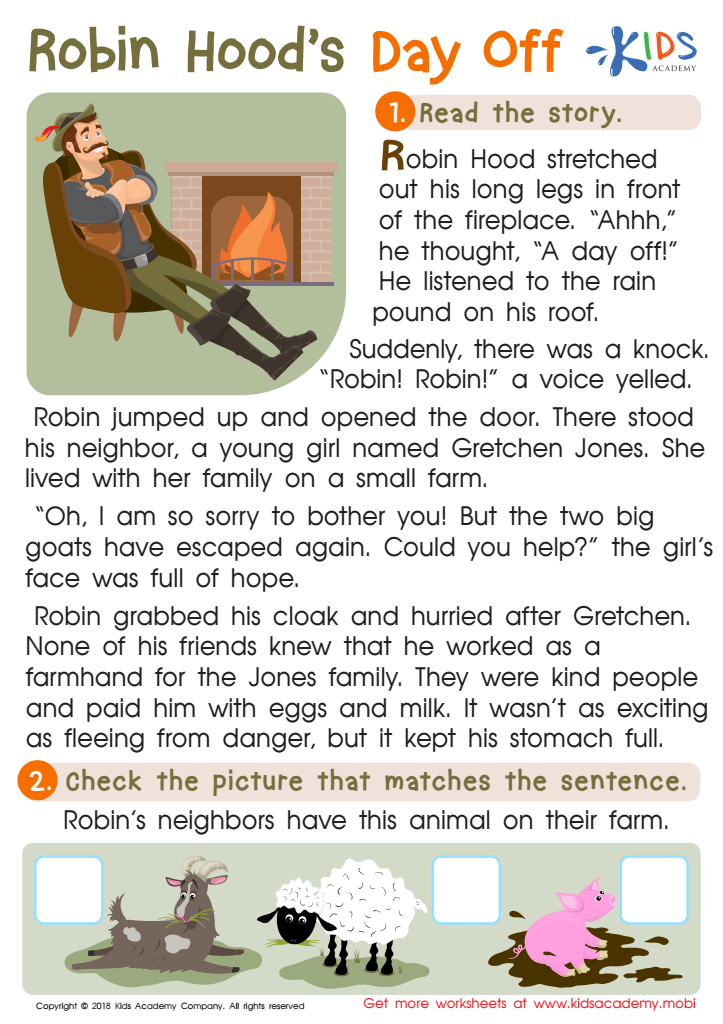
Robin Hood's Day Off Worksheet

Robin Hood's Day Off Worksheet

Encourage your child to express their personality by writing stories. Show them this worksheet's short story about Robin Hood and read it slowly and carefully. Read it again if needed and ask the question below the story. This will help your child use their knowledge to answer it.
Robin Hood's Day Off Worksheet
Worksheet
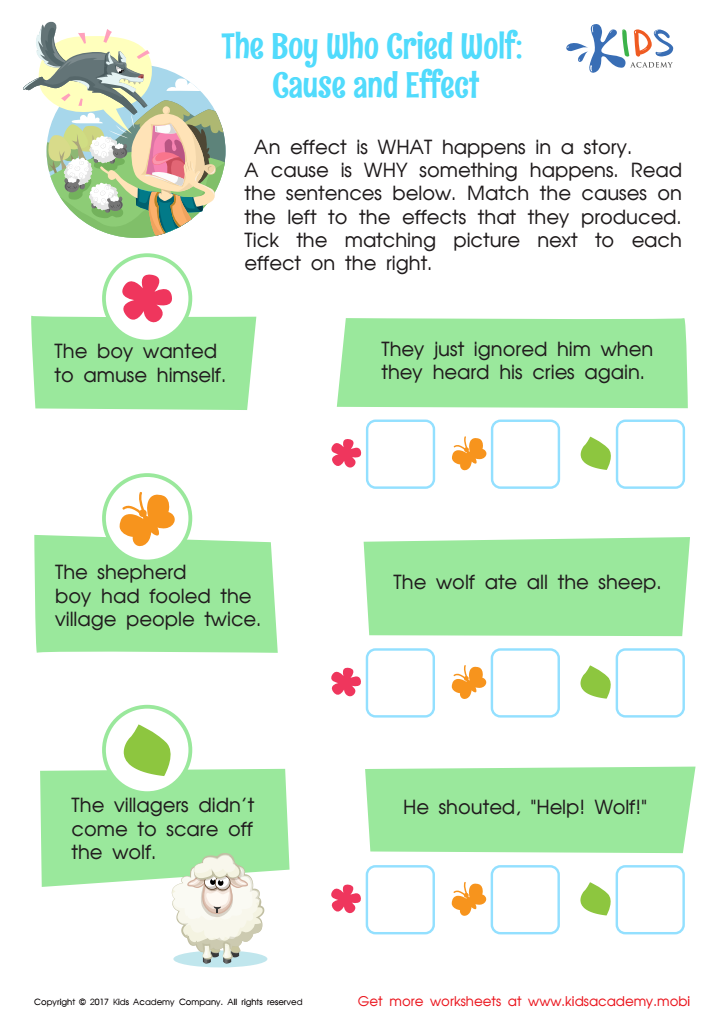
The Boy Who Cried Wolf: Cause and Effect

The Boy Who Cried Wolf: Cause and Effect Worksheet
With classic stories and fables, learning reading comprehension is easy - and fun!
The Boy Who Cried Wolf: Cause and Effect Worksheet
Worksheet
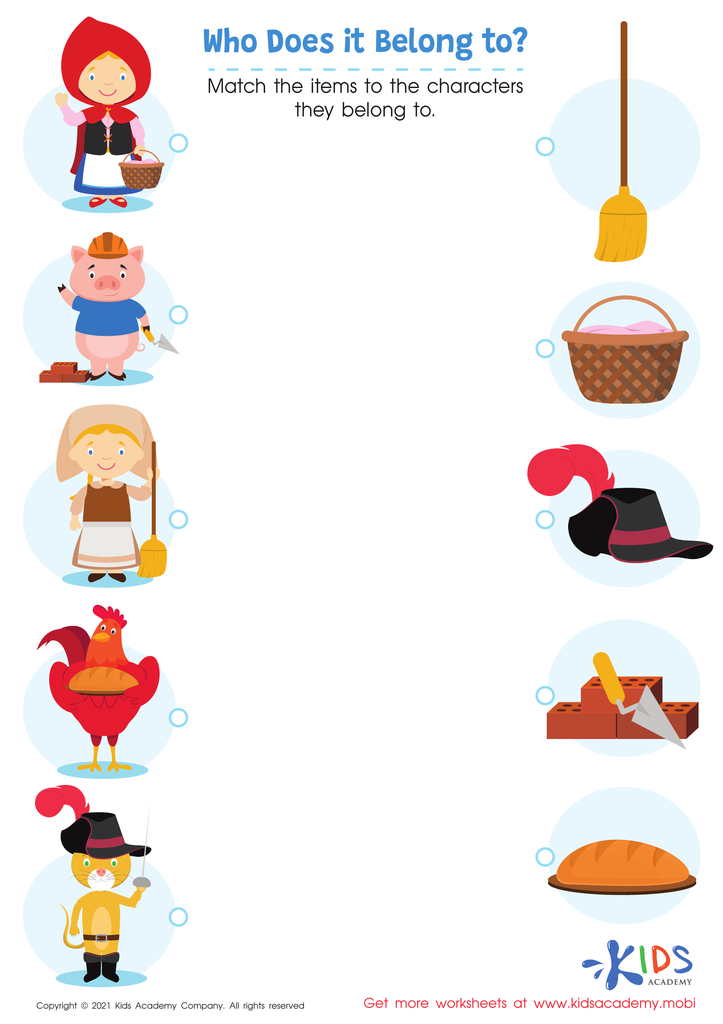
Who Does It Belong To? Worksheet

Who Does It Belong To? Worksheet

The summer season is here, and with it comes a variety of activities that can help you beat the heat. Going to the beach, taking a dip in the pool, and having a picnic in the park are some popular choices. Summer is here! Beat the heat with activities like going to the beach, swimming, and picnicking in the park. Enjoy!
Who Does It Belong To? Worksheet
Worksheet
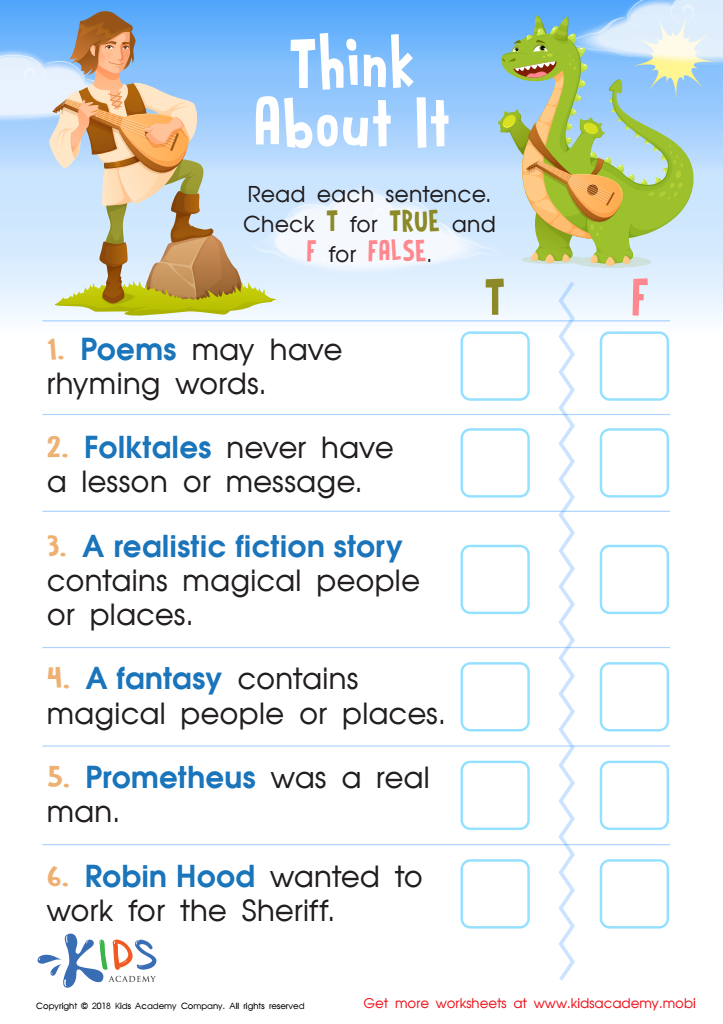
Think About It: Assessment Worksheet

Think About It: Assessment Worksheet

Reading is a fun and important way to learn. Help your students become better readers with this simple yet colorful worksheet. Read each sentence aloud, then have them read it by themselves. Ask them to check T for True and F for False. It's a great way to practice their reading skills!
Think About It: Assessment Worksheet
Worksheet
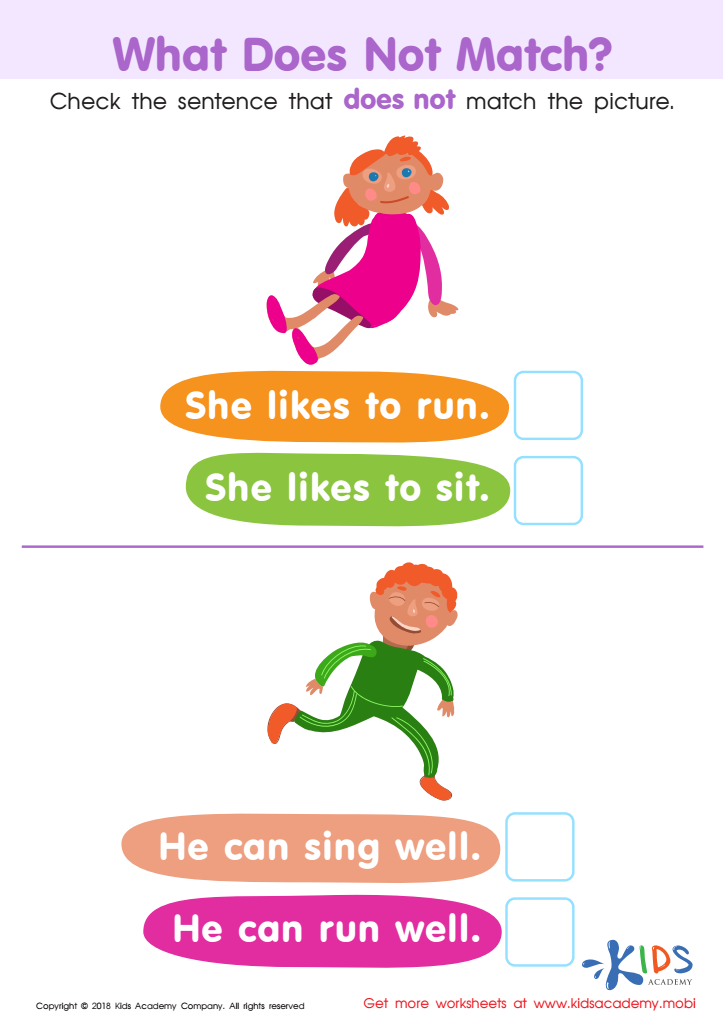
What Does Not Match? Worksheet


What Does Not Match? Worksheet

Emerging readers need to practice using visual cues and repetitive text. This colorful PDF provides them with an opportunity to look at pictures, use discrimination and discern which phrase does not match. It also enables them to gain familiarity with high-frequency words to aid decoding longer sentences.
What Does Not Match? Worksheet
Worksheet


Parents and teachers should care about developing logical reasoning in children ages 3-8 through reading fiction because it builds essential cognitive skills that are foundational for academic and real-life problem-solving. During these formative years, children's brains are highly plastic, making it an optimal time to foster critical thinking and reasoning abilities. Fiction stories often present scenarios that require children to think about cause and effect, make predictions, and understand relationships between characters and events. For example, following a character’s journey through challenges and triumphs helps children learn to anticipate outcomes based on information presented earlier in the story.

Moreover, stories improve empathy by allowing children to envision different perspectives and motivations, which contributes to emotional intelligence. This blending of emotional and logical reasoning abilities helps children interact more effectively and considerately with others. Additionally, fiction can introduce and reinforce moral lessons in a compelling context, helping children discern right from wrong through indirect learning.

Exposure to logical reasoning in fiction also sets a strong groundwork for later subjects like mathematics and science, which rely heavily on such skills. Thus, integrating logical reasoning into early reading habits not only enhances literacy and comprehension but also builds a robust toolkit for lifelong learning and personal growth.