Rhyme recognition Reading Fiction Worksheets for Ages 3-8
3 filtered results
-
From - To
Discover the joy of learning with our "Rhyme Recognition Reading Fiction Worksheets" designed for children ages 3-8! These engaging worksheets help young readers identify and understand rhyming words, enhancing their phonemic awareness and reading skills. Each worksheet features captivating stories and delightful illustrations that spark imagination while teaching essential literacy concepts. Perfect for both home and classroom settings, our resources foster a love for reading and creativity in early learners. Explore our collection today and watch your child develop confidence in their reading abilities through interactive and fun-filled activities! Let the adventure of rhyming begin!
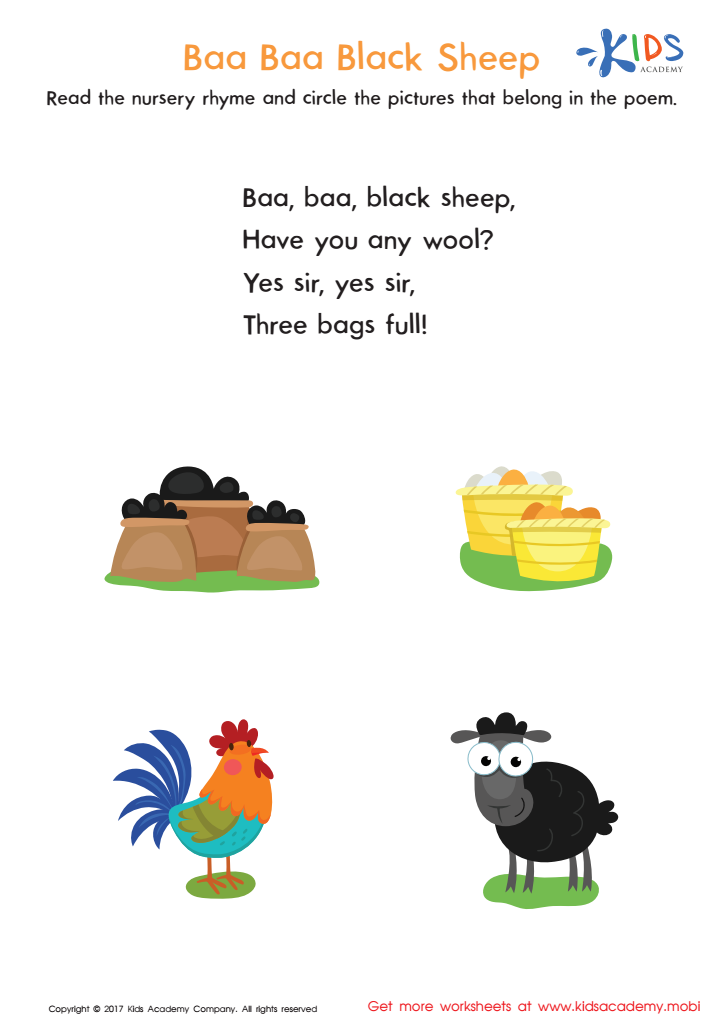
Baa Baa Black Sheep Printable
 Assign to My Students
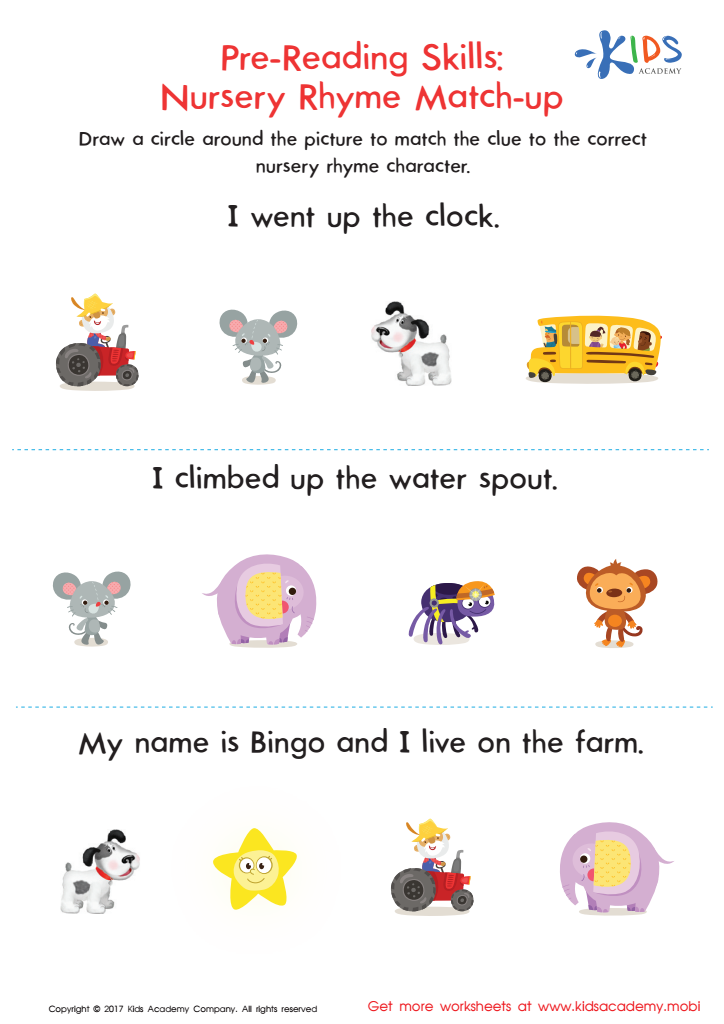
Nursery Rhyme Match–Up Worksheet
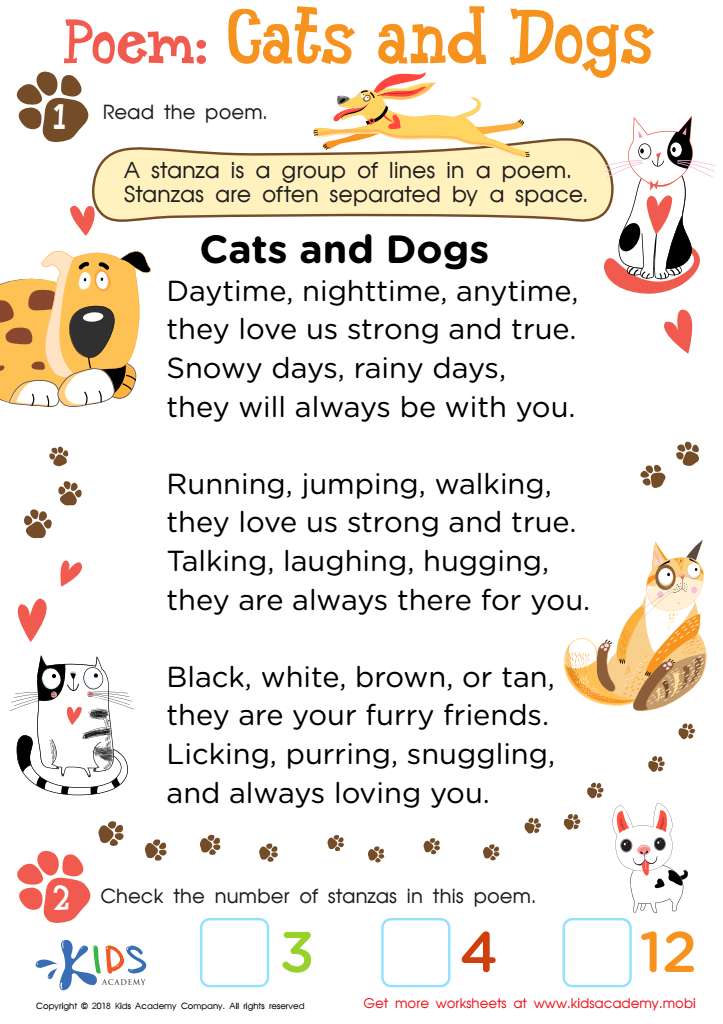
Poem: Cats and Dogs Worksheet






.jpg)
Rhyme recognition in reading fiction is a critical component of early literacy development for children ages 3-8. Parents and teachers should care about this skill because it lays the foundation for phonemic awareness, which is crucial for reading success. Engaging with rhymes helps children notice and manipulate sounds in words, making it easier for them to decode and spell as they progress in their literacy journey.
Moreover, rhyming texts often capture children's interest and foster a love for reading through their musicality and repetitive patterns. This can enhance vocabulary development and comprehension as children connect with the rhythm and meaning of words. When children engage with rhyme, they also develop auditory discrimination, which is important for differentiating sounds in language.
Additionally, shared reading experiences that incorporate rhyming books encourage bonding between parents, teachers, and children. These interactions not only build literacy skills but also promote a positive attitude towards learning. By prioritizing rhyme recognition and incorporating it into reading practices, adults can ensure that children develop essential reading skills while having fun and tapping into their innate curiosity about language. This sets them up for a successful educational journey.








