Reading Non-Fiction Worksheets for Ages 3-8 - Page 5
97 filtered results
-
From - To
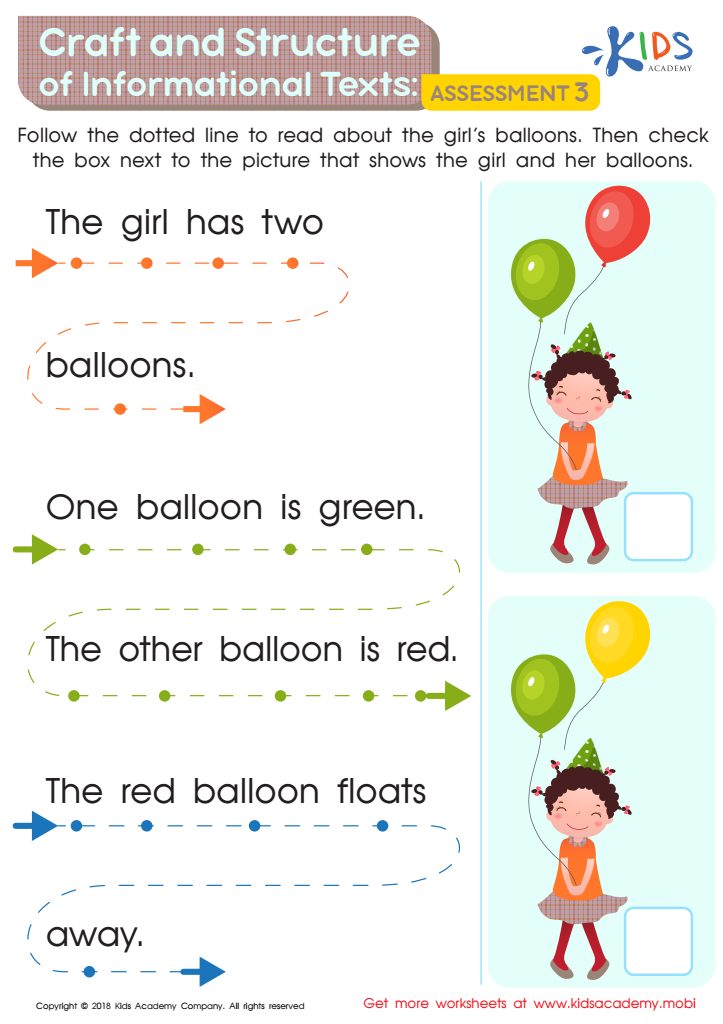
Craft and Structure of Informational Texts: Assessment 3 Worksheet
 Assign to My Students








Reading non-fiction is crucial for young children ages 3-8 because it lays a solid foundation for later academic success and everyday decision-making. Non-fiction books introduce young readers to the real world, providing factual information about nature, science, history, and various cultures. This exposure can spark curiosity and a love for learning early in life. It helps children develop critical thinking and analytical skills as they learn to process and question real-world information. By understanding true facts and concepts, kids become better equipped to distinguish between fiction and reality.
Moreover, non-fiction reading complements educational standards focused on building informational text comprehension, a skill that remains vital throughout schooling. It also aids in vocabulary development, introducing children to new terms and phrases they might not encounter in fiction, thus broadening their language range.
Parents and teachers who encourage non-fiction reading help prepare children for a world filled with information. Additionally, engagement with age-appropriate non-fiction books can improve concentration and focus, building a sense of perseverance as children learn to understand complex ideas Little minds are curious, and satisfying this curiosity with quality non-fiction fuels a lifelong journey of discovery. Therefore, promoting non-fiction reading is a cornerstone for raising well-informed, curious, and capable individuals.








