Reading practice Reading Non-Fiction Worksheets for Ages 3-8
4 filtered results
-
From - To
Unlock the world of learning with our "Reading Non-Fiction Worksheets" designed specifically for children ages 3-8! These engaging resources provide practice in understanding real-world concepts through age-appropriate non-fiction texts. Each worksheet focuses on essential reading skills such as comprehension, vocabulary building, and critical thinking. Perfect for at-home learning or classroom activities, our printable materials encourage curiosity and support young readers in exploring topics ranging from animals to science. Help your child build confidence and a love for reading while enhancing their understanding of the world around them. Discover the joy of reading non-fiction today!
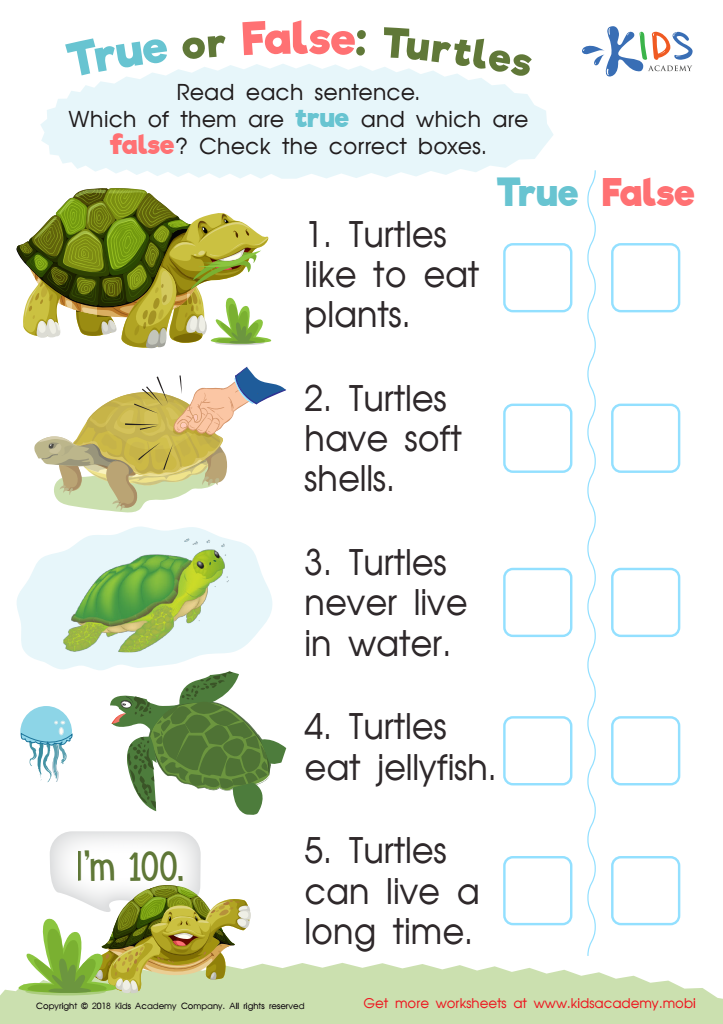
True or False: Turtles Worksheet
 Assign to My Students
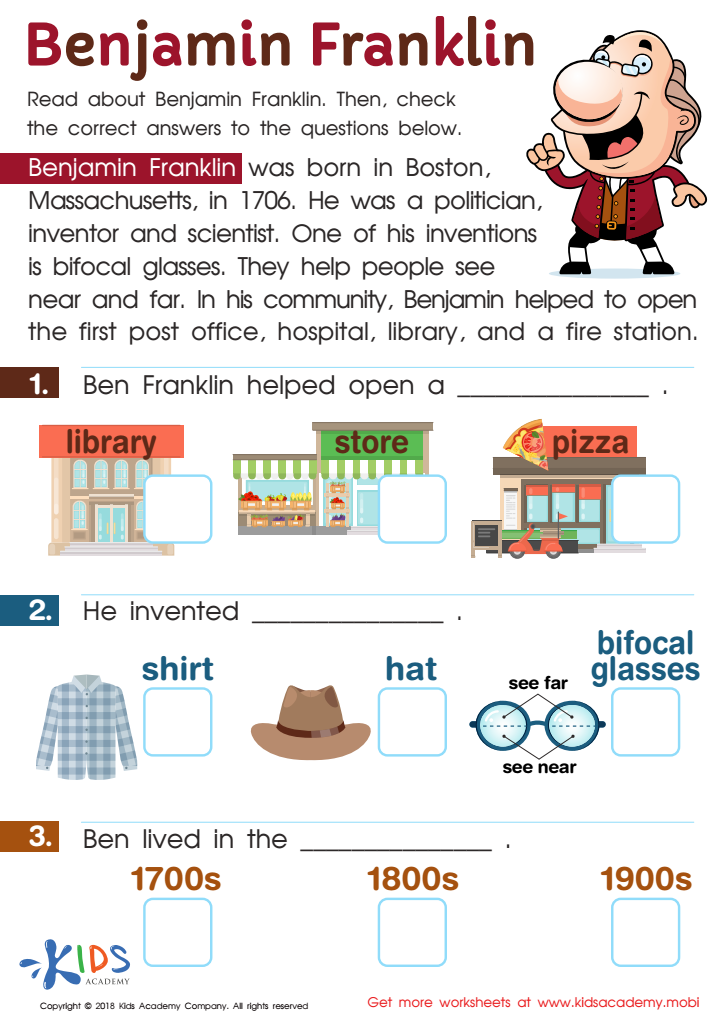
Benjamin Franklin Worksheet
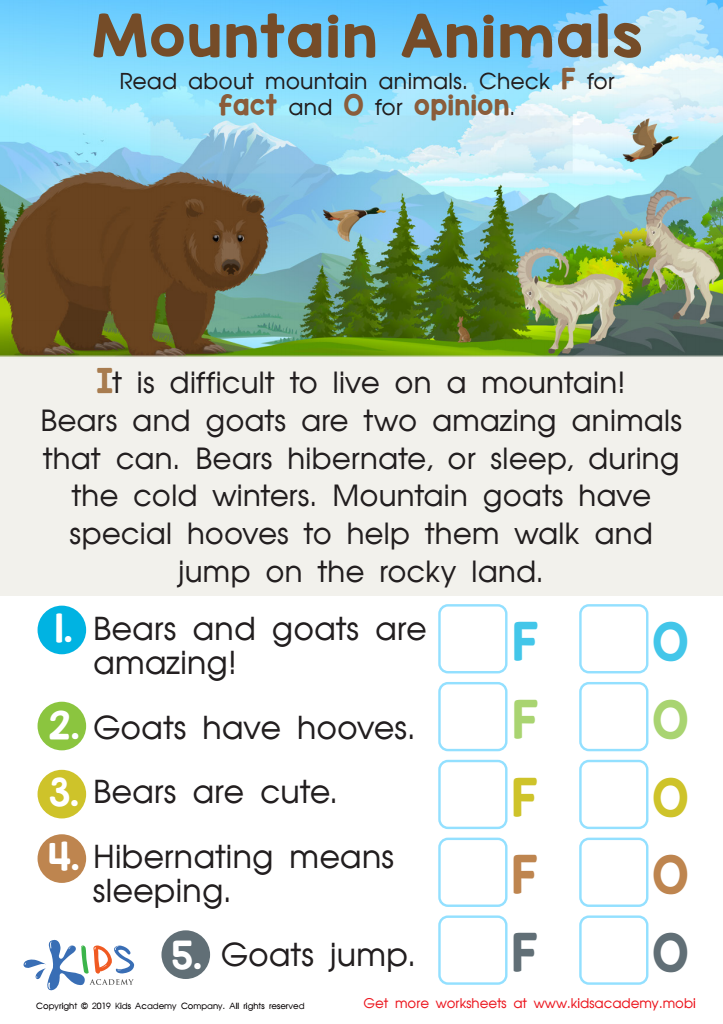
Mountain Animals Worksheet
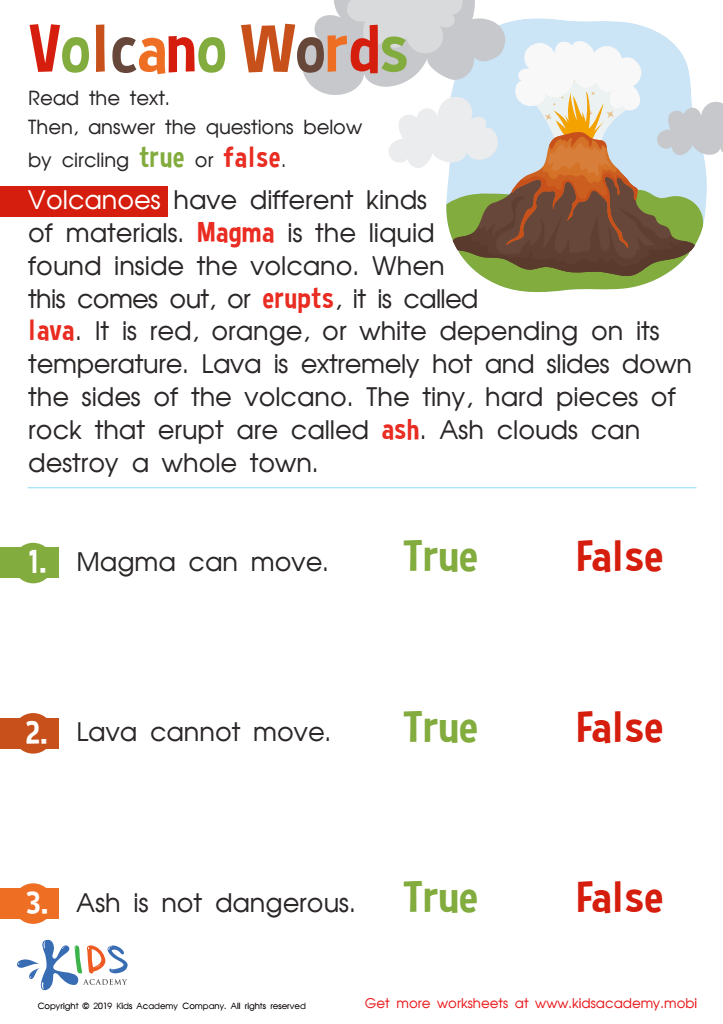
Volcano Words Worksheet








Parents and teachers should prioritize reading non-fiction for children aged 3-8 because it lays a foundation for critical thinking and general knowledge. Non-fiction books introduce young readers to real-world concepts, factual information, and diverse topics, from animals to space, promoting curiosity and learning. Engaging with non-fiction helps children develop essential research skills, encouraging them to question, explore, and understand their surroundings.
Reading non-fiction also enhances vocabulary and language development by exposing children to specialized terminology and diverse sentence structures. As they encounter new ideas and contexts, they learn to articulate their thoughts more effectively. This genre serves to strengthen literacy skills by teaching children how to navigate informational text, which is crucial as they progress in their academic journey.
Moreover, non-fiction can foster a love for reading by connecting literature with children’s interests and hobbies. By discovering the world through non-fiction, children build a sense of context and relevance that enhances their understanding of narrative texts as well.
In summary, reading non-fiction not only promotes literacy but also nurtures inquisitive learners equipped with knowledge and cognitive skills that extend beyond the classroom, setting the stage for lifelong learning.








