Practice addition Sight Words Worksheets for Ages 3-8
3 filtered results
-
From - To
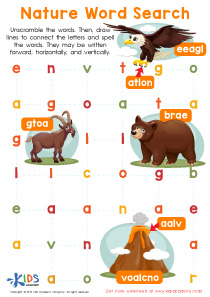
Discover our engaging "Practice Addition Sight Words Worksheets" designed for children aged 3-8! These printable worksheets beautifully combine learning fundamental addition skills with essential sight words. Perfect for early learners, they feature vibrant illustrations and user-friendly layouts that keep young minds engaged. As children practice addition, they'll concurrently enhance their vocabulary, building essential literacy and math foundations. Each worksheet encourages skill acquisition through fun exercises, fostering confidence and enthusiasm in learning. Ideal for teachers, parents, and caregivers seeking to support their child's educational journey, these resources meet the needs of diverse learners. Start your child's journey to mastery today!
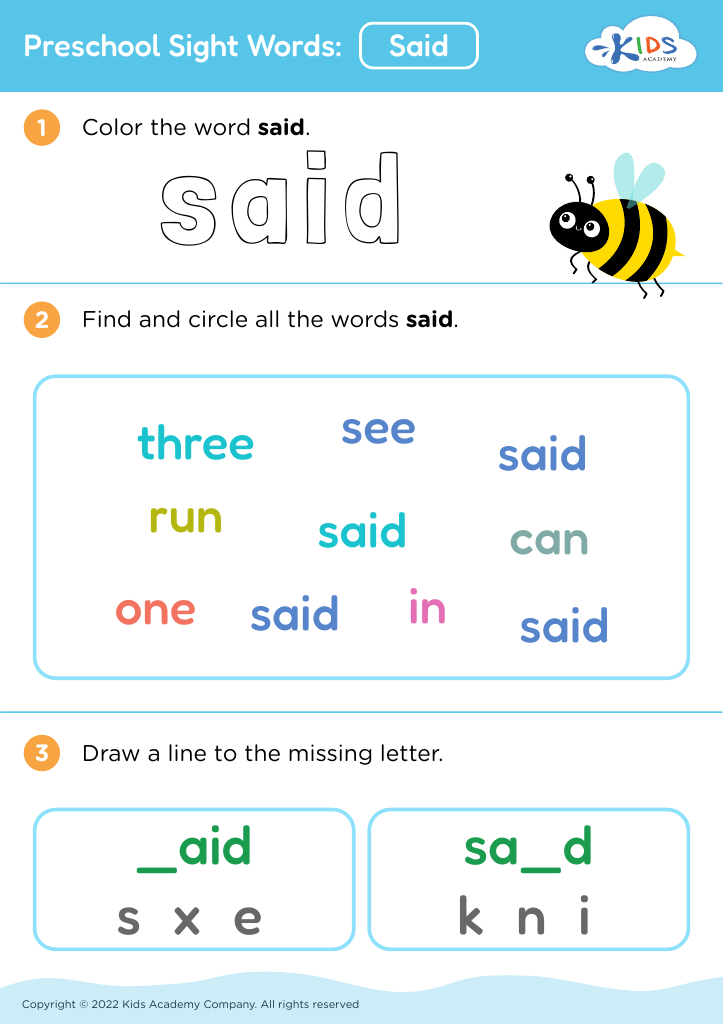







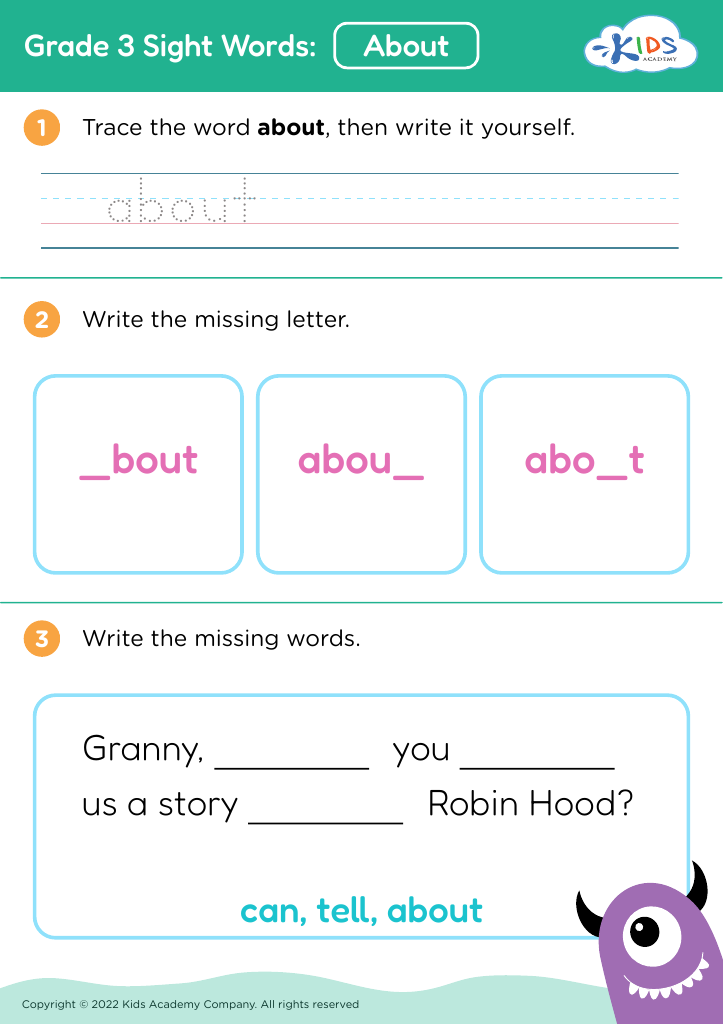
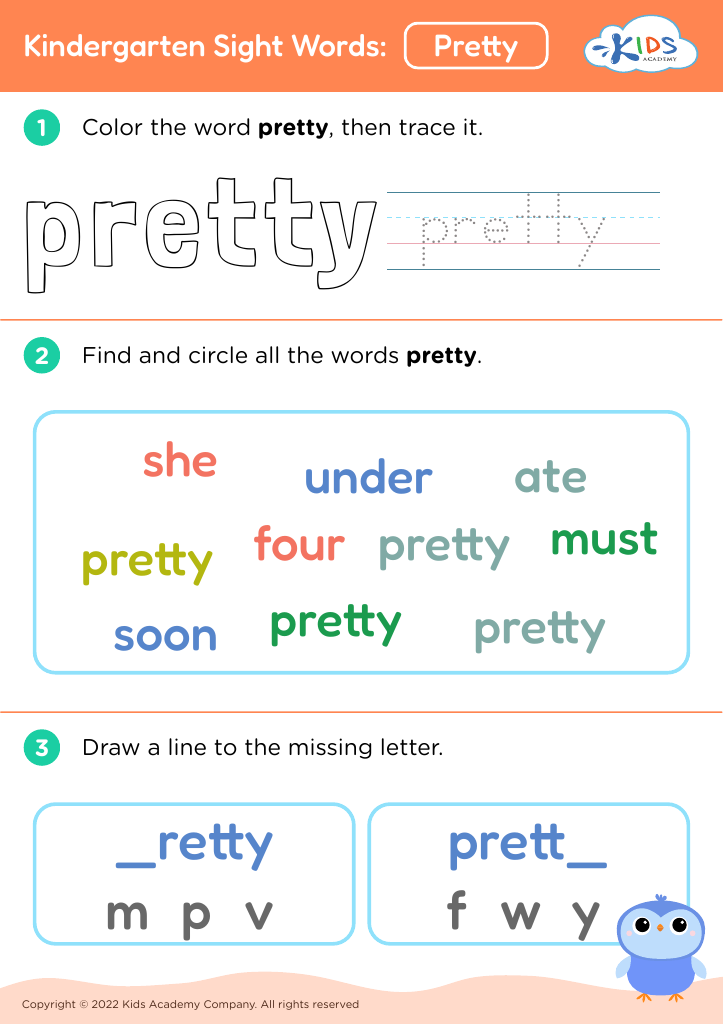







Parents and teachers should care about practicing addition sight words for children ages 3-8 because early literacy and numeracy skills are crucial for a child’s overall development. Learning sight words — the most commonly used words that children should recognize instantly — enhances reading fluency and comprehension. When children build a strong sight word vocabulary, they become more confident readers, which fosters a love for reading and learning.
Additionally, practicing sight words alongside basic math concepts, like addition, supports cognitive development. Research shows that literacy and numeracy are interconnected, and mastering sight words can help children understand math problems better by allowing them to quickly read through instructions or word problems without getting sidetracked.
Moreover, incorporating sight words into daily practice can easily be transformed into fun games and activities, making learning engaging and enjoyable. This interactive approach encourages a strong parent-child or teacher-student bond and reinforces positive learning associations.
Ultimately, focusing on sight word practice supports lifelong skills, laying a solid foundation for future academic success and development of critical thinking skills. This holistic approach helps children thrive in both their educational journey and social interactions.