Understanding patterns Sight Words Worksheets for Ages 3-8
8 filtered results
-
From - To
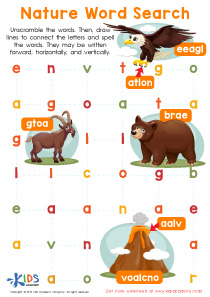
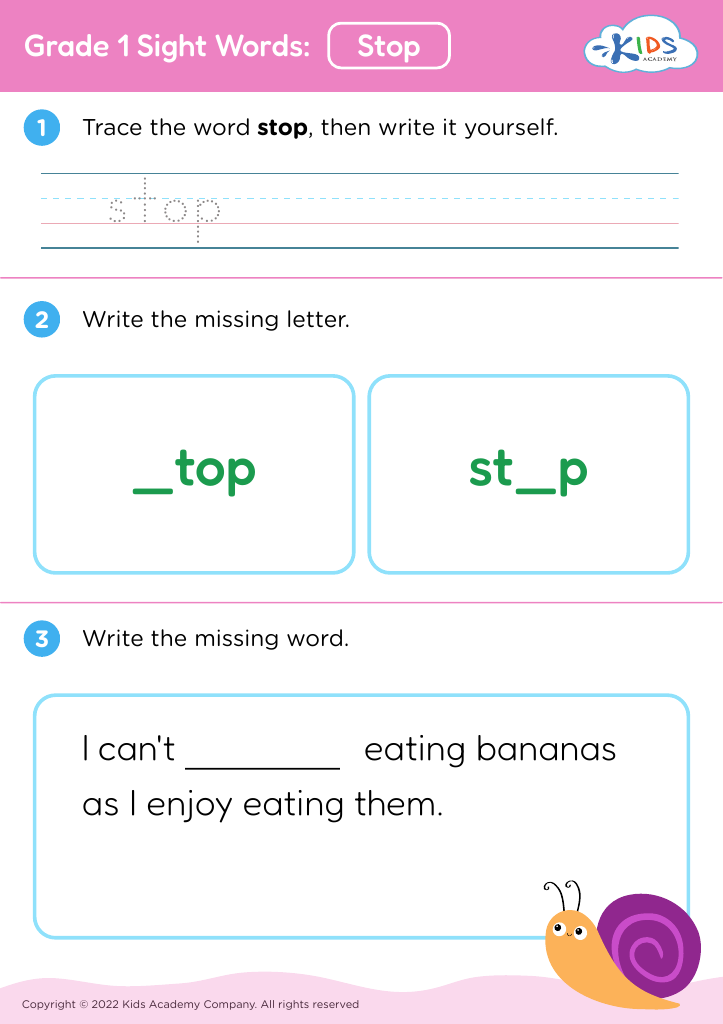
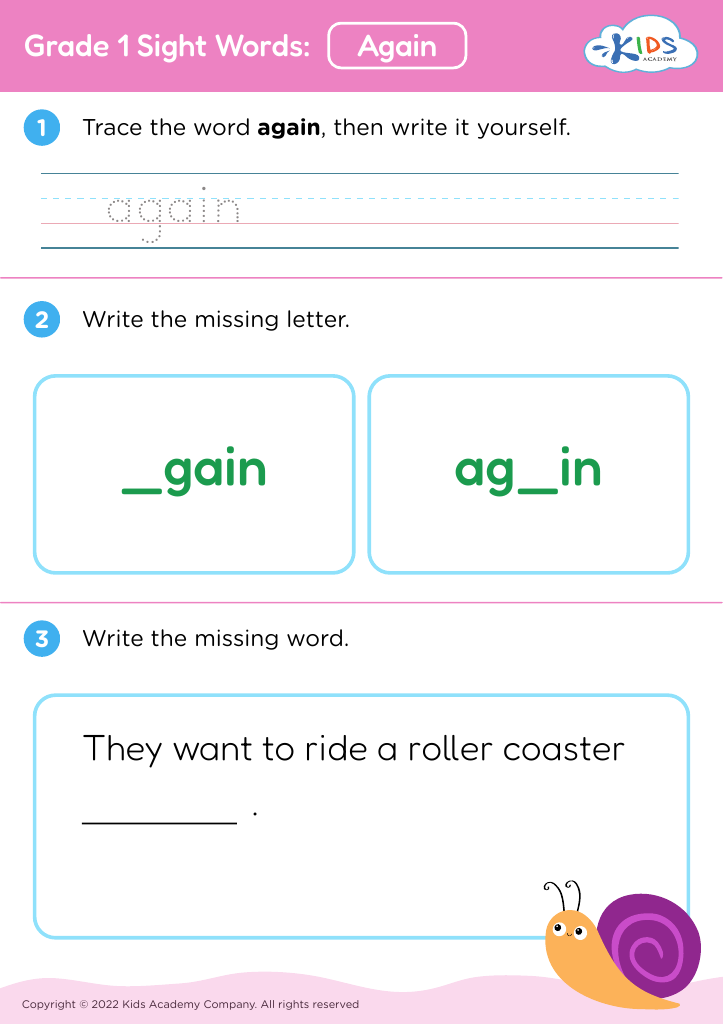
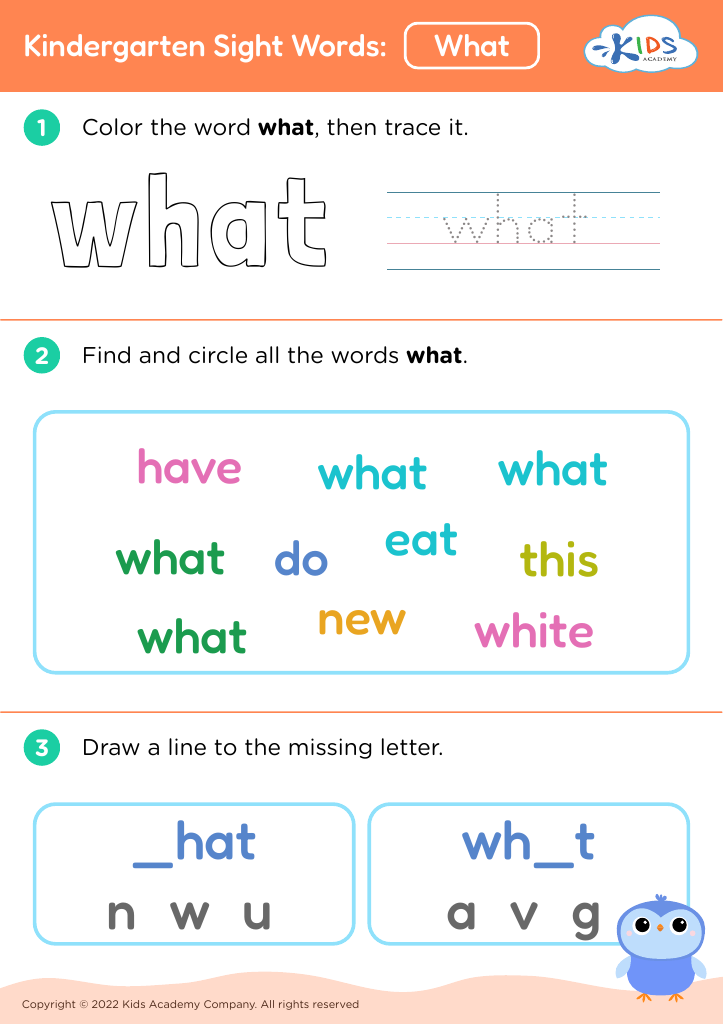
Enhance your child's reading skills with our "Understanding Patterns Sight Words Worksheets," designed for ages 3-8. These engaging worksheets focus on helping young learners recognize and understand patterns in sight words, a crucial step towards building their reading proficiency. By incorporating fun activities, such as matching, tracing, and interactive exercises, children will strengthen their familiarity with essential sight words while developing critical thinking skills. Our thoughtfully crafted resources encourage a love for reading and boost confidence in early literacy. Perfect for at-home learning or classroom use, these worksheets make learning enjoyable and effective, paving the way for future reading success.
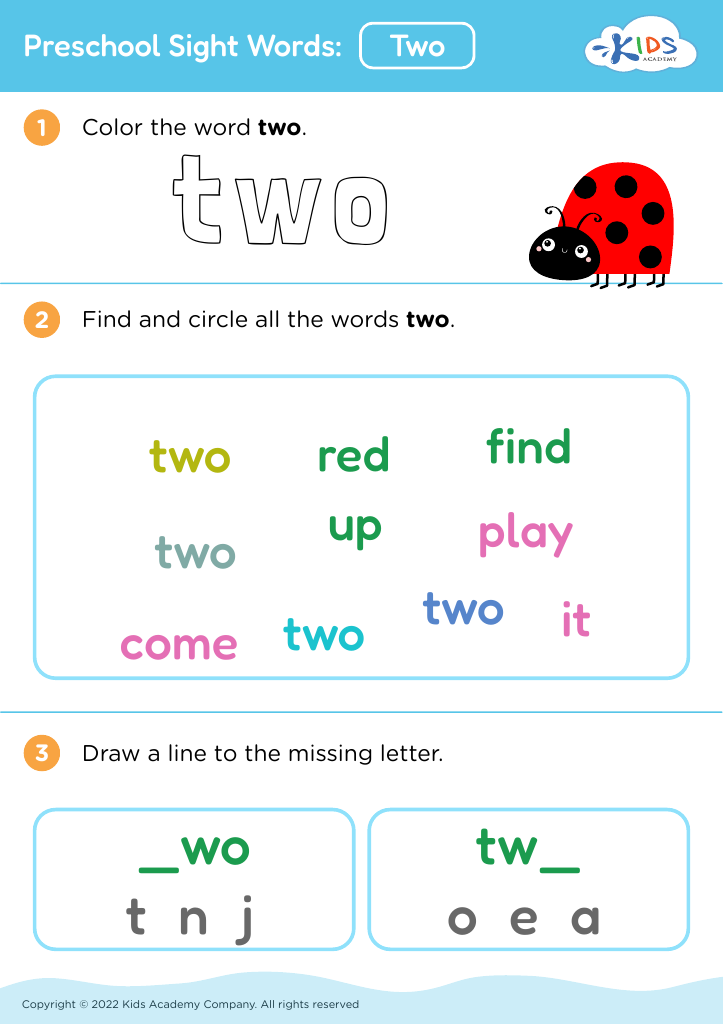




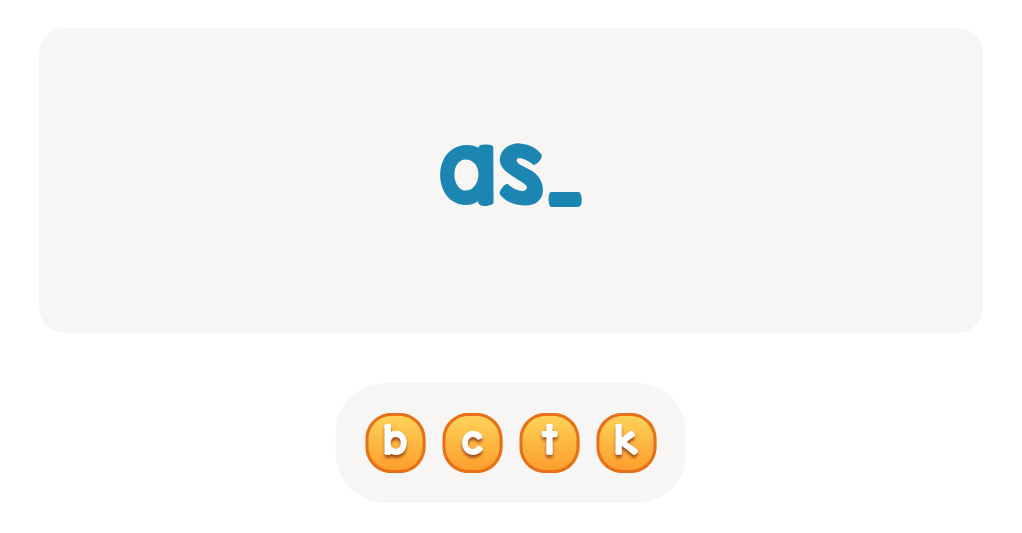
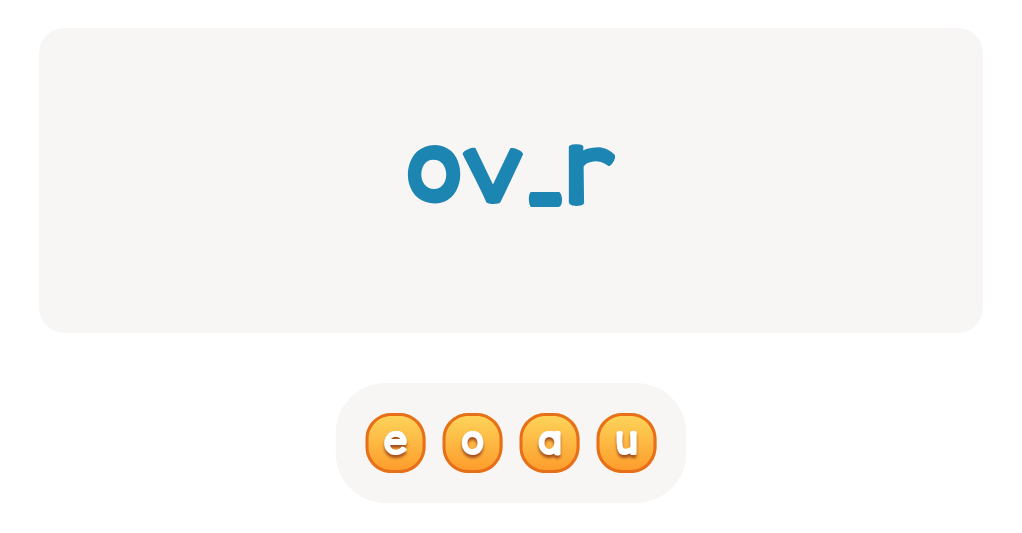
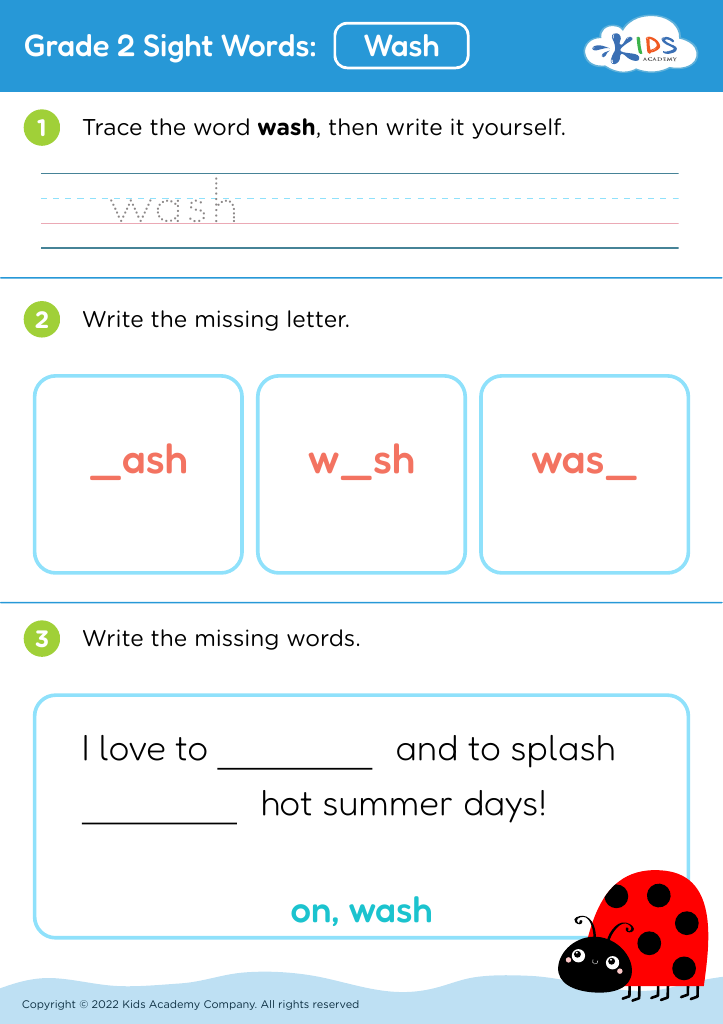
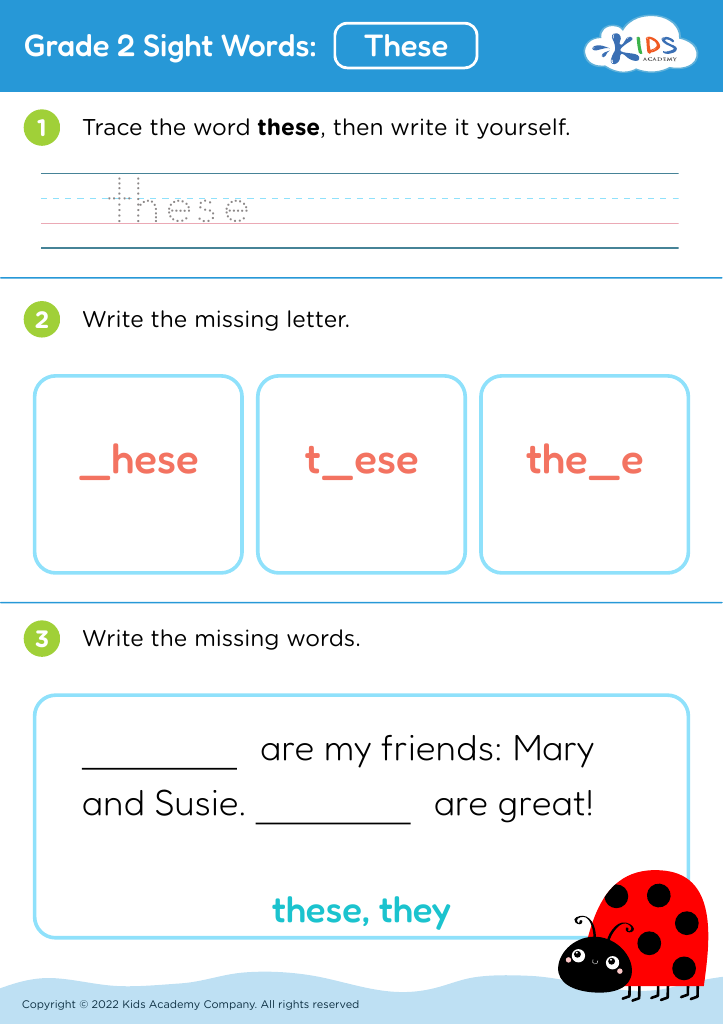
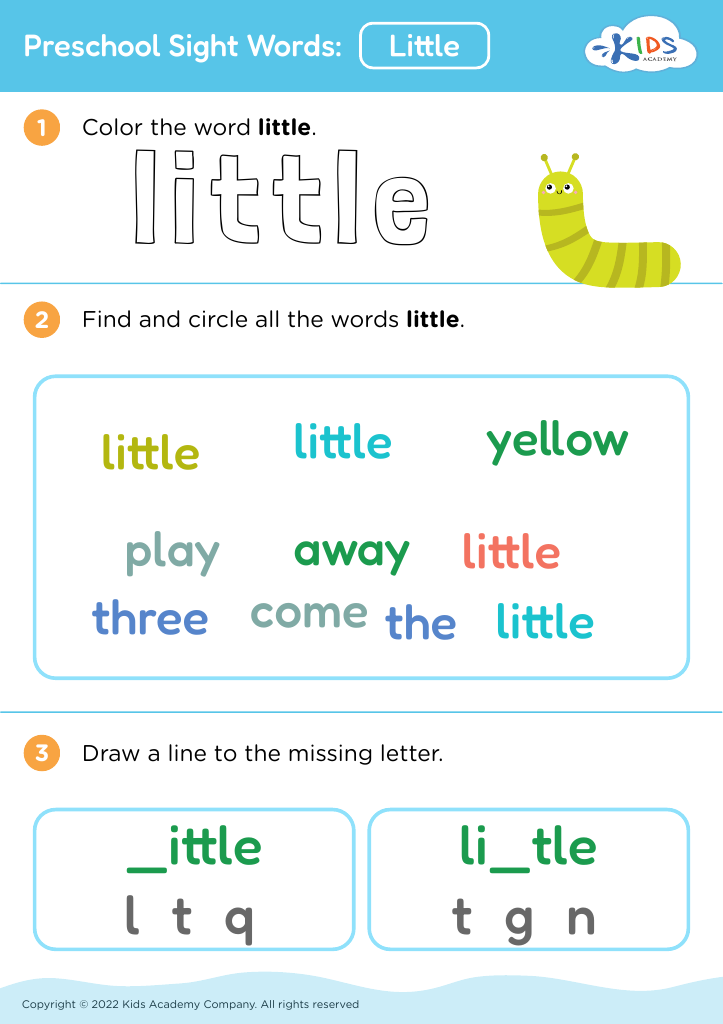
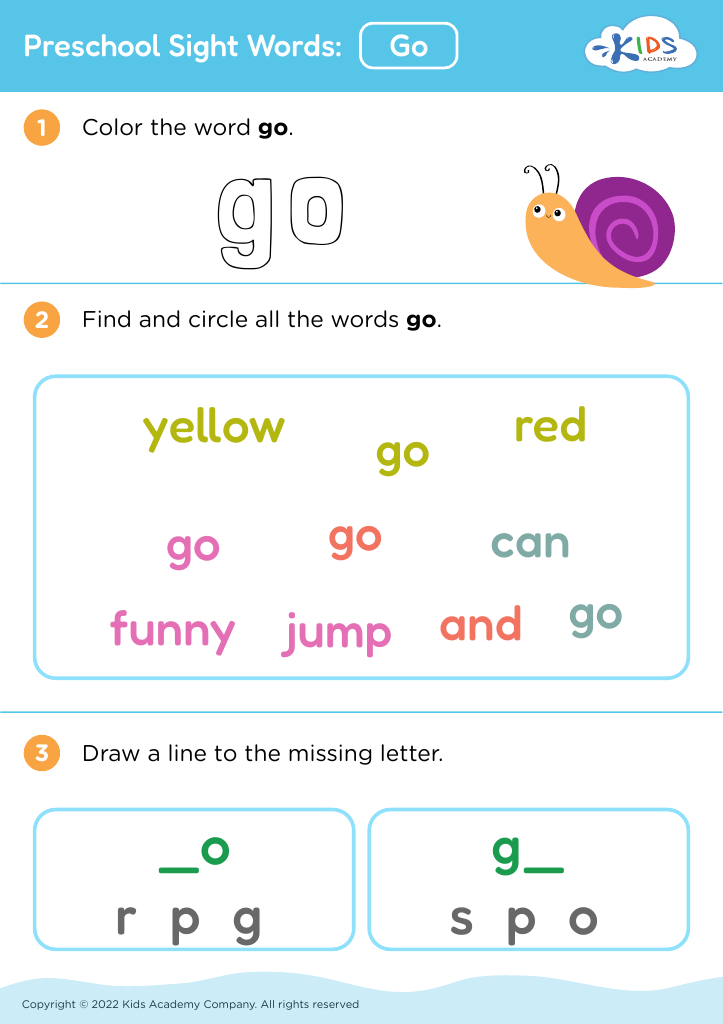







Understanding patterns and sight words is crucial for children aged 3-8 as it lays the foundation for literacy and cognitive development. Patterns help young learners make sense of the world around them. Recognizing patterns in language, such as rhymes or similar letter structures, enhances their ability to predict what comes next, improving decoding skills when they encounter new words.
Sight words, which refer to commonly used words that often cannot be easily decoded through phonological reading strategies, are essential for fluent reading. When children recognize these words instantly, they can focus more on comprehension rather than decoding each word. This helps build confidence and encourages a love for reading.
Parents and teachers should care because early literacy skills correlate with overall academic success. By engaging children in activities that promote pattern recognition and sight word mastery, we can foster critical thinking, enhance vocabulary, and support their emotional and social development.
Moreover, early exposure to these concepts can minimize struggles later in school, providing children with the tools they need for lifelong learning. Investing time in understanding and teaching patterns and sight words is a pivotal move towards ensuring children become proficient, enthusiastic readers.