Understanding symmetry Sight Words Worksheets for Ages 3-8
5 filtered results
-
From - To
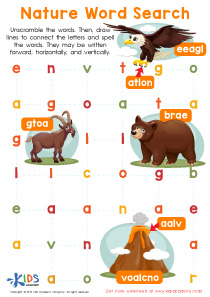
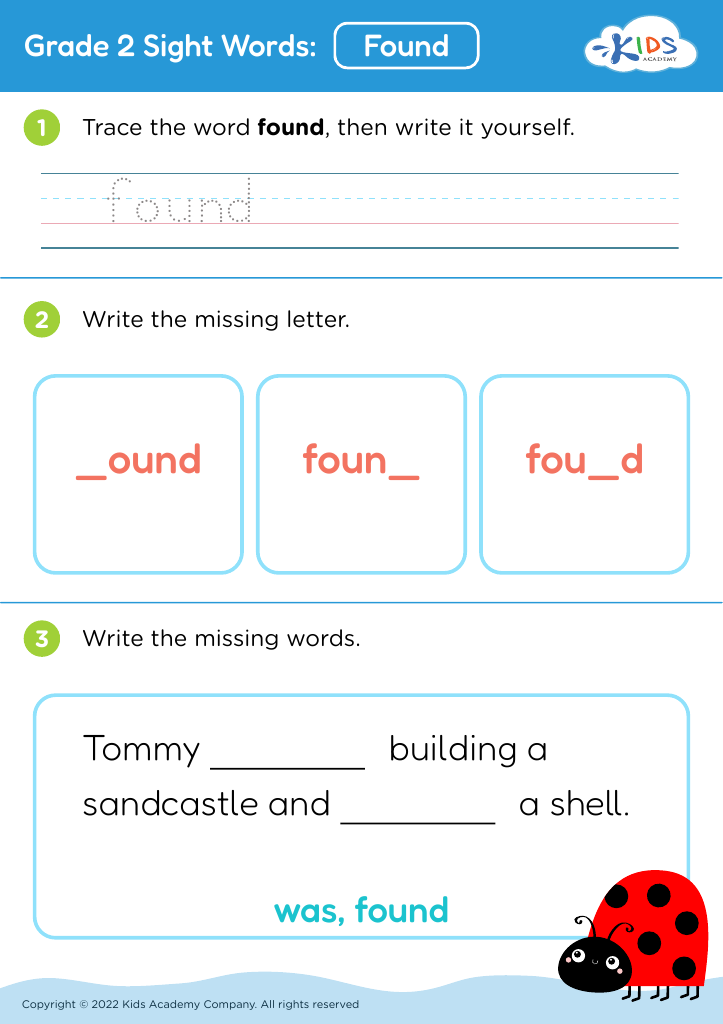
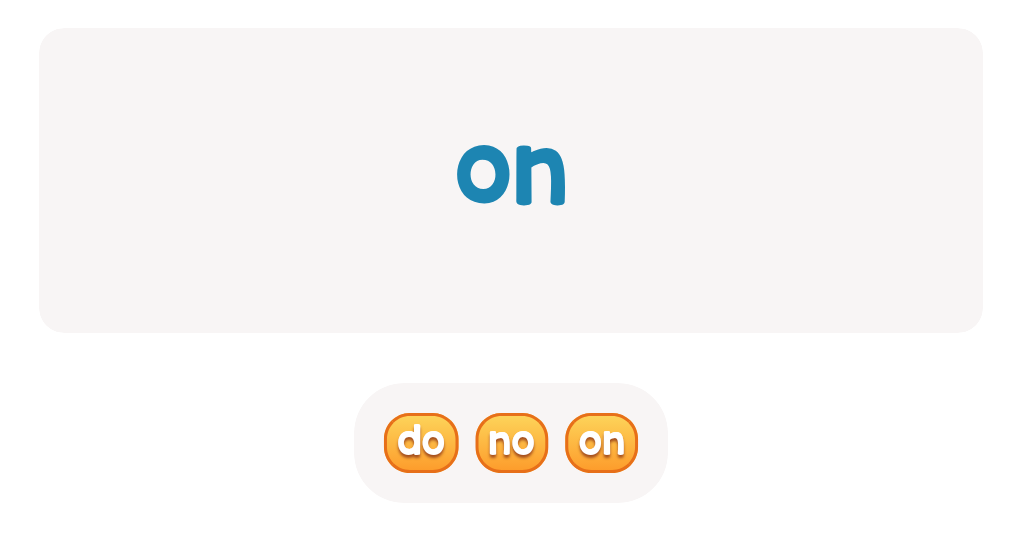
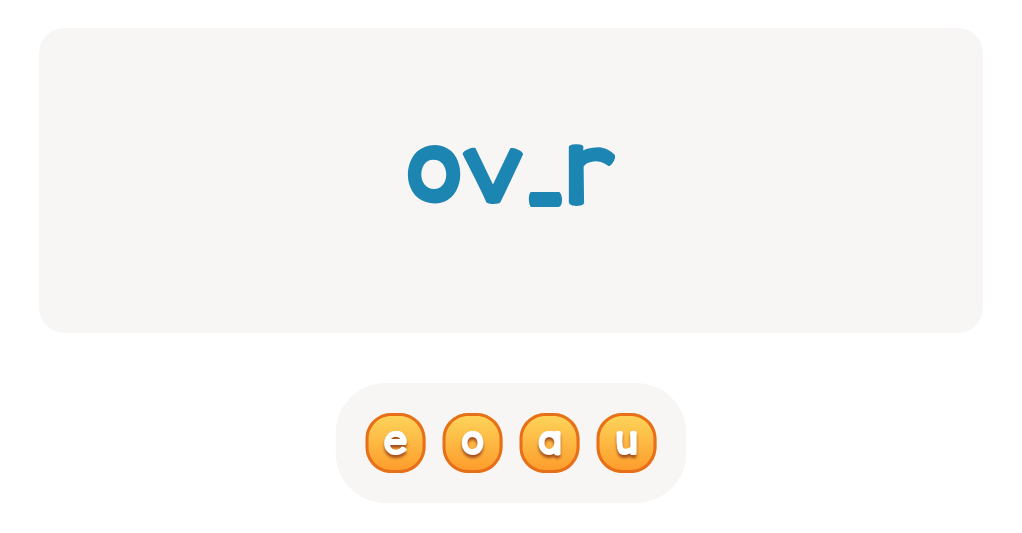
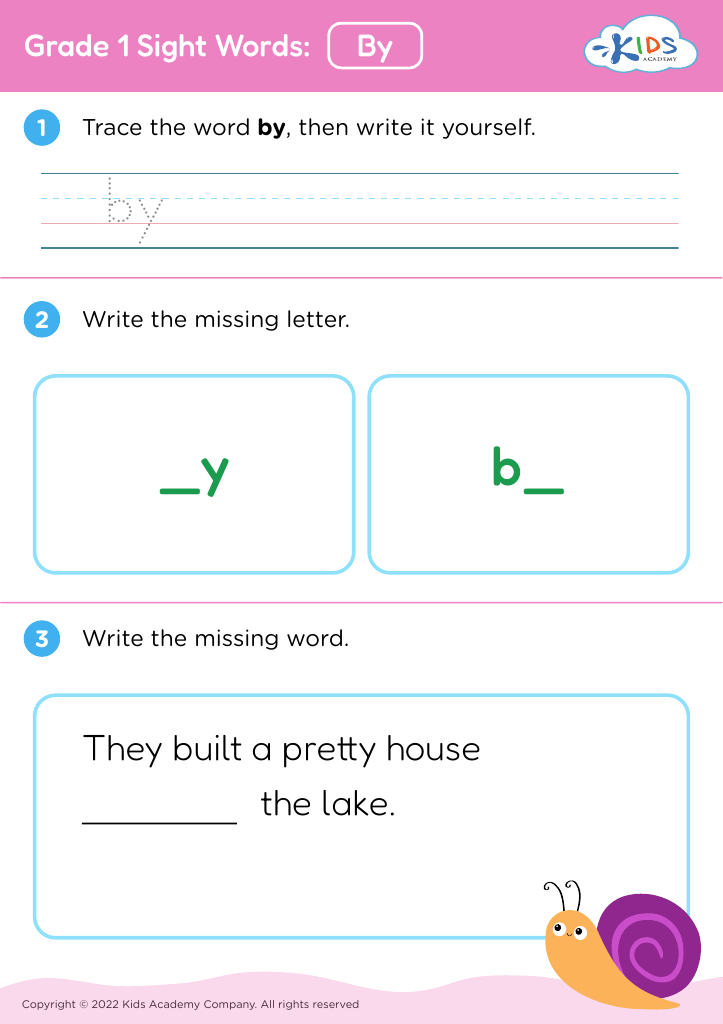
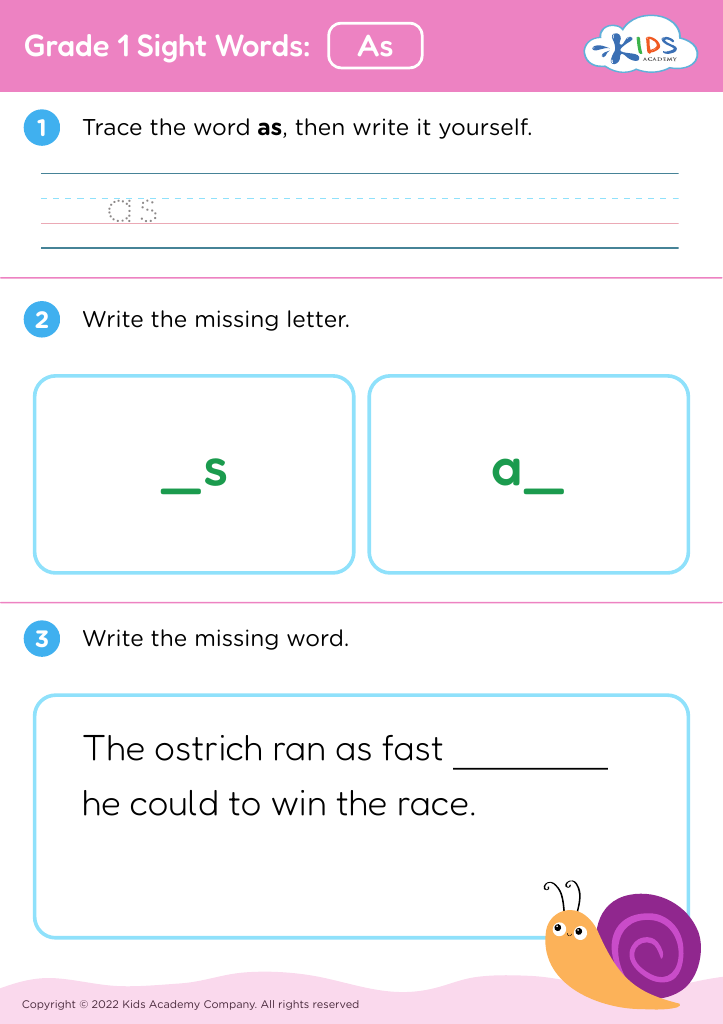
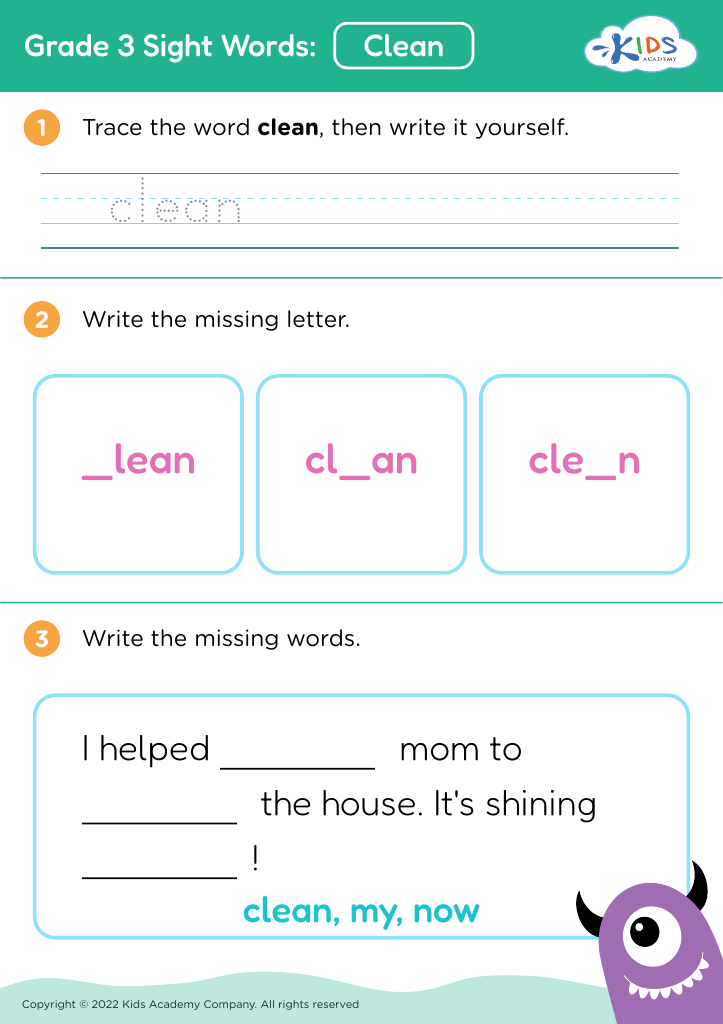
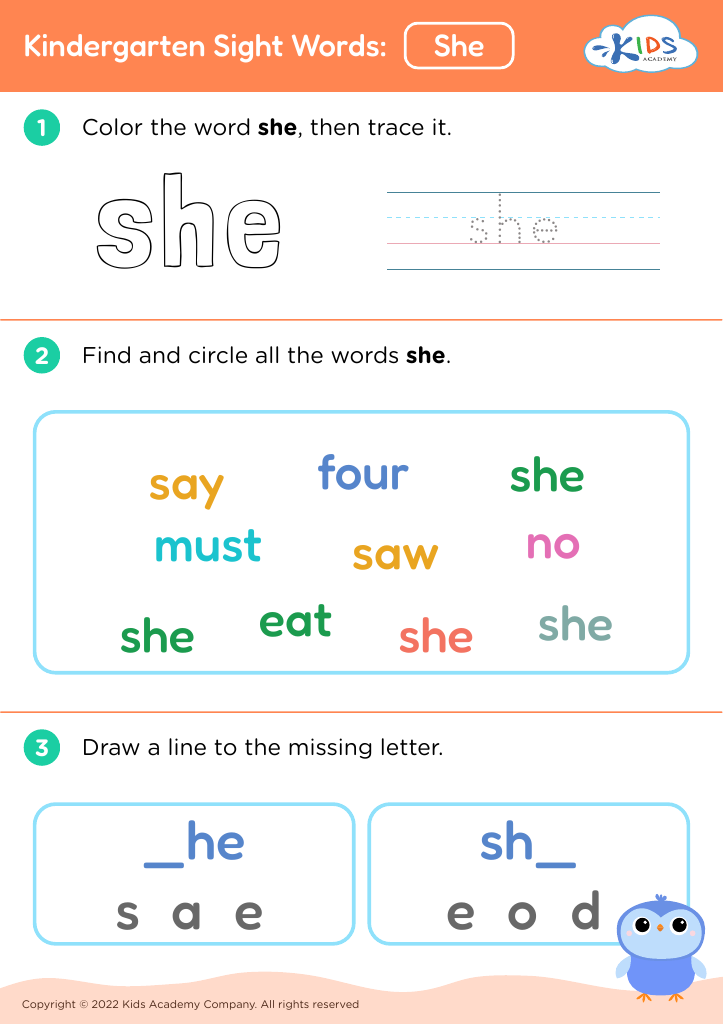
Introducing our "Understanding Symmetry Sight Words Worksheets," crafted for children ages 3-8. These engaging worksheets incorporate sight words into fun activities that teach the fundamentals of symmetry. Each worksheet offers colorful illustrations and kid-friendly exercises that promote visual learning and critical thinking. Perfect for early learners, these resources not only help with reading proficiency but also introduce mathematical concepts in an approachable way. Ideal for both classroom and home use, they make learning an interactive and enjoyable experience. Equip your child with essential skills and watch them excel! Visit Kids Academy for more exciting educational resources.







.jpg)
Understanding symmetry and sight words is fundamental for young children's cognitive and linguistic development, especially in the early years from ages 3-8. Symmetry, a key concept in geometry, enhances spatial awareness and pattern recognition. Engaging children with symmetrical shapes and visuals aids their problem-solving skills and nurtures an intuitive grasp of math. This foundation not only prepares them for future math challenges but also helps in organizing information systematically in their day-to-day lives.
Sight words, on the other hand, are indispensable in early literacy. Sight words are frequently used words that children are encouraged to recognize by sight without needing to decode each letter. Since these words often do not follow standard phonetic rules, recognizing them instantly means smoother and more confident reading. Knowing sight words accelerates reading fluency and comprehension, laying the groundwork for academic success across all subjects.
Both symmetry and sight words offer more than just academic skills. They contribute to a child's confidence and excitement about learning. When children can effortlessly read common words aloud and identify patterns around them, they're more likely to be curious, engaged, and enthusiastic learners. Thus, parents and educators should emphasize these concepts to foster well-rounded, skillful, and eager learners.