
Animal recognition Animals Worksheets for Ages 3-8
3 filtered results
Difficulty Level
Grade
Age
-
From - To
Subject
Activity
Standards
Explore our fun and educational Animal Recognition Worksheets, designed for children ages 3-8. These engaging printables help young learners identify different animals while enhancing their cognitive skills. Our worksheets feature vibrant images and interactive activities to teach kids about wildlife. From naming animals to distinguishing their unique characteristics, these resources make learning enjoyable. Perfect for preschool and early elementary students, our worksheets encourage curiosity and a love for nature. Boost your child's knowledge and confidence with our expertly crafted activities. Visit our website to download the Animal Recognition Worksheets today and watch your little one become an animal expert!
Favorites
With answer key
Interactive
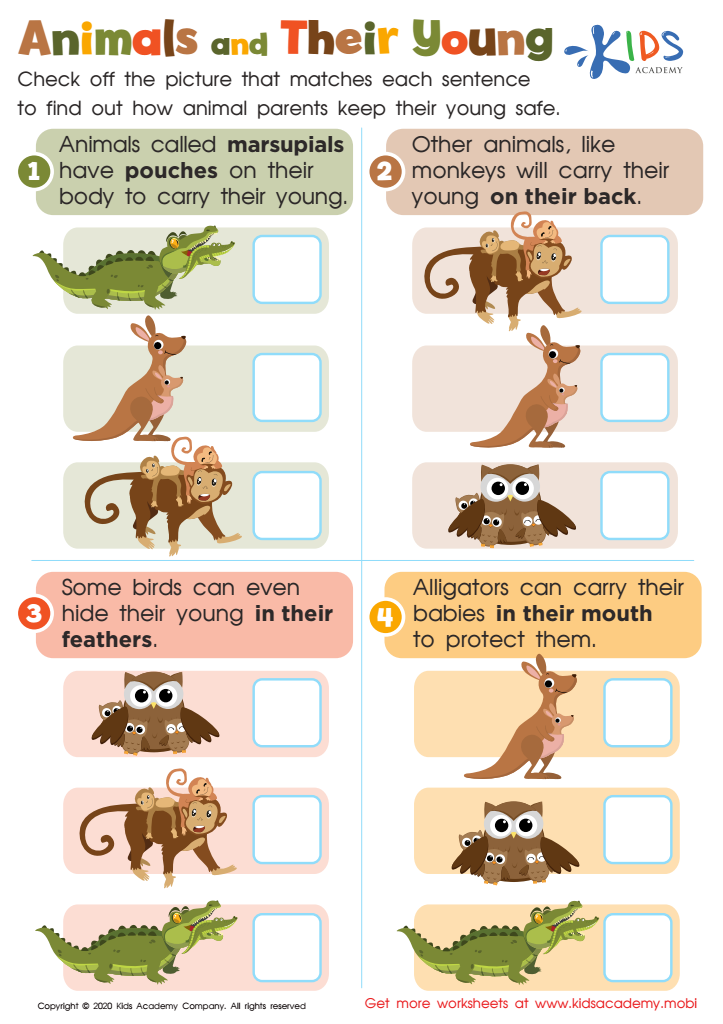
Animals and Their Young Worksheet
Help your child learn more about the animal kingdom with this cute science worksheet! They'll find out how animals protect and keep their babies close. From pouches to hitching a ride on mama’s back, they'll read the sentence above each illustration and select the description that fits. Check off the correct description as they go - a fun and educational activity!
 Assign to My Students
Animals and Their Young Worksheet
Worksheet
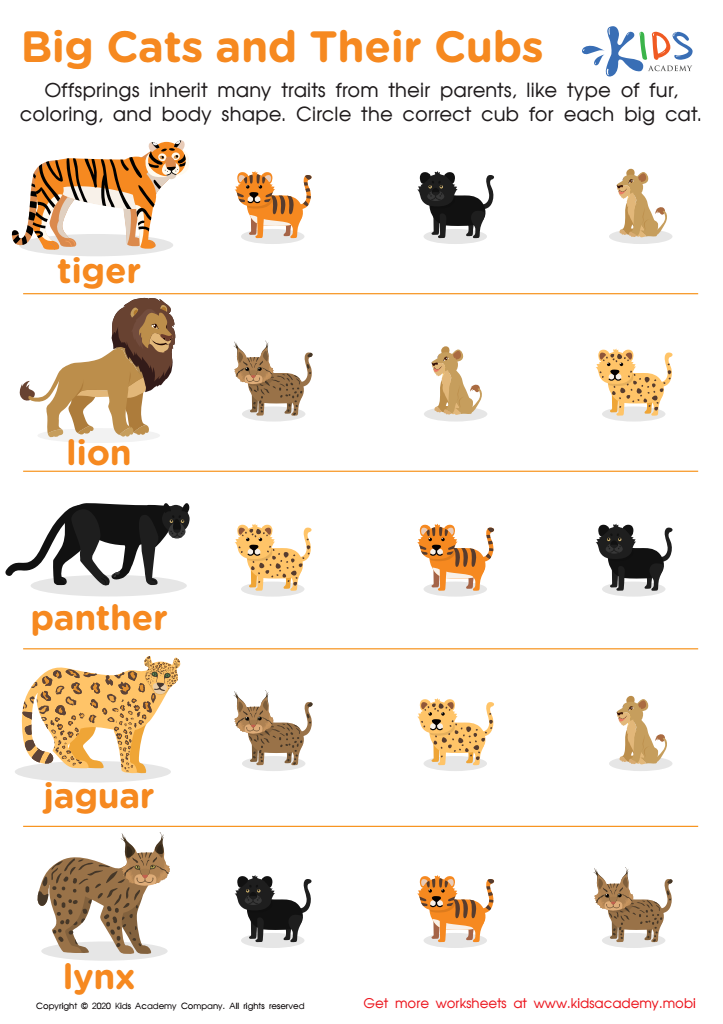
Big Cats and Their Cubs Worksheet
Kids are often like their parents, and the same is true for big cats and their cubs. Introduce your young scientists to genetics with this fun printable worksheet from Kids Academy! Observe the big cats and their cubs, then circle the right cub to complete! It's a great way to teach an early lesson in genetics.
Big Cats and Their Cubs Worksheet
Worksheet
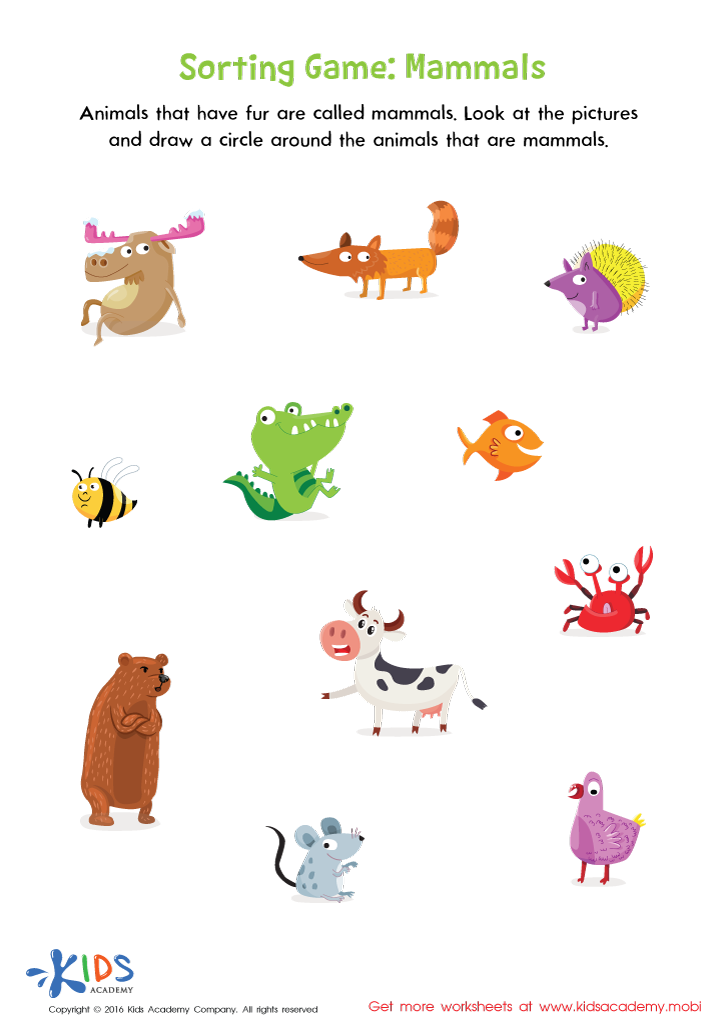
Mammals Sorting Worksheet
They'll practice sorting animals and learn their features with this fun worksheet.
Kids can test their scientific knowledge with this fun worksheet! They'll view pictures of animals, identify mammals based on their fur, and practice sorting them. This colorful worksheet is a great way for kids to learn about the differences between mammals and other animals.
Mammals Sorting Worksheet
Worksheet
Join Kids Academy for Free
Who is primarily going to use this learning content?








Parents and teachers should care about animal recognition for children aged 3-8 because it plays a crucial role in their overall development. First and foremost, learning to recognize different animals helps enhance young children's cognitive abilities, including memory and problem-solving skills. It also fosters language development as kids learn new names and associated characteristics, aiding their vocabulary growth.
Understanding animals and their habitats introduces children to fundamental scientific principles and the diversity of the natural world. This knowledge can cultivate a sense of curiosity and appreciation for nature, laying the groundwork for future learning in biology and environmental science. In addition, being able to identify animals aids in developing observational skills. When children pay attention to details like color, size, and movement, they improve their visual discrimination—an essential skill for reading and math.
Socially and emotionally, learning about animals can build empathy, as it often involves discussing needs, survival tactics, and even emotions of different creatures. When children form positive associations with animals, they are more likely to develop gentle and caring attitudes.
Lastly, animal recognition activities, such as visiting a zoo, reading books, or playing educational games, offer fun and engaging ways for families to bond and for classrooms to implement shared, hands-on learning experiences. Thus, animal recognition is a multifaceted educational tool that supports intellectual, emotional, and social growth.








