Categorization skills Animals Worksheets for Ages 3-8
4 filtered results
-
From - To
Discover our engaging Animals Worksheets designed to enhance categorization skills for children ages 3-8. These interactive activities make learning fun while helping young minds identify, sort, and classify different animals based on various attributes such as habitat, diet, and size. Our thoughtfully crafted worksheets cater to early learners, promoting critical thinking and observation skills through vibrant illustrations and age-appropriate content. Additionally, children will enjoy hands-on activities that encourage participation and creativity. Ideal for classrooms or home use, these worksheets serve as a great educational tool to foster a love for learning about the animal kingdom. Start exploring and categorizing today!
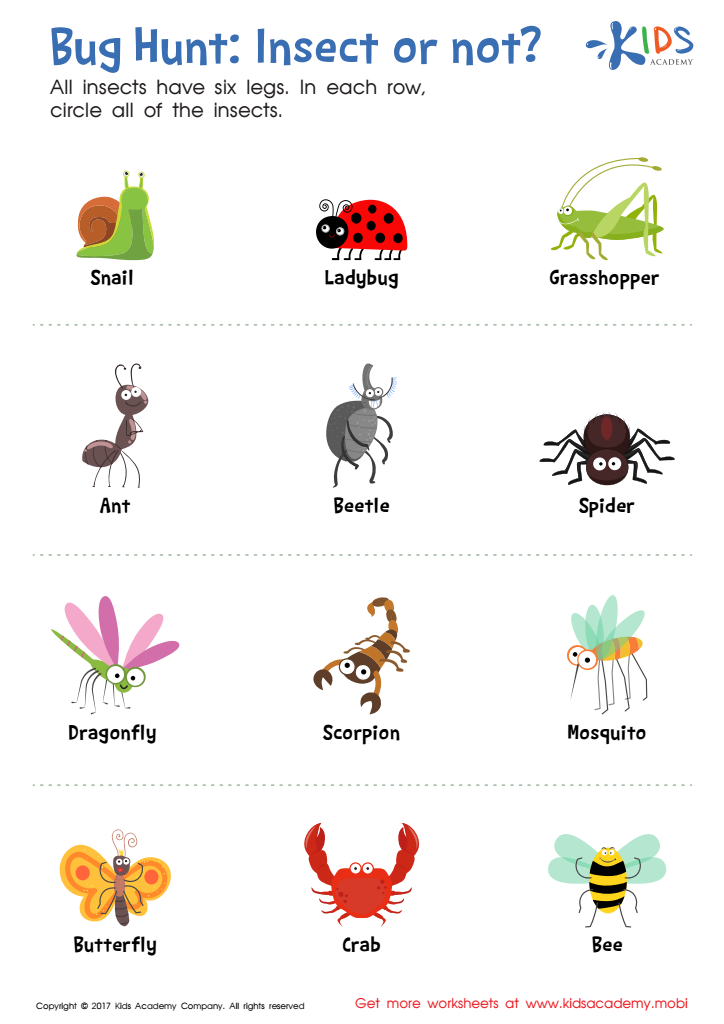
 Assign to My Students
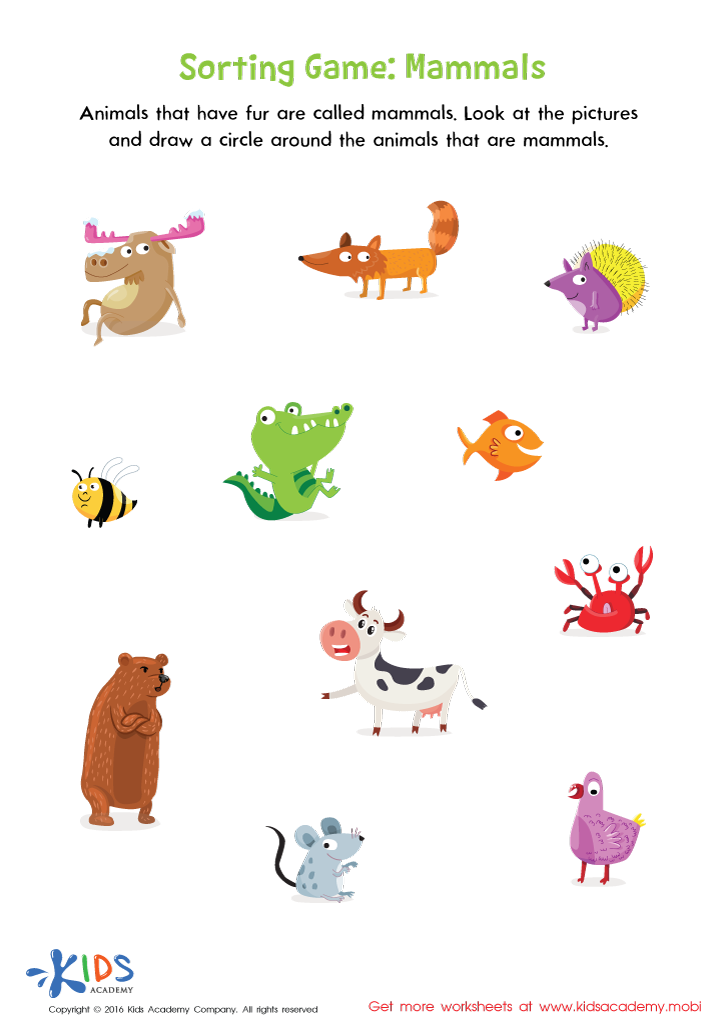
Mammals Sorting Worksheet

Identifying Living or Non–living Worksheet
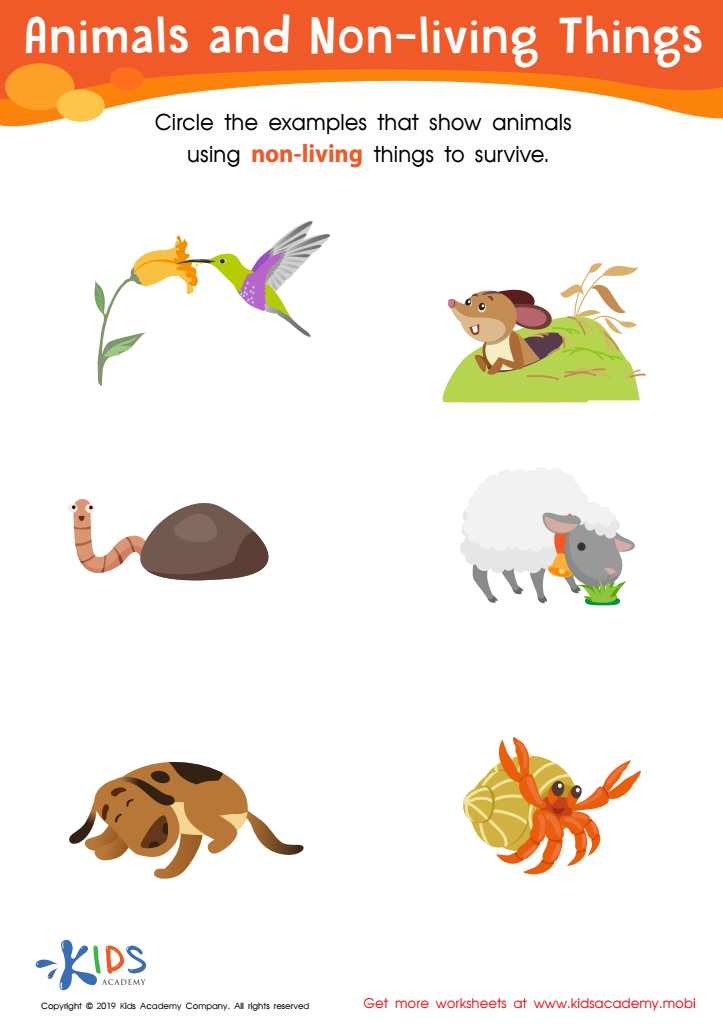
Animals and Non-Living Things Worksheet








Categorization skills, especially regarding animals, are crucial for children aged 3-8 as they lay the foundation for cognitive development and critical thinking. Learning to categorize animals helps children make sense of their world. By grouping animals based on characteristics such as habitat, diet, or physical traits, children enhance their problem-solving abilities and boost their organizational skills.
Moreover, categorization aids in vocabulary expansion. As children learn to identify and classify different species—from mammals to reptiles—they also adopt new terminology, enriching their language skills. This understanding promotes cognitive clarity, as children learn to differentiate and describe the complexities of their environment.
Parents and teachers play a pivotal role in supporting these skills through engaging activities and conversations. Discussions about animals in various contexts—stories, art, or nature walks—encourage curiosity and exploration. This social interaction fosters communication skills, too, reinforcing the connections between words and meanings.
Finally, these skills can lead to a lifetime of interest in science and nature, nurturing empathy for living beings and environmental awareness. Ultimately, supporting children's categorization skills educators and parents not only enrich their knowledge but also cultivate critical thinkers ready to tackle broader concepts in later stages of their education.








