Number Recognition Animals Worksheets for Ages 3-8
3 filtered results
-
From - To
Introduce your young learners to the fun world of numbers with our "Number Recognition Animals Worksheets for Ages 3-8!" Specially designed to captivate and educate, these engaging printable worksheets blend colorful animal illustrations with essential number recognition exercises. Perfect for preschool through early elementary grades, each worksheet helps children identify and understand numbers while developing fine motor skills and a love for learning. Following age-appropriate frameworks, our worksheets create a playful yet educational experience, making learning numbers a pure joy. Unlock your child’s potential and make math fun with our innovative, beautifully crafted animal-themed worksheets!
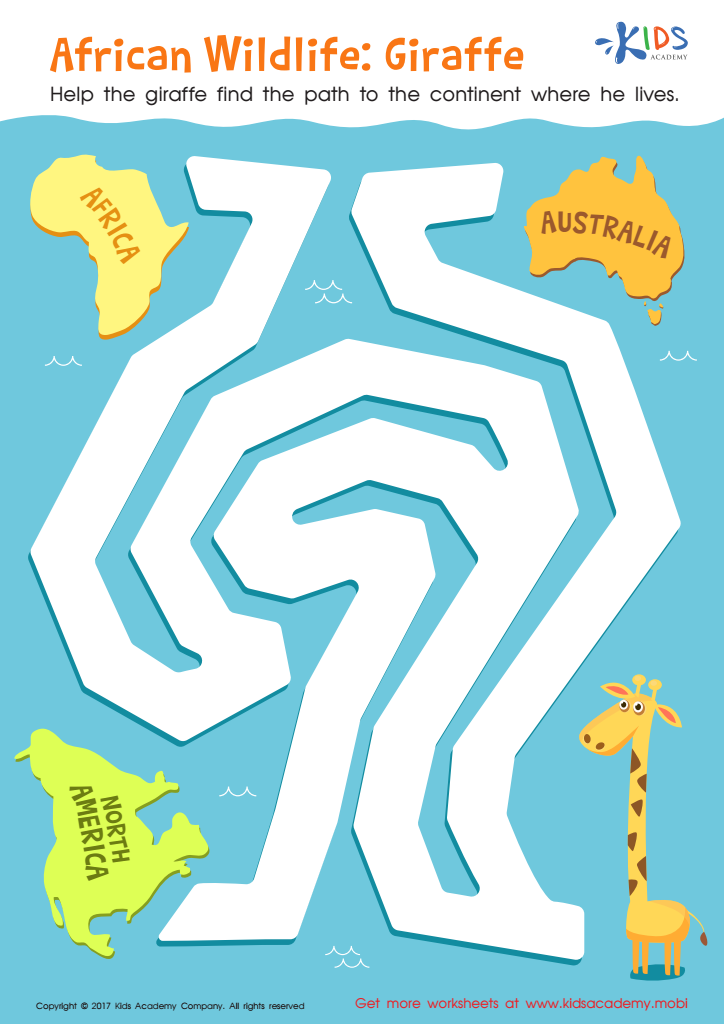
African Wildlife: Giraffe Worksheet
 Assign to My Students
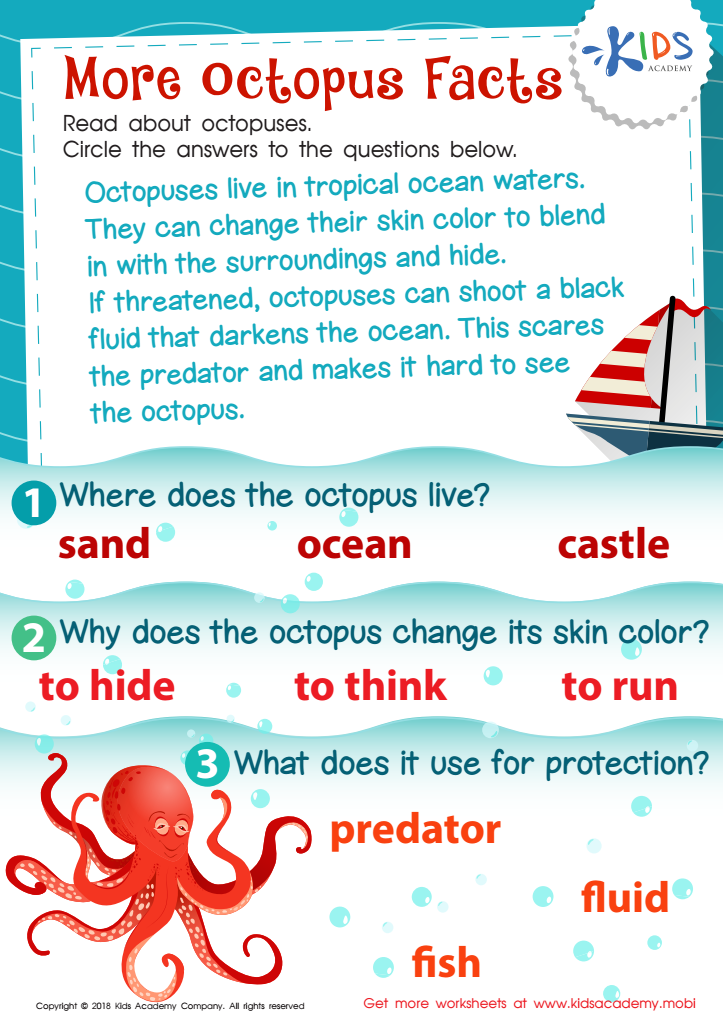
More Octopus Facts Worksheet
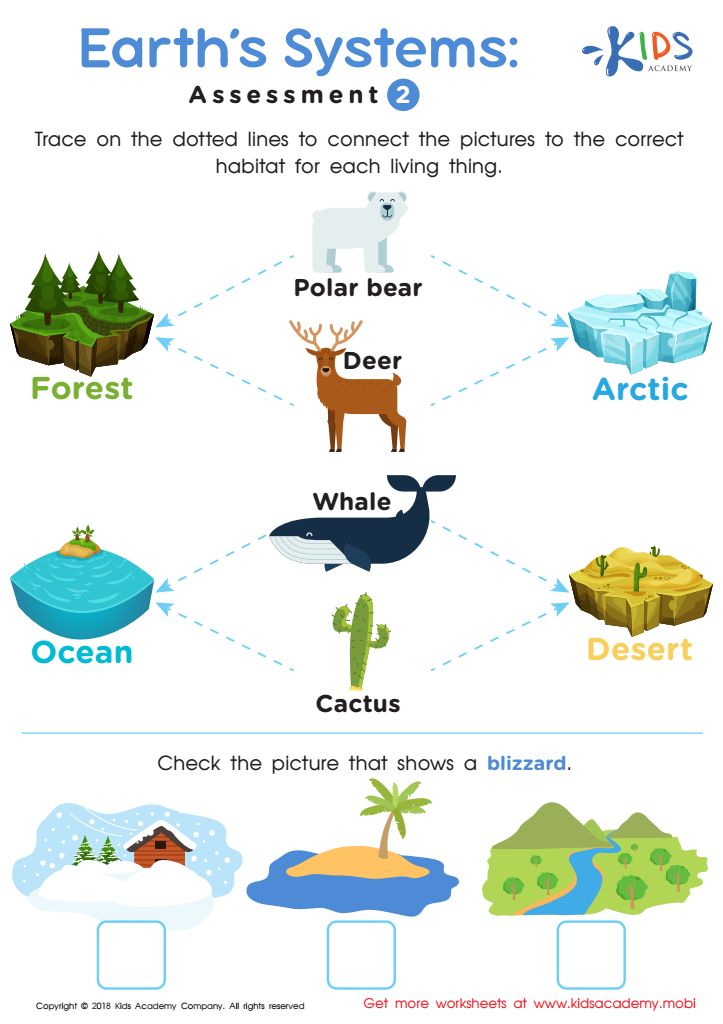
Earth's Systems: Assessment 2








Number recognition is foundational for mathematics, and incorporating animals can significantly enhance the learning experience for children aged 3-8. At this developmental stage, children are naturally curious and enjoy exploring their environment through playful activities. Using animals they recognize and love can make learning numbers more engaging and meaningful. When children see pictures of animals alongside numbers, it creates a memorable association that helps them better understand and recall numerical concepts.
Parents and teachers should care about number recognition animals because they provide a multisensory learning experience. Visual aids, like colorful pictures of animals, capture the child's attention and make abstract concepts more concrete. When children count the legs on a spider or the number of fish in a pond, they better understand quantities, sequencing, and pattern recognition.
Moreover, integrating animals into number recognition activities can enhance language skills. Discussing the animals can lead to rich conversations, expanding the child's vocabulary and comprehension. Additionally, children learn social and emotional skills by collaborating with peers in counting games or sharing their favorite animals.
Overall, number recognition animals foster a positive and holistic approach to early math education, making it a joyful and effective part of a child’s upbringing. Engaging experiences like these build a strong foundation for future academic success.








