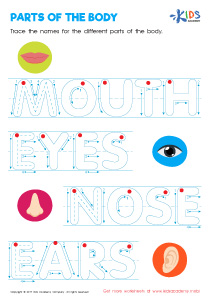
Vocabulary Building World Around Us Worksheets for Ages 3-8
3 filtered results
Difficulty Level
Grade
Age
-
From - To
Subject
Activity
Standards
Discover our "Vocabulary Building: World Around Us Worksheets for Ages 3-8" – a perfect tool to boost your child's language skills. These engaging worksheets are designed to introduce young learners to new vocabulary through themes inspired by everyday experiences. Created by experts, each activity fosters curiosity and enhances comprehension. From identifying objects to using descriptive words, children will advance their reading and communication skills in a fun, interactive way. Ideal for classroom and home use, these worksheets provide a solid foundation for lifelong language development. Start exploring today and watch your child's vocabulary grow with every fun-filled page!
Favorites
With answer key
Interactive
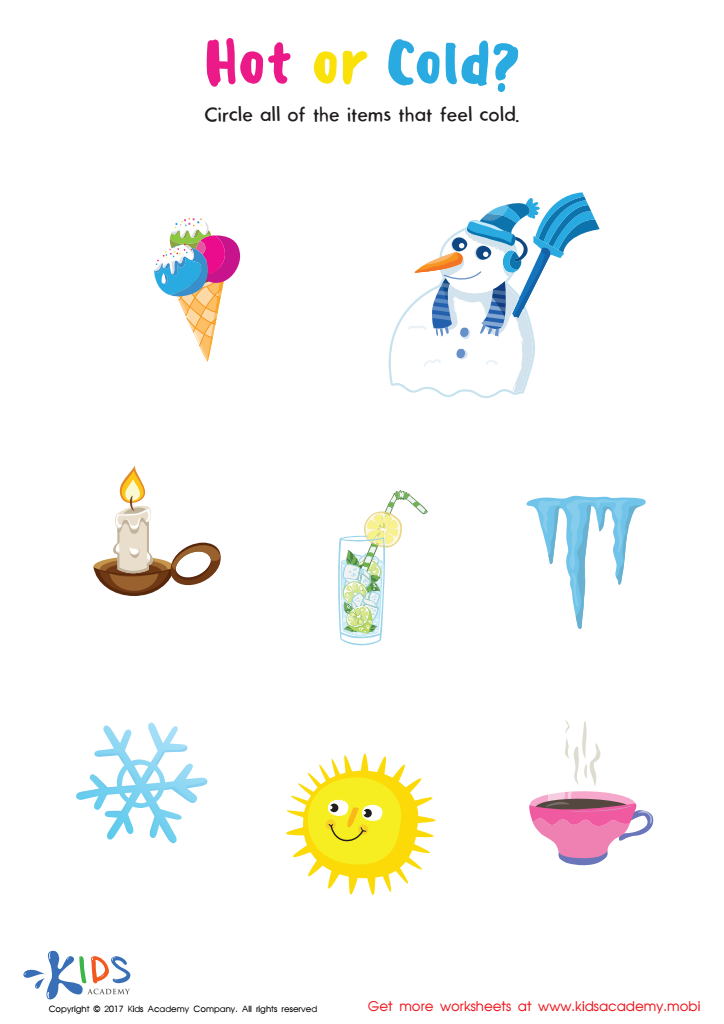
Hot or Cold Printable
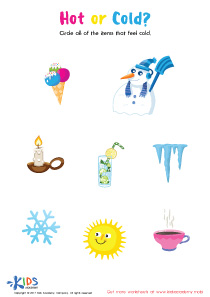
Help your child stay safe with this hot or cold worksheet! It promotes problem solving skills and teaches the important concept of temperature differences. Plus, it’s fun! Get your child to learn by playing.
 Assign to My Students
Hot or Cold Printable
Worksheet
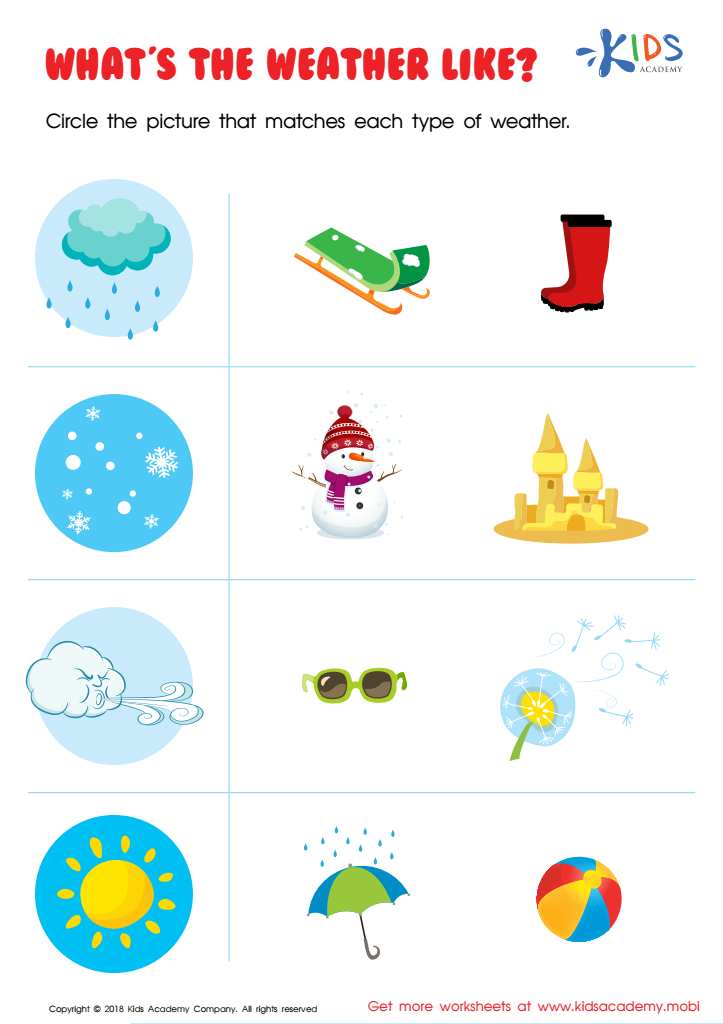
What's the Weather Like? Worksheet
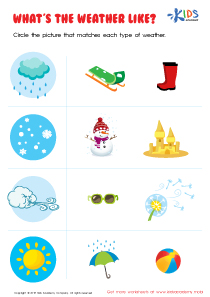
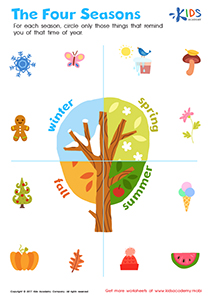
Help budding meteorologists practice matching weather to seasons with this PDF worksheet. Picture clues help identify seasons and fine motor skills are practiced circling the correct weather patterns. Bright and engaging characters make learning fun and reinforce weather knowledge.
What's the Weather Like? Worksheet
Worksheet
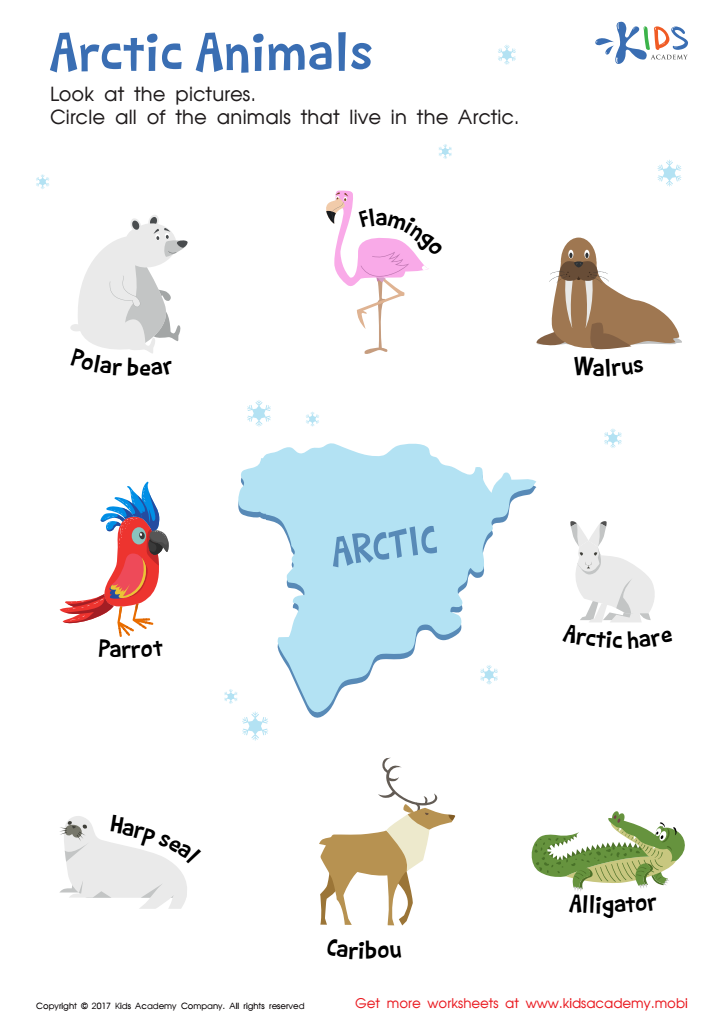
Arctic Animals Worksheet
Kids love animals and this worksheet is a great way to teach them where they live. It reinforces classification skills and introduces new animals, like the Arctic hare. Use it to discuss the Arctic climate and how these animals live, then ask your child where other animals live to keep the conversation going.
Arctic Animals Worksheet
Worksheet
Join Kids Academy for Free
Who is primarily going to use this learning content?







Vocabulary building in children aged 3-8 is absolutely essential for several reasons, and parents and teachers should prioritize this aspect of early education. Firstly, during these formative years, children’s brains are extraordinarily receptive to language acquisition. The richer a child's vocabulary, the more easily they will grasp new concepts across subjects. This is the foundation for effective communication skills, improving both speaking and writing abilities.
Additionally, a robust vocabulary enhances reading comprehension. As children encounter new words in stories or textbooks, those with a more extensive vocabulary can understand and enjoy these materials more readily, fostering a lifelong love of reading. This grows their knowledge about the world and different contexts, making learning more relevant and exciting.
Moreover, vocabulary building also boosts cognitive development. Identifying, categorizing, and relating words strengthens critical thinking skills and deepens understanding. This is particularly effective when incorporating words from the world around them, making learning experiential and engaging.
Finally, a well-developed vocabulary can increase a child's confidence in social interactions as they can more clearly express thoughts and emotions. Parents and teachers investing in vocabulary development create a strong educational foundation that supports overall intellectual and social growth. This investment pays off not just academically but also in developing well-rounded, thoughtful individuals.