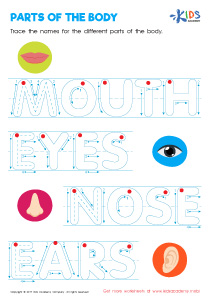
Weather identification World Around Us Worksheets for Ages 3-8
4 filtered results
-
From - To
Discover the "Weather Identification World Around Us Worksheets for Ages 3-8," designed to engage young learners in understanding the various types of weather. These fun and interactive worksheets help children identify and categorize different weather conditions, enhancing their observational skills and vocabulary. Ideal for early education settings, our resources encourage hands-on learning through creative activities that foster curiosity about the environment. Perfect for teachers and parents alike, these worksheets empower kids to explore daily weather patterns while connecting to the world around them. Equip your little ones with essential knowledge as they embark on their educational journey through the wonders of weather!
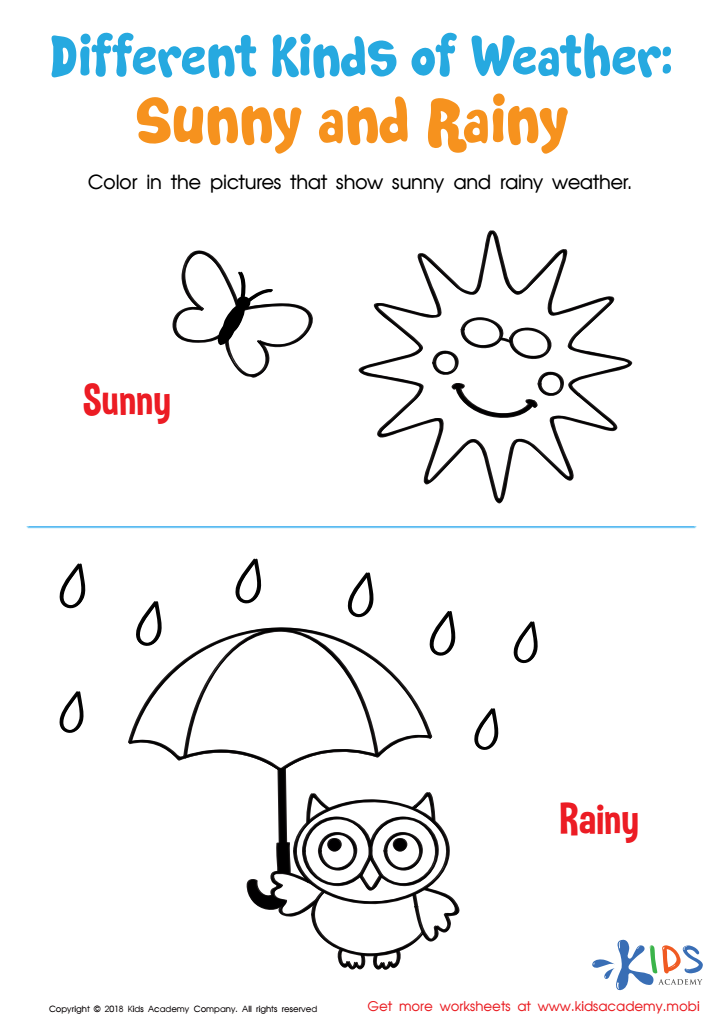
Different Kinds of Weather: Sunny and Rainy Worksheet
 Assign to My Students
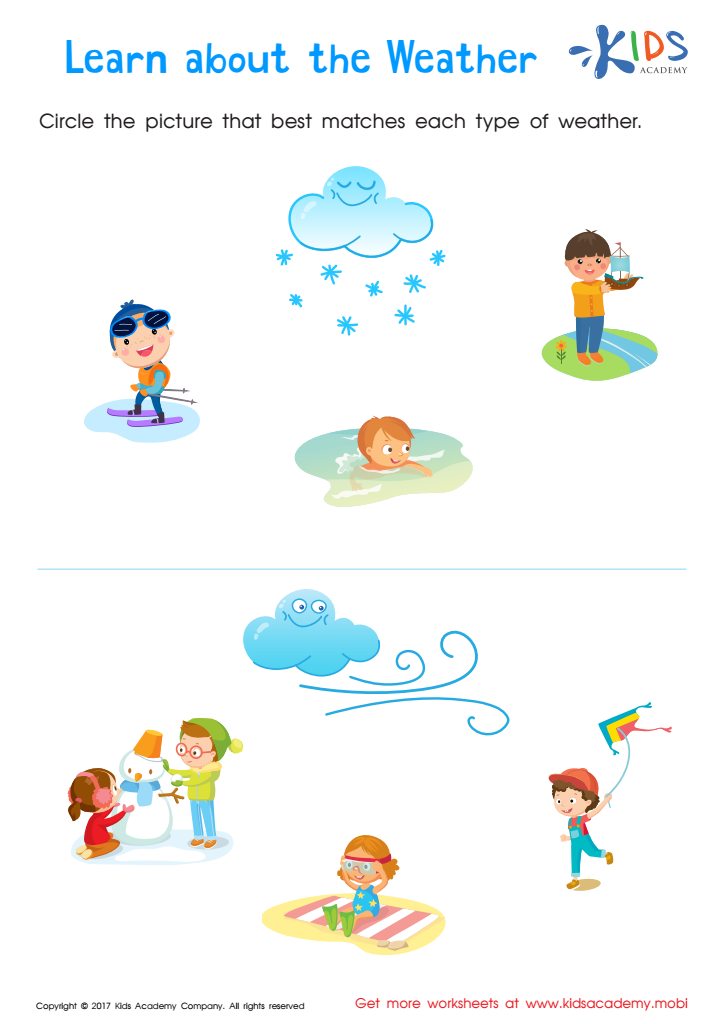
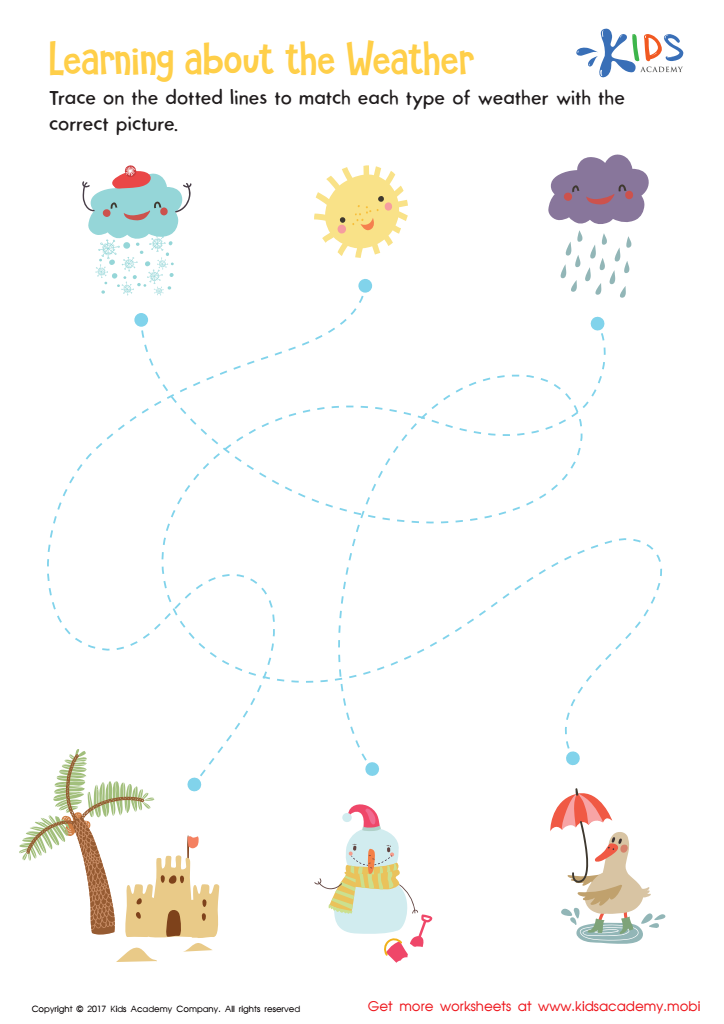
About the Weather Printable
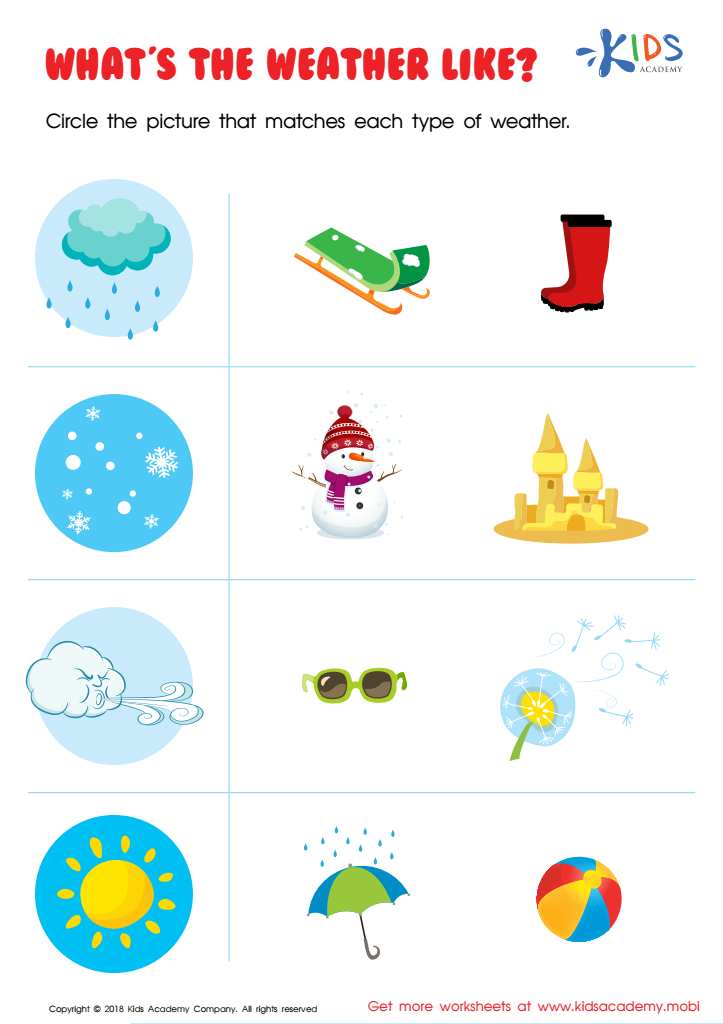
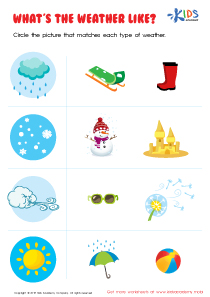
What's the Weather Like? Worksheet




.jpg)

.jpg)
Understanding weather identification is crucial for children aged 3-8 as it provides foundational knowledge about the world around them. At this age, children are naturally curious about their environment, and exploring weather encourages exploration and observation skills. Weather patterns affect daily activities; comprehension of concepts like sun, rain, snow, and wind helps children prepare for outdoor play, dressing appropriately, and making informed choices about their day.
Moreover, learning about weather contributes to early scientific literacy; it fosters critical thinking and cognitive development as children observe changes and predict outcomes based on weather patterns. Integrating weather education into lessons also supports cross-disciplinary learning, combining science, math, and language arts through discussions, charting weather patterns, and storytelling.
From a social-emotional perspective, discussing weather can initiate conversations about feelings associated with different weather conditions, enhancing emotional intelligence. Additionally, weather education can instill a sense of responsibility toward the environment and preparedness for natural occurrences.
By engaging in weather identification, parents and teachers help cultivate a lifelong interest in nature, support early learning skills, and enable children to better navigate their everyday lives. Through these lessons, we empower children to appreciate and interact positively with their world.